Showing posts with label scriptnotes. Show all posts

Thursday, 30 July 2020

Writing in the Time of Covid - How to get back up, and why little steps are OK

Not feeling up to it? Still out of sorts? Just 'vegging out' when you're at the keyboard, with another cuppa?

mmmmm....

Well, that means you're a writer. You're procrastinating, a rather undervalued part of the process. However, all jokes aside, you may have felt more 'out' lately, burdened down by the worries of the wider world and feeling, paradoxically, like you have to write, yet have no energy for it. As I've said, COVID-19 is a collective trauma - everybody's dealing with something. You are not alone, nor should you feel guilt for something you have no control over.

Now, as to what you can do? I've got a few suggestions (some discussed before, but I've thrown in some newer ones) to help you slowly, in small doses, get your groove back up:
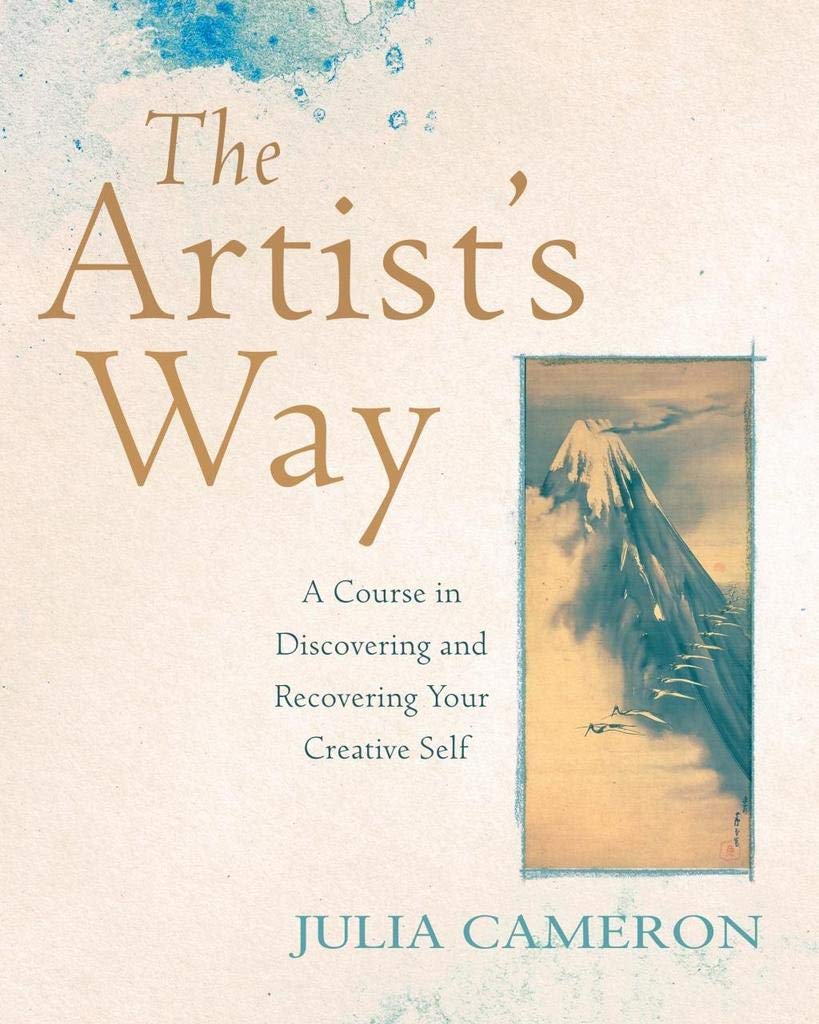
  • Maybe these are a little too brief, and you crave something deeper, more inspiring. Maybe you need a complete recharge? Well, why not have a go at Julia Cameron's acclaimed book, The Artist's Way. The one-time Scorsese collaborator and spouse has built a little empire out of her soul-searching, exploratory and guilt-free take on creative motivation. It even comes with short exercises! 
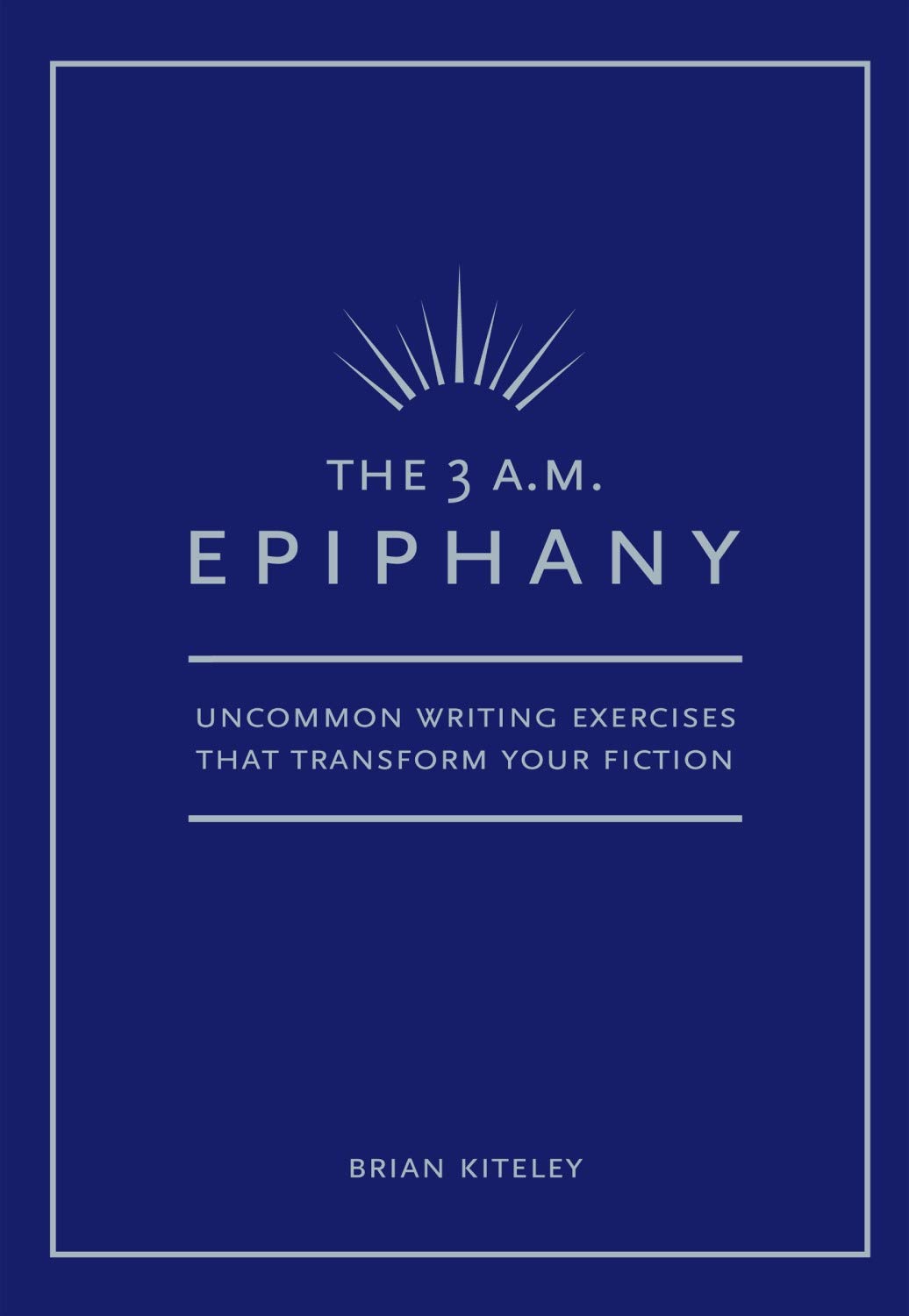
  • Indeed, if exercises are your jam, places like Kindle are awash with workbooks and writing exercise manuals for dirt cheap - just type in Writing Prompts/Exercises/Workbook. Or, if you want something physical, try The 3 A.M. Epiphany: Uncommon Writing Exercises That Transform Your Fiction by Brian Kiteley.
I hope these help you out in getting back on the writing bike. Of course, I reiterate again this: These are times humanity has not had to collectively live through since before the middle of the last century. Don't feel guilty for not writing, and don't feel guilty for being anxious. You owe no one anything - the industry will still be there, and it will, when you want to get back up. Right now, the focus should be on you - getting through, looking after yourself, and, most importantly, not stressing yourself. If it's baby steps, it's baby steps - no reason to be ashamed.

Stay safe.

Thursday, 1 August 2019

Screenwriting on a budget - Can you learn craft cheaply?

Let me be frank: the creative industries have never been the most friendly towards those who come from working-class roots. Breaking in requires a monetary and time investment that makes it difficult if you are not A) Supported by family or B) working a job that both pays well, and has scheduling that enables you to pursue networking and other opportunities.

Writing is, paradoxically, one of the easiest and, yet, one of the hardest sectors to crack: sure, all you need is a good story and a keyboard, and it can be from anywhere; but then, becoming a great storyteller, as well as one who's in demand, takes a lot of investment. Courses, books, other scripts, a means to write, the time to write and rewrite, and then the time, and often financial cost, of finding people to help bring your project to life. And that's all on top of your day-to-day needs and expenses.


I've already talked about what you can do if you're in a time crunch with your creative dreams. While some of that carries over here, I will also be covering things I didn't mention before or not at great length. The goal is to, hopefully, allow you to start your screenwriting road without sinking into money or time sinks.
  • Via BBC Writersroom and FutureLearn, the University fo East Anglia offers a free, online (so no travel expenses, debts or schedule changes needed) screenwriting course. This offers you a starting point if you're entirely green or haven't written in forever.
  • Of course, you have to read real scripts to know stellar from tripe. Good news is that many are free and downloadable. Here's where you can start digging:
http://www.bbc.co.uk/writersroom/scripts
https://indiefilmhustle.com/free-screenplays-download/
https://sites.google.com/site/tvwriting/
http://www.la-screenwriter.com/script-index/
http://www.imsdb.com/http://www.simplyscripts.com/movie-scripts.html
  • How about advice and tutorials? Bang2Write, run by veteran consultant Lucy V. Hay, is your one-stop shop. It's filled with great blogs on just about every facet of screenwriting you could want to know, told in Hay's snappy style. Furthermore, many of the screenriting gurus have dedicated websites, full of resources related to whatever their paradigm or selling point is (like Save The Cat), as well as The Writer's Store and Scriptmag.com also offering plenty of articles to chew on.
  • Videos to watch? Trying D4's thorough yet lean series on screenwriting structure in popular films like Pulp Fiction, Frozen and Guardians of the Galaxy.
  • You like to read something tangible and don't want to develop square eyes? Well, this one may be obvious, but sometimes, obvious is good: Libraries with decent media sections and charity shops are great hunting grounds to find the classic screenwriting tomes, as well as physical printings of major screenplays (some even come with bonus interviews with the writer and/or creative team behind the movie). If you're lucky enough to be near one, visit your local BFI.
  • There's also podcasts you can listen too, while you're sitting down with a cuppa: Danny Stack and Tim Clague talk with all manner of film and TV people on their popular UK Scriptwriters Podcast. Meanwhile, over in the USA, John August (Charlie's Angels) and Craig Mazin (Chernobyl) have probably the most well-known screenwriting podcast of all, ScriptNotes: both these guys discuss Hollywood, interview guests who've worked on some of the biggest movies and shows, and offer all sorts of advice and weird stories.
So that was all to help you learn the craft. What about when it's writing time? Recommended programs like Final Draft are a big investment and, for those with tight purse strings, may take a while to fully save up for. Plus, Celtx, the one-time saving grace for broke writers when it came to professionally formatted work, no longer does free versions. So, what can you do meanwhile?

Well, basic as it sounds, just reformat Word. Yes, it's like using a pile driver to make a mosaic, but it'll do fine for now. At this stage, learning and practice should be your priority, not trying to get an agent or gigs. You'll find no shortage of how-tos online, so this shouldn't be overly difficult to get rolling with.

As long as it looks like this, you're clear:


(If you can guess what script this is from, you win a prize!
The prize being the gift of dedication)

To cap off, don't ever feel ashamed: if you can't afford a full, fancy degree, or just 'know' great storytelling right away, it's not a problem. Like I've said many times, nobody cares where you went to school or how you learnt: just that your output is good. Some will benefit from books and structured learning, others just by reading scripts. Whatever you do, make sure it's right for you.

Monday, 24 June 2019

Chernobyl, Craig Mazin and the deceptiveness of credits

So, while the ending of Game of Thrones caused a ruckus, HBO quickly bounced back with one of the most acclaimed TV series in recent memory, Chernobyl. This period drama, a co-pro with Sister Pictures, examines the real-life Russian nuclear disaster and cover-up that resulted in many deaths, and a lot more trauma.


The mind behind this is veteran screenwriter (and Sexy ScriptNotes host) Craig Mazin, an industry pro whose films have grossed millions of dollars at the box office, and created a reputation of being able to bring troubled productions home and to said monetary glory. Alright, so for the unaware, you'd think this means 'Oh, well if he wrote Chernobyl, he must work with the likes of Nolan and Scorsese. He probably has a few Oscar wins to his name.'

Nope, he's the guy who wrote Scary Movie 3, Identity Thief and the Hangover sequels.

Yeah...

As the title says, credits are a deceptive little minx. It's easy to look at Mazin's credits and go 'HACK!', 'SELLOUT!', 'FAILING UPWARDS!' and more. How on earth did he pull out Chernobyl when his past career heights were sex and fart gags? Oh, and a sequel to Snow White and The Huntsman, for some reason. Surely, if those are 'his creations', then there's no way he could've also written something of Chernobyl's quality.

See this? Let's discuss.


Well, put big airquotes aroung 'his creations': much of the work in Hollywood is assignments i.e. what the studio hands out. Adaptations of books, remakes of studio I.Ps, script rewrites (Mazin loathes the term Script Doctor) etc. Stories of Hollywood rewrites are just as mythic as the films themselves: eleventh-hour fixes or scripts drowned under endless notes, despite the best efforts of the likes of William Goldman, Robert Towne, Nora Ephron, Joss Whedon, Quentin Tarantino and many more. In short, just because a project says one name, does not guarantee that said project is on the shoulders of that one person. Film and TV, like in any collaborative project, get revised all the time.

The way that the Writers Guild of America works, credits are often arbitrated and alloted, based on percentages of material contributed. You don't meet the quota, you don't get credit (see Frank Darabont and David S. Goyer on Godzilla, or Paul Dini on Maleficent). If you'd like to learn more about this, as it can be a headscratcher, I suggest you read Writing Movies for Fun and Profit: How We Made a Billion Dollars at The Box Office and You Can Too! by Ben Garant and Thomas Lennon. It's an addictive read that'll leave you chuckling yet also be rather pensive about the Hollywood machine. Love or hate their films, this duo (who have shared projects with Mazin, like Baywatch) have been at the epicentre of some of the big comedies of the last decade (Herbie, Night at the Museum), so they know their stuff.

For how Britain works, here's our own Guild.

But, what's just as important here, is what this body of work says about Mazin: he's a lean, mean writing machine. Regardless of critical reception, you don't last as long as Mazin has if you aren't able to deliver the goods on time, solve problems, and said goods turn out greater returns. If you are that good on assignment jobs... what then could your own original work be like? What level of trust have you built, through these jobs, to convince people to take a chance on your original idea?

In short, what's your reputation? A go-getter, a dedicated craftsman, or a stubborn, difficult pain?


It's as true of the UK as it is of the USA. It's easy, especially for newer screenwriters, to look at the industry too much like a fan, and not as a professional with perspective. It's tempting to whine about how terrible you think these films are, and thus can't make the jump from Hangover 3 to Chernobyl as the work of the same man. However, here's some other examples to bear in mind:
  • Justin Marks - Wrote Legend of Chun-Li. Also wrote Counterpart and The Jungle Book.
  • David S. Goyer - Wrote Blade Trinity and Man of Steel. Also wrote Batman Begins, The Dark Knight, Blade 2 and Dark City
  • Julian Fellowes - Wrote The Tourist. Also wrote Downton Abbey.
  • Roberto Orci & Alex Kurtzmann - Wrote Transformers 1 & 2, as well as Legend of Zorro and The Island. Also wrote People Like Us, Xena, Fringe, Alias and Sleepy Hollow S1.
All of this is to say: no experience or work is wasted. Everything can be a learning opportunity, if you choose to use it: clearly Mazin did, and now look what he pulled off. What's more, never take things at face value: writers are always writing, commissioned or on spec. Much of what you write will never see the light of day, it's just a sad fact. How different would the perception of Mazin's work be if his more dramatic projects got made, or he got credited for more serious assignments?

However, wherever you end up, you never stop pushing or challenging yourself, and you use that to broaden and improve your own portfolio. Even if the end product isn't great, to get on it in the first place requires one to have a certain, often high, level of skill. That can sometimes be as good of an endorsement as great work by critical standards.

Sometimes, a creator's body of work can say more than the surface allows. What Identity Thief and other of Mazin's work may lack as great or unique cinema, it makes up for as a reminder of having a good work ethic and initiative. Chernobyl then, on top of being a great show, is also proof of the potential rewards of said dedication.

Saturday, 16 February 2019

Read how-to-books or screenplays? Hey Genius, DO BOTH!

Blake Snyder is a hack who destroyed movies! No, Save The Cat is unparralleled storytelling genius. No you're stupid! No you're STUPID! FUDGE YOU! NO, FLECK YOU, BAR STEWARD! - the polite TV-broadcast version of what goes on in many screenwriting threads on forums.

In the eternal quest of the new screenwriter in tackling their first script, one of the first questions that arises is: what should I read? Screenplays or screenplay manuals? Should I just jump in and read PDFs like no tomorrow, or, should I study paradigms, beat sheets and arcs? Well, I've got an ingenious solution to your problem, and one which has never, ever, EVER, been broached before in the whole history of anything: do both.

I'll never understand the screenwriting community's bizarre fixation on one or the other. It's not like you're in one of Jigsaw's traps and forced to make a choice between losing your hand or your head. You, as student of the form and a consumer, have full freedom to choose what to go for. It's not binary black-and-white and to say it is is, at best, just standard elitism and worst, destructive to an artist's growth.


Brass tacks here: most new spec screenwriters (who are not muli-taskers, like writer-directors) are, by and large, not students of English Lit or have a strong literary background, period. Many are simply enthusiasts of various movie and TV franchises or persons in said mediums, and would like to write for them some day. Cue dropping to their first port of call: the internet. They do some rudimentary searching, maybe learn about Save The Cat or 'three act structure' and then after that, find a multitude of people grousing about STC and saying the only way to is to read screenplays and nothing else.

Let's start with books: blind adherence to formula is, of course, not a good thing, nor being married to a set of arbitrary rules. Absorbing all McKee or Hauge or Field has to offer may lead to a very proficient, polished screenplay, but it can also lead to an overly mechanical one without a sense of voice or imagination. While writing is hard, structure and pace can be learned fairly quickly: creating snappy, to-the-point scenes, as encouraged by these books, is very doable in a small amount of time. With a copy of Final Draft to boot, it's easy to create what LOOKS like a quality screenplay.

But looks can be deceiving: the common element with a lot of books is they can't teach you to have a voice, a unique style and POV that only you can tell. Nor can they provide you with distinct and different subject matter, so sadly, a lot of 'technically' proficient screenplays fall back on the same stories about cops with demons, star-crossed lovebirds and disenfranchised youth. X happens by page Y, at point B this twist happens and the hero gets C. All well and good, but kind of bland.

Here's the thing, to take the alternate view: if you can't explain or understand why something works in a story, reading screenplays alone is a total waste of time because you're not really learning. The books aren't perfect, but at least they can give you a framework and a means to explain what or why something is or isn't working. Without a basic grasp of dramaturgical terms or theory (in particular, oft-misunderstood terms such as 'characterisation', 'pacing' and 'subplots') you won't be able to really grasp and hone that vague ethereal spark that is your story idea.

Too often, it seems the people who screed the supremacy of 'read alone' are people who were already aware of the conventions, or working in the industry and thus, could learn direct on the ground. For example, John August (Big Fish and co-host of ScriptNotes) began his career as a script reader so of course he didn't need Syd Field: he was already learning in possibly the best school possible. Nor did Ed Solomon (Bill & Ted): he was already working as a comic and got on staff for Laverne & Shelley while at college. He got the ultimate introduction to the craft by actually writing commissioned work. Others majored in English at a university level (Frank Cotrell-Boyce, The Railway Man) so again, didn't need the guides. But for many, either because of financial or health reasons, this is non-viable.

And, in an interesting dovetail, many of these guys got in decades ago, a criticism that's also been levied at guides for being out of date in their industry advice. Yet, the circumstances under which some of these people rose under is fundamentally different now, why should their word be any more sacrosanct?

Obviously, I'm being a bit hyperbolic, but I hope it serves a point: no one knows anything, so learn from everyone, take what you can and ditch what doesn't help. In the long run, no one cares how you write just as long as you write well. Do that, and things will fall into place.