Showing posts with label screenplay. Show all posts

Tuesday, 27 June 2023

Does proper formatting actually matter in scripts?

I was reading the Haunt filmmaker diaries a few months back - Scott Beck and Bryan Woods document their lives as working Hollywood screenwriters while also juggling directing their horror film. It came with a draft of the script as a bonus, which was not only a fun read, but prompted some interesting questions about how the duo used formatting to create a particular effect on the reader.

Formatting is one of the biggest battlegrounds when it comes to screenwriting - it's possibly the only thing as loaded and fraught as discussions on whether or not 'act structure' is real. Scripts, so say some, are done on Courier font 12, with a specific spacing, usually in a programme called Final Draft (but some have also preached about John August's Highlander software, and for a time there was Celtx) that then exports it as a PDF. 

Final Draft Software Review | Is Final Draft Worth It | Music Gateway

On the page, the real meat of the formatting debate, everything is broken down into slug lines (scene headings, like INT/EXT, DAY/NIGHT), and tight action lines to describe what's going on. All the character names and their dialogue is centered, and anything more specific is usually put into brackets (whisper, chuckling, screaming etc.). The key to this, the reason why it's done, is for clarity and ease of reading. And under NO circumstances are you allowed to use the following:

  • Pictures/JPEGs
  • Maps
  • Weird fonts and word sizes
  • Word Art
  • Different colours
  • Random quotes from other sources, like famous politicians or historical figures
  • Specific times of day, broken down into hours and even minutes
  • Long action lines/descriptions, more akin to bits from novels
  • Ending scenes on dialogue instead of an action line
  • Cut To

So, as both a script reader and working writer, how true is all of this? Does it really matter, in my experience, if you chuck in pictures or extra bits, or even if you play with fonts?

Mostly no, but there are some caveats. The top goal is writing a compelling story that people will want to make - so long as it's eligible, and of quality, then you'd be surprised how many people will let slide some minor errors. The only ones that are non-negotiable are the use of Sluglines and having character names and dialogue be centered. Those are the only true fundamentals necessary for a screenplay's format. Everything else is service of creating the mood and style of your script, anything you can do to get the reader utterly sucked in.

To return to Haunt, the writers there use the formatting itself to sell the creepy, surreal atmosphere of a haunted house gone mad. Word size is increased and decreased to indicate sound and proximity, with the odd use of onomatopoeia to punctuate. Even the scene headings and descriptions will flip to the other side of the page to sell the weirdness factor, and it really works. This is breaking the rules, done correctly: it's a horror script and it makes you uneasy.

But, I did warn of caveats - in my experience, most scripts that include all or even some of the gimmicks listed above turn out to be, well, just that: Lazy and poor quality stories, loaded with random nonsense no doubt trying to make it stand out in the submissions pile. The worst of these is inserting pictures: to me, this is simply an all-out failure of writing. You have the written word at your disposal, why not use it to describe something marvellous or weird and let the reader's imagination do some of the work? Changing colours can also fall into this: it can look ugly and there's often no sense of an actual benefit to doing this.

(And, as a cherry on top, most of the pictures tend of be of abysmally low quality. Blurry, grainy, muddy images shoved willy-nilly about the script. This defeats the entire point of even including them to begin with, meaning you just gambled with the reader's tolerance for no reason.)

Ditto the beefy action lines: if you want to write a lot, my advice is break it into smaller, more dynamic sections. It reads cleaner and it can give an added sense of tempo and attention to what's happening in the scene. The best advice to remedy this is, well, read more screenplays - learn how writers sold something ambitious or hefty, and apply it to your own work.

A lot of this comes down to developing your own voice as a writer, and that takes time. You use shortcuts (like say, grabbing a picture off Google Images) to try and get stuff done quicker, and maybe in the process, create a unique presentation. Maybe you want to showcase more of your creativity with some original art or funky font tinkering? However, if it's not done in actual service of the story, then it's not actually helping you: It's just a distraction. You have to give the reader as few reasons as possible to say no, and yours is maybe the fifth or sixth script they have to read that day - every choice you make has to be considered. Sticking to the 'rules' is simply an easier guarantee, one less possible strike against your work.

My advice, if you're really nervous: stick with traditional formatting and focus on fine tuning your writing. However, if you want something extra in, make sure it is justified and actually adds to the atmosphere and style of what you're making. Reasons like 'it looks cool' are utterly worthless and, as said, will just hasten the reader's finger to the big red X. Keep them on the page, at all costs.

Monday, 1 May 2023

Review: Haunt: Screenplay & Filmmaker Diaries

With 65 having done its run in theatres, I figured why not share a recent read of mine - the Haunt: Screenplay & Filmmaker Diaries. Writer-directors Scott Beck and Bryan Woods (also the minds behind A Quiet Place) made a little slasher called Haunt back in 2019, a twisted take on chintzy haunted houses where a group of teens get stuck in very real danger. Overseen by Eli Roth, Haunt used its low budget and small cast to its advantage, creating a small but distinct little horror. 

So in 2022, the duo brought out this book, a diary documenting their lives as working Hollywood screenwriters while also juggling directing their horror film. The pair discuss meetings, foods, movies they've seen and even changes in their own lives (like fatherhood and marriage), as the film lumbers from script to production to finished film. It comes with a draft of the Haunt script as a bonus.

Books like this are always deeply fascinating for me - I love getting inside other storytellers' minds and seeing how they tick; how they approach challenges and what are things to avoid. Beck and Woods, writing in a simple, conversational manner, offer this in easy, digestible chunks. They go over every issue that comes with making a film - pitching, writing, rewriting, notes, meeting, casting, budget, working with crew, getting locations, editing, balancing work and home life and then getting it out there. For every success, there's a bunch of setbacks, mistakes and sudden left turns, forcing the duo to think fast and still balance everything. It has the peaks and valleys of good drama, yet Beck and Woods never become sappy or maudlin - they acknowledge the pain, but endeavor to push on and enjoy the good parts.

The script draft, which follows a quick but neat interview with Scott McConnell (Gointothestory.com), was not only a fun read, but prompted some interesting questions about how the duo uses formatting to create a particular effect on the reader. Throughout, the script will have onomatopoeia to punctuate sounds and movements in scenes, as well as use the spacing and position of words themselves to create a sense of distance and atmosphere. The effect is a highly visual and evocative read that makes the script pop, even as the material itself is very firmly in its genre. 

Yet, it never feels gimmicky or lazy: it always done to enhance that haunted house feeling, giving it a sense of place and style. In my time as a script reader I've seen exactly this sort of stuff done wrong. VERY wrong - quirky formatting done to mask a generic, unengaging script. I and certainly no company is impressed by 2004-level Word Art or goofy Photoshop. However, Beck and Woods do it right - the story is set in a mad haunted house attraction, so it creates the sense of being in a twisty, turny, spooky place. Form and substance marry up.

A definite recommend, even if you're not a horror hound and just like a peek behind the curtain.

Sunday, 13 June 2021

The Fake Script Book Epidemic on Amazon

It's one of the most duplicitous things done to aspiring writers... and isn't a dodgy contest for a change. In an age where companies are really anal about copyright, it's bizarre to think that not only are these allowed, but there are new ones being uploaded all the time!

What am I talking about? Up on Amazon, there's a deluge of supposed 'script books' from hit movies, and often for knock down prices. A bargain for new writers who are constantly told to 'read read read' if they want to improve and understand screen storytelling. They even come on Kindle, so no worries about shelf space, right? 


Nope - it's just someone uploading a transcript, not a proper screenplay. Not formatted in anything resembling an industry standard, usually next-to no action lines or slug lines: it might as well just be a collection of the DVD subtitles. The audacity makes it almost not qualify as theft, as theft implies some kind of effort - this is the lowest, laziest type of screenwriting-related literature I've seen in the near-decade I've been involved with this scene.
 
How can you spot them and not be conned out? Sometimes, it's super easy as they'll use generic Createspace covers with ugly word art, but over time, they've gotten more savvy and use official images and art from the movie. Instead, here's some ways: 
 
1) If the author is not the actual screenwriter. In the example below, the book is credited to one Charlene Kiser, but Changing Lanes was actually written by Chap Taylor & Michael Tolkin. 
 
 
2) Its publisher is Amazon and not a proper publisher or studio affiliate. Some of the real guys include Picador, Faber & Faber and HarperCollins among others. 
 
3) Check the title: if it doesn't something akin to 'Official Script/Screenplay of the Movie', or if the release date is years, or decades, after it was released and its not marked as an anniversary edition, those are red flags.
 
 
Hope that was useful as this is something that has been grinding my gears for some years now and it's an insidious way that writers are being preyed on. Not to mention, y'know, you're profiting off of something YOU DON'T OWN. If you want screenplays, you can find the real ones, often for free online. Here's a handy list of them:
Writers already deal with enough in trying to make a go of a career - don't make the learning process more difficult too.

Saturday, 29 May 2021

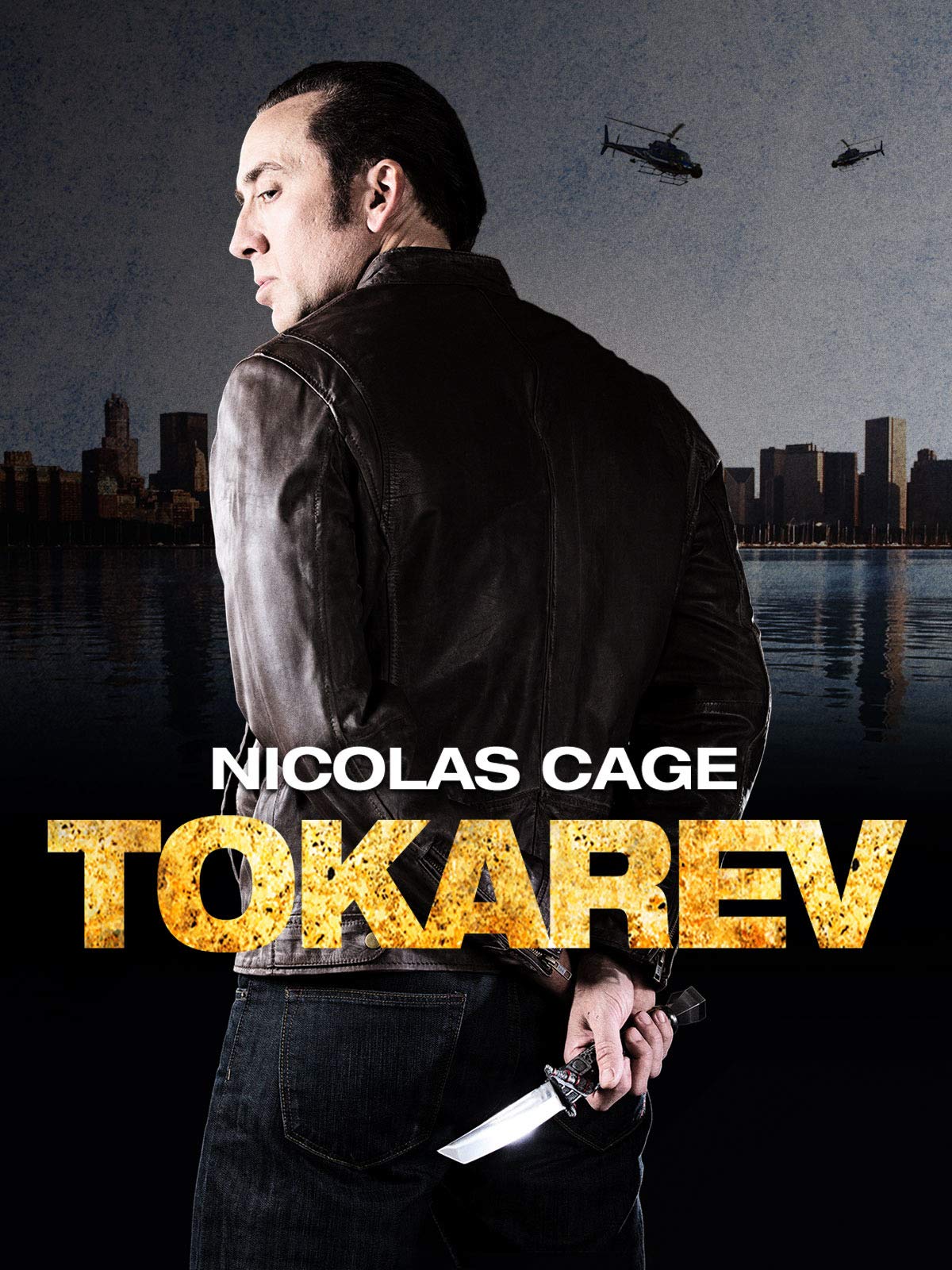
Tokarev (2014); OR, Subversion for Subversion's Sake

Watch Tokarev | Prime Video

The 2010s are an incredibly odd era when it comes to Nicholas Cage's filmography: from indie king in the 90s, to major star in the 00s, this decade was schizophrenic and lacked a consistent identity. One minute, he's your regular Hollywood lead (Ghost Rider Spirit of Vengeance); the next he's a quirky character actor (Into the Spiderverse) and then there's the headliner of low budget genre fare. Some are madly experimental (Mandy, Color Out of Space); others just lower grade versions of studio movies (Dying of The Light, Trespass), and then there's Tokarev (aka Rage in the US).

From the outside, it's cut-and-dry: it's Cage-Taken, a badass dad out to get his daughter back from villains. However, Tokarev makes a couple of key choices to set itself apart from both the Neeson franchise, as well as other B-Grade revenge flicks. In turn, I think there are some valuable screenwriting lessons to be learnt (outside of the usual shortcomings of these types film i.e. the two-dimensional characters, the well-trodden premise, predictable arcs etc.)

Naturally, there will be SPOILERS, so you are warned. Tokarev is free on Amazon Prime, if you want to watch it.

Tokarev starts out simple: Cage plays Paul, a reformed crook, now construction bigshot. He's a good husband and devoted to his teenage daughter Caitlin. However, Caitlin is abducted while he's out to dinner. With no ransom demand, Paul turns to his old criminal buddies to help get her back. Alas, a few beatdowns are not enough and she's found dead, having been shot by the titular Soviet weapon. 

This freaks out Paul, as he and his two friends had stolen cash from the Russian mob as young crooks, swearing the theft to secrecy. Paul becomes convinced this is all a revenge plot, goes on the offensive against the Russians, and even suspects someone ratted him out. All pretty standard.

Tokarev then throws out its big curveball: it turns out it was Caitlin's boyfriend who killed her. How? Because she and him got drunk and took out Paul's old gear which, surprise surprise, included the Tokarev he had taken years earlier. She gets accidentally shot and so he concocts a fake kidnapping to mask what he did. Realizing that he's brought hell down for no reason, getting his friends killed in the process, Paul lets the Russians kill him, consumed by his past sin.

I kind of like the twist, at least in concept: it's unexpected, you do get small hints that, to Paul and his fellow criminals, something seems off and it serves as dramatic irony. It even mirrors Paul's own life-altering choice with the Russians and how taking a life changed him. Tokarev plays less like a Diet-Taken, and more like the tragedy of a man who, in trying to hide his crimes, is destroyed by them. Paul's not a bad guy: he values family and friendship and he has, by and large, left that life behind. Even his drive to get revenge comes from a genuine place: he values his daughter above all else and saw her as the embodiment of his new way.

For a film of this calibre, this is more thought than one might expect. Screenwriters Agnew and Keller's experience in genre B Movies means they know the tropes inside and out, and can find ways to play with those to create something with more depth. Toying with formula and genre expectations can lead to fresh and exciting new experiences (Knives Out, Mad Max, The Lego Movie). However, this decision has huge knock-on effects on the rest of the film that open up many holes and undercut what, even among negative reviews, has been called a genuinely strong element. Tokarev would make for a perfect case study in set up and payoff, and how to correctly subvert expectations to deliver a payoff that's not only more original, but more satisfying.

Tokarev reminds so much of one of the classic beginner's screenwriter's mistake - stapling on a twist to an, otherwise, bog standard story. Just write something that's identical to something else, thinking it'll be an easy sell, but then throw in a last minute wrench to catch the potential producer off guard and have them leaving going 'Wow, what an ending!'

Mashing up what I would describe as Taken and Carlito's Way, however, leads to a film with a confused identity: characters are not deep or textured enough to work as a searing drama that meditates on redemption, but there's also not enough action sequences to be a proper action film. A twist like this only works if the rest of the narrative supports: the best twists make subsequent viewings more enriching (think of say, The Sixth Sense). It's like jamming a peanut into a half-melted chocolate bar and calling it peanut butter chocolate - doesn't work.

The main offender, naturally, is the protagonist. Paul is presented, throughout the film, as too much of a nice guy for this twist to land. The film is too earnest in his 'new' self for it to feel justified: he shows remorse, he does have second thoughts, he does doubt why he's doing what he's doing and he does feel powerless. The film makes his quest for revenge palatable to the audience, so when it turns out he was going after the wrong people all along and it was his own gun that killed Caitlin, it feels awkward. Sudden.

If he was more turning more monstrous and become more willing to let innocents get hurt as he tears up the city, the irony of him being, in essence, his daughter's killer would work a lot better. On rewatch, it would make his choices feel more pathetic and tragic, now that we know. Maybe if the film had challenged his 'nice guy' image more, it could add another layer to his character and have us, as the audience, question more who he truly is: did he ever really change? Was his daughter the only thing holding him back from becoming a monster again? As the text stands, Paul is presented in a way that that doesn't match the intended effect of the narrative he's being taken through. Imagine if Othello 'killed' Desdemona but it wasn't him, just some soldier under his command who did it for reasons unrelated to Othello himself or Iago. It's tragic, but the meaning is completely different and less potent.

The fact that the boyfriend, the real culprit, is barely in the film and has no real dynamic with Paul compounds this problem: how much harder would it hit if they had begun bonding in their grief, had gotten closer, only for the bombshell to drop? Would he egg on Paul, maybe get involved as a means to save his own skin, or would he try to pull Paul back as some attempt to atone for his own crime? What vein of rich, ironic drama could be mined there?

The other major problem is that, with its current execution, the twist leaves us as an audience with no sense of closure to the plot, cheating us out of catharsis. Think about it: the Russians still rule the city; Paul's wife is left without her husband or step daughter, and the real killer is still free. This invites so many questions and makes Paul looks ineffective as a protagonist. By not making the tragedy hit harder, and using it as a means to tie everything up, Tokarev ends up, as a story, unfinished. The mob boss doesn't even get the final showdown or come to kill Paul himself: it's just a squad of faceless goons. Had he finished the job himself, it would've acted as a mirror to Paul's own past.

Tokarev, in every way, is a perfect example of how much payoff matters in writing a compelling story. It's also an example of how great ideas, alone, cannot salvage something that doesn't try hard enough everywhere else.

Monday, 1 February 2021

HOW DO I DEAL WITH REJECTION? - Screenwriter's Survival Kit

This is inevitable.
You can do nothing about it.
It will happen.

Every writer, in every field, deals with this at least once (and that's being generous): rejection. The big R all writers fear (whereas Residuals is the R writers like). it's one of the hardest facets of being a working writer that newbies must make peace with.

 
Yes, you will work really hard on a script or other project (but as this is a screenwriting blog, let's mainly focus on that), only for someone to say no. I'll talk more about why shortly, but there's any number of reasons why rejections happen.

WHAT DOES REJECTION FEEL LIKE?

For as much writing as there is about rejection being a reality, I don't think there's much written on what it feels like in the moment; especially if you're new to the whole business. Naturally, I can't claim to represent every screenwriter in this: just my own experiences. However, for what it's worth, here's my take on the stages of rejection grief (mainly when you're a newcomer, though pros certainly feel the sting too), and what to do.

  1. Shock - You open the email or envelope and get told the bad news. Usually, it will start with a courteous hello/how are you/hope you're well, and then tell you that they will not accept your screenplay at this time. Sometimes they will cite a reason (not for us/we already have something similar/we like the concept but...), but other times not. The initial shock of being told no will give way immediately to a sort of numbness, like time has slowed and you've divorced from reality. Afterwards, you will feel
  2. Upset - Naturally, rejection hurts. You spent all this time, put in all this work, and they said no. This can hurt more if it's from a person or company you really like. You may feel a weight in the pit of your stomach, or even the trickling of tears at the corners of your eyes. Hey, it hurts - you're not a baby for feeling hurt by something that meant something to you. Then comes a burst of
  3. Anger - You spent all this time, put in all this work, and they said no - HOW DARE THEY! You want to scream, want to explode with indignity and rage. You were sure you did everything write - proofread it over and over to make sure it worked; the characters were good; the plot was good; the pacing tight; the structure strong; no typos or errors. You were sure! SURE! And yet, it didn't make it. After the fire subsides (time taken can vary a lot), you will reach a state of
  4. Acceptance - Having got the fire out of your system, calm sets in and you just say, 'well, that's a shame, but I must move on.' Maybe you go back to your current project, maybe you opt for a break; you just do something because you're a creative and it's what you do.

The main thing to remember with rejection is it's not personal. No one is out to get you, or humiliate you, or destroy your dreams. 

Sometimes, it just doesn't work out. 

BUT WHY NOT?

Maybe you need to get better at writing; maybe they weren't the person for the project; maybe it simply wasn't the right time in the market for the project; maybe you just didn't have the name recognition for it to be worth the gamble. 

BUT HOW DO I DEAL WITH IT?

Well, aside from going back to writing, one easy bit of advice is just give yourself room. Let yourself feel; let yourself have time to digest. If you're not on commission, then the script is being written on your time and thus, you are in total control. Step away for a bit; have a walk, eat something you like, maybe watch a movie or a show. Like after a night's binging, let yourself detox from a rejection. Give it a few days, I'd say.

As time passes, and you get more rejections (which you will), you will find the stages get less potent. The shock, anger and upset will start to fade: never fully gone, but they will not be as harsh on you. 

DO I NEED TO REWRITE MY SCRIPT?

I'd say, if you sent it out to multiple people, wait. If they all come back rejecting it, it's worth having another look over. As the saying goes 'If one person says it's crap, it's an opinion. If ten people say it's crap, you've got a problem'. However, never try to rewrite something right after getting a rejection - it's too raw for you yet to be truly objective.

WILL I GET USED TO REJECTION?

Like anything in life, the more you do it, the more used to it you become. The hurt and annoyance will never fully vanish, because you are an artist and you are, always, exposing yourself in creating your art. However, experience brings maturity and with that maturity, coping mechanisms. You may think you won't, but you will.

BUT IF I CAN'T?

You will - that's just the immediate shock talking. Nor should you worry about 'lost chances': barring you being rude to the other person, new opportunities can and will emerge in time. Maybe this script wasn't for them, but another could be. 

And if not? There's always someone else out there.

Always keep pushing, and you will get where you want to be in the end.

Monday, 24 August 2020

Do you need to write social distancing into your screenplay?

The industry is picking itself back up, with shoots resuming under new guidelines. Testing, social distancing, PPE, bubbles - all measures there to protect cast and crew. All of which, also, will impact how productions are filmed and directed and, in turn, how they will be written in the immediate future.


The question that I've seen pop up among screenwriters is, 'Do I have to write in social distancing in a script? Does this mean stunts and romance are out? Are my thriller and action specs, or anything with a lot of more intimate scenes dead in the water?'

The long and short answer are: No. At least, for spec scripts.

If you are going to make it yourself, or will more directly know the people doing it, then yes. There, you have a more direct responsibility on what is likely, a lower budget production. But in most cases, the people who are asking this question are thinking of agents and production companies i.e. the classic way into the industry. Having spoken to three different development people at Mammoth Screen (Endeavor, Victoria), Hillbilly Films (Tin Man) and Hartswood (Sherlock, Dracula) respectively, the answer was all the same: leave that to production, just focus on the writing.


In addition, specs I have been sending out to both types have received no rejection or disqualification, by virtue of having been written, pre-pandemic, with those larger elements. The industry has had to find ways to make these aspects doable - realistically, you can only work around them for so long. People want romance and action and other types of more physical, close up scenes in their shows. To this end, projects like The Batman, Jurassic World: Dominion and Fox's War of the Worlds have been getting back up and running with new protocols. Richard Clarke, director on WotW, has been documenting it on his Twitter.

Writing has undeniably been made harder because of Covid disrupting our routines. I've certainly talked about this plenty. The broader economic woes don't help much either. However, this at least one aspect that you shouldn't concern yourself with much - the focus, as always, should be on quality writing.

Stay safe.

Saturday, 16 February 2019

Read how-to-books or screenplays? Hey Genius, DO BOTH!

Blake Snyder is a hack who destroyed movies! No, Save The Cat is unparralleled storytelling genius. No you're stupid! No you're STUPID! FUDGE YOU! NO, FLECK YOU, BAR STEWARD! - the polite TV-broadcast version of what goes on in many screenwriting threads on forums.

In the eternal quest of the new screenwriter in tackling their first script, one of the first questions that arises is: what should I read? Screenplays or screenplay manuals? Should I just jump in and read PDFs like no tomorrow, or, should I study paradigms, beat sheets and arcs? Well, I've got an ingenious solution to your problem, and one which has never, ever, EVER, been broached before in the whole history of anything: do both.

I'll never understand the screenwriting community's bizarre fixation on one or the other. It's not like you're in one of Jigsaw's traps and forced to make a choice between losing your hand or your head. You, as student of the form and a consumer, have full freedom to choose what to go for. It's not binary black-and-white and to say it is is, at best, just standard elitism and worst, destructive to an artist's growth.


Brass tacks here: most new spec screenwriters (who are not muli-taskers, like writer-directors) are, by and large, not students of English Lit or have a strong literary background, period. Many are simply enthusiasts of various movie and TV franchises or persons in said mediums, and would like to write for them some day. Cue dropping to their first port of call: the internet. They do some rudimentary searching, maybe learn about Save The Cat or 'three act structure' and then after that, find a multitude of people grousing about STC and saying the only way to is to read screenplays and nothing else.

Let's start with books: blind adherence to formula is, of course, not a good thing, nor being married to a set of arbitrary rules. Absorbing all McKee or Hauge or Field has to offer may lead to a very proficient, polished screenplay, but it can also lead to an overly mechanical one without a sense of voice or imagination. While writing is hard, structure and pace can be learned fairly quickly: creating snappy, to-the-point scenes, as encouraged by these books, is very doable in a small amount of time. With a copy of Final Draft to boot, it's easy to create what LOOKS like a quality screenplay.

But looks can be deceiving: the common element with a lot of books is they can't teach you to have a voice, a unique style and POV that only you can tell. Nor can they provide you with distinct and different subject matter, so sadly, a lot of 'technically' proficient screenplays fall back on the same stories about cops with demons, star-crossed lovebirds and disenfranchised youth. X happens by page Y, at point B this twist happens and the hero gets C. All well and good, but kind of bland.

Here's the thing, to take the alternate view: if you can't explain or understand why something works in a story, reading screenplays alone is a total waste of time because you're not really learning. The books aren't perfect, but at least they can give you a framework and a means to explain what or why something is or isn't working. Without a basic grasp of dramaturgical terms or theory (in particular, oft-misunderstood terms such as 'characterisation', 'pacing' and 'subplots') you won't be able to really grasp and hone that vague ethereal spark that is your story idea.

Too often, it seems the people who screed the supremacy of 'read alone' are people who were already aware of the conventions, or working in the industry and thus, could learn direct on the ground. For example, John August (Big Fish and co-host of ScriptNotes) began his career as a script reader so of course he didn't need Syd Field: he was already learning in possibly the best school possible. Nor did Ed Solomon (Bill & Ted): he was already working as a comic and got on staff for Laverne & Shelley while at college. He got the ultimate introduction to the craft by actually writing commissioned work. Others majored in English at a university level (Frank Cotrell-Boyce, The Railway Man) so again, didn't need the guides. But for many, either because of financial or health reasons, this is non-viable.

And, in an interesting dovetail, many of these guys got in decades ago, a criticism that's also been levied at guides for being out of date in their industry advice. Yet, the circumstances under which some of these people rose under is fundamentally different now, why should their word be any more sacrosanct?

Obviously, I'm being a bit hyperbolic, but I hope it serves a point: no one knows anything, so learn from everyone, take what you can and ditch what doesn't help. In the long run, no one cares how you write just as long as you write well. Do that, and things will fall into place.

Sunday, 4 November 2018

How can a Screenwriter get their first credit?

Since 2018 has proven to be somewhat a watershed year for me in terms of career advancement (new short, stage play, TV credit), I figured now is as good a time as any to discuss this, and boy ain't this the big one...

It's possibly the most common oxymoron you'll find in screenwriting: Can't get an agent without a credit, can't get a credit without an agent. Whatever is a new screenwriter to do, hoping to catch that much vaunted fish?


Well here's the thing: you don't need anyone's permission, agent or otherwise, to make something. Having some independently produced material can rather be handy: It shows you write well enough to have people want to make it, as well as have initiative. Sometimes, it can even serve as a demo of a bigger project (think Whiplash, which started life as a teaser short film, then got expanded into a feature), or be a way to build your own brand with some other successes.

So, what can you do?
  • Short films: This is the classic staple, and is pretty self-explanatory. If you lack contacts for a crew, don't fret: Facebook has tons of filmmaking groups, filled with a never-ending supply of producers and directors looking for short scripts. It's as easy as typing in film or screenwriter and BOOM: a goldmine. 
THAT SAID, as time passes, I find the first project below far more advisable for writers creating short-form material than a short film: not only because there's likely to be more content, but shorts tend to be viewed primarily as director showcases. A lot more emphasis gets placed on performances, style and ambiance than on great dramatic or comic writing.
  • Webseries: In the internet age, these are everywhere and cover every genre. Some can even attract some decent name talent, such as cult-favourite Cops and Monsters (which counts among its staff TV scribes like Debbie Moon (Wolfblood) and Roland Moore (Land Girls)), or recent hit Shiro's Story from Rap Man (now at the centre of a bidding war from networks). These are especially good if you have an eye for TV and want to show you can write a returnable/long running project. It affords you a freedom of plot and character that short films simply don't allow. Facebook and Screenwriting Staffing also put these staffing gigs up regularly, so keep an eye open for that too.
  • Stage Plays: Loads of small theatres and festivals regularly offer opportunities and competitions for material, some even doing full plays that they fully fund. Most of these tend to be sketches, ten minute plays or one acts (totalling about 40 mins). Agents and other talent scouts do attend these (though usually, they have to be invited), so it's a good way to get spotted and network. BBC Writersroom and London Playwrights' Blog are great sources for finding out who has an opening coming up, and usually three or four show up a month.
  • Radio and podcasts: The audience is much smaller than film or TV, but the advantadge: lower costs, allowing more risks to be taken. Yes, you can just pitch straight to a producer on radio, and maybe get your work on BBC Radio 4, without any sort of 'unsolicited' hullabaloo (Commissiong guidelines are available on the site to learn more.) However, the same need for patience and decorum as with TV still applies. Welcome to Night Vale and Homecoming, meanwhile, are proof of how much narrative podcasts have become a force of their own, and not something to overlook. If you have a bunch of mics lying around, some type of theatre or acting associates and some decent editing software, you could get your own decently-produced audio drama up and running.
There's also the question of screenplay contests. Even just placing highly in one of the heavyweights like the Nichols can be a useful sales hook. Just like everything I've discussed on this blog that involves money, Be A Discerning Shopper: Check the prizes, judges, fee prices, how long they've been running and if they've had any major success stories. Thescriptlab.com did a great piece on the best ones that I have recommended previously. Alternately, why not try one of the yearly TV Fellowships from the States?

Okay, but say you've done that: what about actually talking with companies? Two words: IMDB Pro. Quick and easy way to find emails, and substantially better than doing the dumb thing of sending to the info@ address of a company. Type a short email, giving a brief account of you, your work and pitching a sample (DO NOT ATTACH THE SCRIPT, you will only come off as desperate) for them to read. Alternately, just ask to have a five minute meeting with someone in development about career advice: You'd be surprised how generous people can be with their time.

Just do not be:
  • Clingy 
  • Impatient
  • Annoying
  • Demanding
Got it?

Monday, 22 October 2018

Review: Screenwriting is Rewriting: The Art and Craft of Professional Revision

Given I've made my feelings know about screenwriting gurus and the whole field of writing teaching before, I decided why not jump on the bandwagon's bandwagon and review some books on the subject in a new, ongoing segment? And what better one to start with then one of my personal favourites: Screenwriting is Rewriting: The Art and Craft of Professional Revision by Jack Epps Jr.


The man behind Top Gun, Dick Tracy and Turner & Hooch attacks the rather volumunous world of screenwriting theory with a different perspective and emphasis: instead of long sermons about Aristotle, three act structure and 'negation of negations', Epps focuses more on the actual process of rewriting your screenplay and getting it into the best shape possible. Across linked chapters, he breaks down and discusses ways to identify problems, create game plans and give oneself targets during rewrites to strengthen your craft and content.

Epps' methods may appear, on the surface, to be slower and more lethargic than what we normally associate with rewrites (recommending individual passes over one big attack, as well as lots of planning and detailing), but there is a clear process at work. In each chapter, Epps very plainly breaks down the how, why and what (going through topics like dialogue, characterisation, pacing, scenes) in a manner not disimilar to a good teacher (he is the chair of the School of Cinematic Arts at USC). He even readdresses and recontextualises concepts and processes throughout the book, showing how every piece of a screenplay must be carefully considered and nothing left to luck or chance as they have a knock-on effect on one another.

One of my favourite parts of the whole book is his suggestion of compiling all your notes on a script, and breaking them down by categories (again, character, pace, dialogue and many more subcategories, depending on what detail you like going in) in a type of plan. From there, depending on the project, you can prioritize what the biggest problems are and leave minor stuff till later, drafts or passes. I have found this incredibly useful for my own rewrites on projects and it helped clear so much of the clutter I had had trouble with before. Even his stressing of handwritten notes and twice reading your script, while it may seem a no-duh, only hit home once you try them and realize how much more liberating and clarifying they are. 

 
This more matter of fact approach is the book's greatest strength, feeling completely unpretentious and just focused on giving the writer clear tools on how to make a script better. As a bonus, he even provides examples of his techniques in action, both on his own projects as well as from some of his former students, just to hit home that this is not snake oil. Those with more of a taste for drama/literary theory, however, will not get much from the book's bluntness and mind on application rather than analysis or philosophy. This is a work tome, not a quick or casual read. 


However, there are already plenty of titles that fill that cavity in, and it's good to have something more immediately useful to a practising screenwriter in a market often criticised for not providing such tools. Easily one of the more refreshing titles to have hit the market in some time, Epps provides a book less interested in esoterics and more in practical use to the writer. Highly recommended.

Wednesday, 10 October 2018

The Value of a Writing Rota for Screenwriters

In the past, I've discussed the dangers of relying on just one script, that one 'magic ticket', to make a career happen. It not only stifles your creativity by not broadening and challenging you, but you can become desenstized to your material's problems with constant, and often tedious, rewrites.


In my own journey, I've found implementing a 'writing rota', a system for when and what I write, has greatly enabled me to not only write what I really want, but to always push myself with new challenges. You might find some inspiration, for example, in working on a horror and then a comedy versus two horrors consecutively. Maybe you can't quite crack that senior drama until you've had a stab at a heist film and mastered suspense? But let's back up: what exactly makes up a 'writing rota'?

Well it's two parts: first, it's about the number of projects. Giving yourself targets can help focus you up for your writing year, but not going overboard in how much you do will ensure they are actually achieveable. I opt for 4-5 spec projects a year (with a 2:3 ratio fo film to TV), allowing me to work on stuff I really want to tackle, as well as allow time for rewrites, additional research and polishes so they are, in theory, ready the following year to be presented. I also think this more humble target allows margin for error and, as they say in law, 'Acts of God'/sudden accidents, so you're not prone to panicking.

The second part is the projects themselves: a good writing rota depends on having strongly contrasting projects. After all, if a production company is not paying you, you have total freedom to tackle whatever you want. This also helps avoid a risk of samyness or burnout by just working on one thing, or rather, one type of story or genre. Yes, I'm aware of Lee Jessup's advice in specializing in a particular genre, and while I certainly see her point, she's also refering primarily to the US market. Britain, being smaller, has less to offer in certain genres, so a jack-of-all-trades is more useful in building a career here.


Allow me to use an A-D scenario (with each representing about a month, give or take) to illustrate a rota, A could be a dark feature thriller, then B a children's sitcom pilot, than C a rewrite of A or a period drama, and then D could be an adult sitcom or cheesy fun B-actioner. Indeed, a very crude impression of this rota could be described as dark, light, dark, light, but genre variety matters much more than tone. In my own recent work, for instance, my 1hr crime thriller pilot gained quite a bit, especially on the subject of character, after I had worked on a 1hr period-fantasy pilot set in Spain.

The rota also means you can factor in specific deadlines, if there are opportunities, schemes and contests you want to enter. Just make sure you do your homework and allow plenty of time to properly polish your script before the opportunity comes around: don't wait till the last month and go nuts.  If you can, try and hold back till the following year so as to maximise your script's chances of being more ready. Again, nobody's paying you so why do it wrong?

The elements above also gives the rota a third trick up its sleeve: allowing for room to slot in commissioned projects. Whether it's your first proper TV or film credit, a short film or web series you've been hired to work on or maybe your first stage play, you can now give it the attention it needs and not panic because it ruins 'the flow'. Simply push a draft or rewrite back and now, you've got a free gap because you didn't overegg on specs. If you're really lucky and you get multiple commissions, no problem: just recalibrate the rota and prioritise what you most urgently need to finish. In this scenario, the commissions take the place of the other projects, again avoiding the risk of the 'magic ticket' mentality.

Sunday, 9 September 2018

Why One Pagers are handy for screenwriters

One of the hardest things about writing is pitching. Let's be frank: most of us are pretty nervous about it, and would rather eat burning coals than have to sell someone our story. How can you tell someone your compelling saga of emotional heartache or exciting adventure within a minute or two?


And what about when you're starting a project? Naturally, give yourself the freedom to experiment: Just plugging in for the formula won't yield interesting results, usually. However, with that always comes the peril of losing focus and forgetting why you ever bothered in the first place. Wouldn't having some kind of mission statement help keep you on track with what your intent is? What is your story about, at its core, when you strip away all the bells and whistles of snappy action or whimsical dialogue?

Enter one pagers: a succinct and tidy summation of the project and what you want. For me, they've proven to be rather handy and helped keep me on the course to story nirvana. No, you don't have to obey them as gospel or refuse to change them: consider them more as roadmaps on the creative journey.

So, how do you actually write one? Well, there's three steps:
  1. Start with your logline, the super basic distilation of your film. Who is it about, what the threat/problem is, and what will happen if they do or don't get it. IMPORTANT: Loglines are not taglines. ''In space, no one can hear you scream'' ain't a logline. Neither is ''why so serious''. Need help? Try this video.
  2. Then, write three or four paragraphs that cover the major beats of your film or pilot. Broad, arch and not usually invoking dialogue, it's your cliffnotes but is also, in a sense, why you want to write this specific story with these specific parts. Also, like in a script, use strong words that evoke clear images in the reader's eye.
  3. This is capped off by a paragraph devoted to explaning why it matters, what's special about it and why it could work. This is where your awareness of the market place, what it has and what it doesn't, will come into play. You have been reading the trades, haven't you? Haven't you?
From this, you can then graft and expand into a treatment or even a step outline. Again, gospel is not what you're writing, merely a friendly reminder. What's more, this can help narrow down your brainstorms and early research, as well assist email pitching, as it's a much easier document to hand over than a whole script. It can, also, very succintly tell someone how good you are, and if the script is right for them. I should know: I've used it to not half-bad effect before and gotten some reads for one of my kids show pilots.

Sunday, 26 August 2018

Abel Diaz - Complete Credits

Just a little record I keep of what I've done, on top of my IMDB page (and will still keep even after that, as its reliability is notoriously unwieldy at the best of times). Stuff both on-screen and off, for your perusal.

AGENT: Andy Townsend, Long Road Talent. (Contact here.)

Film/TV Credits:

PRODUCED/PLACEMENTS/AWARDS

  • 2022: ITV Original Voices 2021 (Opportunity for BAME/Disabled writers to train on ITV Continuing Drama Emmerdale).
  • 2021: Doctors (TV, BBC One). Daytime drama. Completed Writer's scheme.
  • 2020 - BBC New Voices Scheme (Development opportunity with CBBC/Cbeebies)
  • 2020: Pablo (TV, 2x11mins, CBeebies/Paper Owl Films). Pre-school, animation. A 6 yr. old boy with autism explores the world in his own unique way. 
- Participated in writer's room for Series 3 (TBA). 
- #2.38/83 Oink Cluck Neigh: Pablo doesn’t want to leave the city farm, so he decides to become an animal and live there! 
- #2.36/81 Headache Volcano: Pablo has a funny feeling in his head when he plays on a hot afternoon, and it won't go away.
    • 2018: Wrapped Up (short film, 15 mins.) Dark comedy. A lovestruck finds herself in deep when she kills her boyfriend, who was sleeping with her brother.
           - Winner - Best Student Film: Kiev International Film Festival 2019.
    • 2017: Creative Access: Bobette’s Story (Promo, 2 mins.) A recruitment video for Creative Access (a service that enables B.A.M.E youth into internships in media industries), centring on one of their success stories, theatre manager Bobette.
    • 2015: Silver (short film, 10 mins. Dir. Zay Basile. Script editor, credited under ‘Special Thanks’). A tale of love between two living statues in the heart of London.
    • 2015: Spiderfly (short film, 5 mins.) Romantic thriller. Two lawyers, following the closure of a murder case, embark on a ‘killer’ affair of their own.
    DEVELOPMENT
    • Never The Bride (TV, 6x60mins, Free@LastTV). Horror-fantasy-drama, based on the books by Paul Magrs (Doctor Who). The life-after-life of Brenda, the Bride of Frankenstein, moonlighting as a supernatural-busting gumshoe in the coastal town of Whitby.
    Film (Crew):
    • 2020: The Reason I Jump (Feature film. Dir. Jerry Rothwell. Transcription assistant). A documentary about autism, based on the best selling book by Naoki Higashida.
    • 2019: Love Sarah (Feature film. Dir. Eliza Schroeder. Floor Runner). A young woman who enlists the help of her mother’s best friend and her eccentric estranged grandmother to fulfill her late mother’s dream of opening a bakery in Notting Hill. Stars Celia Imrie (The Best Exotic Marigold Hotel) and Rupert Penry-Jones (The Strain).
    • 2014: Shattered Reflection (short film, 10 mins. Dir. Katarina Leskoova. Producer). A young woman battles with bulimia, embarrassed to tell her friends.
    Non Film/TV work:
    • 2023: I Am, You Are: Let's Talk About Disability, Individuality and Empowerment (disability consultant, non-fiction book. Ladybird/Penguin)
    • Pablo The Official Guide (contributing writer, non-fiction book. Paper Owl Films/Penguin) - TBA
    • Pablo The Stage Musical (co-writer of book, Selladoor Worldwide/Paper Owl Films) - Southbank Centre, TBA.
    • 2016: Iron Joe (published short story for Doctor Who charity anthology Time Shadows). The Sixth Doctor and Peri travel aboard the newly inaugurated Transcontinental Railroad, only to come face to face with the ultimate terror of the West: a bandit made of metal known only as ‘Iron Joe’.

    Articles/Other Writings:


    Monday, 20 August 2018

    Reference Books - The Writer's Secret Weapon

    For a lot of writers, it's a pain: ''I don't want to do homework, I just want to write!''

    But, as discussed last article, the old addage of 'write what you know' can only help to a point. But where do you start research: any subject can be broad and look rather daunting from the outside. How do you begin to tackle proper police procedure or modern medical practice or the Napoleonic Wars?

    Internet, right? Well, not really: while the options are nigh-limitless, it also means you could get easily overwhelmed by all the search results. Within that comes sites of varying credibility, the always debatable Wikipedia and even the differences between countries - police in the States are quite unlike our local bobbies, for example.

    What is needed is a guide, a lense that will focus where to start and, from there, expand. Reference books are just such a tool: tomes devoted to specific subjects that will tend to cover a little bit of everything, giving you plenty of places to then dig further on Google or Bing. It's actually kind of incredible they aren't talked about more often by writers, blogs, courses or just in general discourse.


    But what do some of them actually offer?
    • The Crime Writer's Guide to Police Practice and Procedure by Michael O'Bryne and The Real CSI : A Foresnics Handbook by Kate Bendelow. These are as good as anything for getting started in writing about crime, providing a nice overview of police hierachy, investigations, crime scenes and the plethora of possible crimes you can use.
    • The Writer's Guide to Weapons: A Practical Reference for Using Firearms and Knives in Fiction by Benjamin Sobieck: want to know how guns, knives are other weapons work and are supposed to be like? This military vet had you covered with easy-to-read yet comprehensive detail on all types of weaponry.Plus, he deubunks common myths and exaggerations. such as the uselessless of pumping and cocking guns to be threatening.
    • The Writer's Guide to Psychology by Carolyn Kaufman. Too often, insanity is used as a lazy crux by writers to write dull, nonsensical villains who exist just to be bad. Or worse, misappropriating conditions such as schizophernia and giving them nonexistant effects like split personalities. Well, Kaufman's here to combat that with a tome that covers all the major mental illnesses and, more handily, also provide coutner-examples to common misuses of the conditions.
    • Oxford Handbooks: this ever-respectable label is most notable for its lengthy series geared towards healthcare, such as Clinical Medicine and Clinical Diagnosis. These are primarily intended for students in these fields but still contain a wealth of useful intel on the how and why of medicine, surgery, hospitals and proper treatment. They're so good they even got namedropped in the BBC miniseries Trust Me.
    • Spycraft: Essentials by Bayard and Holmes and Spycraft Secrets: An Espionage A-Z by Nigel West. Fancy knowing about the real life 007s, what their jobs are really like and the strange lingo? Well, these books'll have you covered, though Bayard and Holmes' book is geared more in favour of the States and organizations like the CIA.
    • The For Dummies series: hey, they have the title for a reason! Well written for novices and very detailed, these books have endured so long for a good reason and are the most common and easiest to find of any on this list. There exists one for just about every topic out there, no matter how random or ridiculous it could be. After all, they did books on sex, beekeeping and Youtube Channels. What's next? A book about Freemasons?
    And that was a super-quick skim. Just typing in 'reference' in Amazon will yield loads more results that cover almost every subject you could want to know. You'll also often find tons of them at charity shops and boot sales for ridiculously low prices, since they're seen as just disposable 'general interest' and thus, not percieved as valuable as novels, comics or even their more respected breathren, encyclopedias.

    Also handy - autobiographies: what better way to learn than from someone who's been and done it? You can't take it word for word, you'd need to buy the rights for that, but these two can help guide your explorations and even help inspire a few characters.

    Monday, 6 August 2018

    The Research Conundrum - How much to do for scripts?

    ''Write what you know'' is quintessential writing advice: Start from your own life, experiences and memories. From there, you can mine for thrills, chills and laughs. But after a point, it stops yielding. If you want to write a procedural and you're not a police officer or detective... what do you do? Or being a super-spy, or a rocket scientist?

    RESEARCH! Good old fashioned studying is there to help you with your woes. In our information age, education and knowledge have never been easier to find and access. Or maybe you're the old fashioned sort who likes going to museums and libraries to study: Also a valid method. You fill up notepads, diaries and Word docs with all sorts of tidbits to help you create a world and characters you can draw from.

    But then comes the question: how much is too much? 

    When does research becoming delaying and excusing not writing? At what point does your story become a documentary or worse, an essay? On the one hand, William Goldman spent several years researching the Old West to write Butch Cassidy and The Sundance Kid; by contrast, David Henry Hwang, who wrote the acclaimed Broadway hit M. Butterfly, said he only researched what he absolutely needed and then got on with writing.

    This is a question that's been, I imagine, especially on the minds of those who wish to write period pieces and stories with a lot of technical jargon, such as medical dramas, spy thrillers and anything involving scientists. Here's the thing: like most writing questions, it's not so much a matter of right or wrong, as everyone's method is different. Rather, it's a question of priority. What is your story really about, and what does it require?


    Consider the following trifecta when pondering this question:
    • AUTHENTICITY: How 'real' are you trying to make your story? Are you going for a complete tell-all recreation of events, or just enough to give you a credible platform from which you can tell the story that really interests you? How heightened or fantastical will it be? Indiana Jones and Pirates of the Carribbean are both period pieces with well-realized worlds that are researched, but they're not concerned overtly with historic fidelity or recreation: they just give the story a world to play with.
    • ACCESSIBILITY: At what point does this information become irrelevant for the reader/audience and, worse, could create a roadblock? Is there a simpler way to say or name something so a reader doesn't have to break off and go find an encyclopedia (or Wiki it)? Deadwood is a classic example: its unmistakable roostersucking dialogue was anachronistic, but it was done because actual curses of the time would seem silly to a modern ear and thus, lose a lot of their vulgar impact and harm the drama.
    • NECESSITY: Following from the first two, relating to setting and clarity of information, do you need this specific thing to make your story work? Does your character arc or theme hinge on this detail? Do you need to mention the extact brand of shoe polish Winston Churchill used in order to write about his nature in office? Do you need to name a specific make of Rolls-Royce, if it somehow serves to inform that character, or just put up the date and say it's a Rolls? Remember, the more details you put in, the bulkier your action lines and, by extension, screenplay will be, which will have a knock-on effect on pacing.
    Never forget, your plot and character is your first priority. So long as they're good, the audience will forgive anachronisms and, to be frank, most are not versed in random cultural or historical minutiae. Saving Mr. Banks was so touching and funny you forget P.L. Travers actually hated everything that happened, or Tombstone so exciting you'll not recall that the real Wyatt Earp was not the clean-cut good-natured Kurt Russell.

    But okay, that's what to do during the research: what about a starting point, since the internet can be a giant ocean to explore? Next time, I'll tell you about your new best friend(s).

    Monday, 9 July 2018

    Writing for the Market - Screenwriters, Please Don't

    Trend chasers are nothing new in any artistic business. After all, if something made money, why not just make more of the same? When The Matrix was a hit, cue all the big effects-heavy sci-fi duds in the early 00s that tried to mimic its success. Lethal Weapon? Hello The Last Boyscout and all those buddy cop movies that populated the 90s. Disney hit it big with Little Mermaid? Let's see Warner Bros. humiliate themselves with Quest For Camelot and The King & I in a vain effort to catch up.


    At the level of the studio and big pro-cos, this is understandable. It's on the newbie screenwriting level, however, where it's a surefire way to mess up first impressions. Anyone who has worked as a reader (myself very much included) knows exactly what I'm talking about: oh joy, ANOTHER Tarantino wannabe with more 'Melon Farming' than you can shake a Royale with Cheese at; ANOTHER pilot about a secret government agency that fights supernatural phenomena; ANOTHER romantic comedy about a dweeby loser who gets a girl well out of his league, despite being a moron?

    It's easy enough to see how this happens: we're all fans and have particular movies we love and would like to make ourselves. Imitation is the sincerest form of flattery, after all. You love stories about the gangster with the heart of gold who protects his kid? Write your own! With so many being made and smashing the box office or the ratings, and a common bit of advice being to pitch to companies who make that content, surely this is foolproof, right?

    And yes, I know of Scott Kirkpatrick, his book and interviews on Film Courage. There's some interesting stuff in there, but it's important to bear in mind what industry level he's aiming at. Namely, TV movies and VOD content in the American market, where low cost, fast turnaround and a flashy title are the norm.

    What companies and producers are looking for, with small variations depending on who's in charge, boils down to a marriage of concept and talent. 'Same but different' is something you've heard thrown around and it's true: familiar enough to be marketable to an audience, but also different enough to justify its own existence. What's special about YOUR giant robots script, YOUR girls-night-out-goes-wrong script, YOUR vampire script, and how is it different to the one they just made?


    Budget also plays a role: if it's a drama or comedy with few locations and a small cast, or a horror set in the woods, you're better off just raising some cash and shooting it yourself, rather than speccing it. Projects like that were tailor-made for indie and don't really make sense to try and pitch to guys with bigger resources. With crewing resources like Facebook film groups, ShootingPeople or Stage32, as well as Indiegogo and Kickstarter for cash generation, these are now more doable then ever.

    Furthermore, what's special about how YOU tell it? How good of a read is your script? Does it move at a good pace? Are the characters all distinct? Does it have strong conflict that a reader can get invested in? Does it have a compelling theme or worldview? In short: why THIS, why NOW? When I went about, pitching my kids superhero pilot, those were questions I had to answer. By doing so, I landed myself a few notable contacts, who saw I was serious, and got talking on some pretty cool stuff.

    But if you can't answer that question, don't bother continuing (and for the love of all things, don't just say 'well it's fun'. It might be to you, but A) everyone's idea of fun is relative and B) it doesn't really give a meaningful justification for the time that will be spent on it). Remember, you're asking these people to commit several thousand to several million pounds to make your script a reality: don't you have the courtesy to at least send something good, if not great?

    However, it must be stressed copying the market is not the same as knowing it: A smart writer is aware of it and keeps an eye on things: mainly, to know where gaps exist for you to pitch your own ideas. More importantly, it helps with what NOT to pitch if it died in the ratings or at the box office recently. 2011's Outcasts, written by Ben Richards and produced by Kudos, was a noted sci-fi flop that stalled homegrown, non-Doctor Who sci-fi TV for several years until Humans came along in 2015, with the help of AMC, to restart the engine. It was a total dead zone.


    But wait Abel, you say, what about TV Specs, like in the States? Those are about as 'for the market' as you can get, as they're potential episodes of a produced TV series.  Well, I already did a whole piece on the value of American-style specs and fellowships before here, so read that if you want to know more.  In short, different country, different system and it's for a very specific reason: selling your writing ability, not getting it made.

    How can you stay up with the market? Read the trades: Deadline, Hollywood Reporter, Screen International (for film) and Broadcast (for TV), all releasing regularly with the latest developments, partnerships and deals. Occassionally browsing on IMDB is not good enough: you have to have a steady flow of reliable, well sourced information, if you want to stand any chance in this line.

    And if after all that, you're still not convinced that market copying is folly, look up the story of the now defunct Amazon Studios. It was a nice dream, opening the floodgates for writers around the world to pitch to a juggernaut and see their scripts become movies and TV. However, the tidal wave of copycats, knock-offs and remakes-in-all-but-name destroyed that beautiful dream and now, wannbe screenwriters have one less powerful ally. Please don't be that.

    Monday, 11 June 2018

    Superman Lives & The Last Crusade - Lessons in drafting and redrafting

    A lot changes in rewrites. Characters, dialogue, whole chunks of plot and even the order of events can shift or vanish. Long before there's a frame of film shot with which to create deleted scenes, writers must undertake their own 'editing' known as the rewrite. Key component of a rewrite: the draft, a version of your story that has been altered in some way. Usually, a script takes several before it's 'ready' for any type of submission.

    If you're reading this, chances are you're a writer of some description or just interested in the craft. If so, you've probably heard all the sermons on the value of rewrites a million times now, but is there something more tangible? Where can you see how scripts change between drafts and chart the evolution of a piece?

    Well today, I have two such examples: one from one of the finest adventure films ever made and another from one of the most infamous comic book films not made. I'm talking about 1989's Indiana Jones and The Last Crusade, with drafts by Jeffrey Boam and Sir Tom Stoppard, and 1998's Superman Lives, written by Kevin Smith, Wesley Strick and Dan Gilroy respectively.


    Regarding Last Crusade, filmmaker Mike Fitzgerald already did a great breakdown of what changed between the Boam and Stoppard version. Here's the whole piece on Last Crusade, which in itself includes a link to the drafts and handy graphs mapping out the story & what went where: https://creativescreenwriting.com/indiana-jones-and-the-last-crusade-learning-from-stoppard/

    Done? Told you it was good stuff. Now, onto the aborted, strange and often headscratching saga of the three Superman Lives scripts, planned to star Nicolas Cage as the Last Son of Krypton and be directed by Tim Burton.

    Basic gist of the project if you're not familiar: after the success of Burton's Batman in 1989, Warners got to work, trying to bring Superman back. Drawing from the best-selling Death of Superman comic arc, Warners opted for a story that focused on the death and resurection of Superman, following a battle with alien killing machine Doomsday. However, the budget quickly ballooned, Warners got cold feet and canned it. Luckily, the internet has preserved these original drafts for our perusal.

    (Links to the Smith & Strick scripts can be found here: http://www.supermanhomepage.com/movies.php while the Gilroy one is here: http://www.simplyscripts.com/s.html)

    First up to bat, Askewniverse mastermind and comic's beloved FatMan, Kevin Smith (dated to March 1997. There also exists an earlier version dated to January 97, but this is the more common one):

    Plot: With designs on a Kryptonian artifact known as the Eradicator, energy consuming cyber-alien Brainiac comes to Earth in his colossal skull ship. There, he finds the last son of Krypton, at the height of popularity and in a healthy relationship with Lois Lane, who is tied to the Eradicator. To this end, he forms an alliance with tycoon Lex Luthor, and unleashes the monster Doomsday on Metropolis.

    Summary: Described by Smith himself as 'fanfiction', this behemoth (page count not officially known, with some pdfs coming in at 119, others at 209) does bear the typical hallmarks of such literature: truckloads of cameos and references chucked in left, right and centre (from Deadshot to a speech-centric cameo by the Dark Knight). The formatting is often off with Smith not using basics like correct aligning for dialogue or using proper scene transitions like 'Continuous' or 'FLASHBACK starts/ends'. Likewise, the plotting and structure is not very strong and often feels tedious, with hefty chunks of exposition where the film tells, rather than shows, its big ideas or themes. Such instances include Superman giving big speeches about the impact of love and life, or the Eradicator learning what it means to be human in the midst of what is supposed to be an intense battle.

    Yet despite these glaring issues, there is a 'fun' underpinning the whole affair and some of Smith's strengths still shine through: his skills as a dialogue and character man hold true when it comes to Clark and Lois' relationship. Not only does he make them likeable and endearing, but also makes them feel like they've been in a relationship for some time. I even admire Smith's efforts to be introspective, having a Superman who questions his place in the world and the nature of god vs. man (reminding me a bit of what Batman Forever was originally intended to be).

    Plus, despite the silly polar bears guards and alien spider, Smith still crafts fairly engaging setpieces befitting a summer movie, ranging from big slugfests and high speed hover chases, to monster fights that echo Harryhausen, be it with Doomsday or the arachnid Snare Beast. For the man who joked about his Green Hornet being fight-lite and then directing the mediocre action of Cop Out, Smith has a decent eye for spectacle here that blends 60s and 90s rather well.

    Closing Thoughts: While overlong and not terribly accessible to the mass audience of a summer movie with its fangasiming, I admire the earnestness of Smith's script and with some tailoring and focus, could've made for an enjoyable Superman film, albeit not one that would've exactly reset trends the way Burton's Batman had back in 1989.

    Phew, that was a big'un. Let's hop to script #2, brought to us by Cape Fear's Wesley Strick:

    Plot: Same jist as before, though there's more of an emphasis on a distant, uncertain Superman who questions his origins and what his purpose is. Also new this time around is, instead of the Eradicator, Brianiac's desire is for an artificial Kryptonian intelligence called 'K', so he forms an alliance with Luthor and unleashes Doomsday on Metropolis to draw it out.

    Summary: While leaner than Smith's 'fanfiction', this 117 page Lives doesn't quite compensate with substance or depth. In the place of bloated speeches and fanservice, we get a lot of tedious moping from Clark Kent as he returns to Smallville following some excavations by Lexcorp into alien tech. Whilst I admire the effort to be introspective, having a Superman who questions his place in our human world and the nature of godlike powers, Strick makes him come across as whiny and a little too naive for someone who is meant to be a seasoned reporter, as well as crimefighter. Plus, the inciting incident that leads to Superman's doubts doesn't feel strong enough and I couldn't help but wonder 'Why now, of all the times Luthor has probably meddled with alien tech or tried to tamper with something or somewhere tied to Supes' past does THIS cause him to have a crisis'?

    Recall how Smith's strengths were dialogue and character, especially when it came to Clark and Lois' relationship? That's been junked in favour of dialogue that veers from robotic to goofy, with a Clark-Lois dynamic that reads more like awkward teenagers. It also resets them to 'Lois not knowing Clark is Superman', which feels more like an excuse to pad out the script and never has the weight Strick clearly wants it to by the time Supes dies.

    What's more, the 'earnest fun' underpinning Smith's script is almost entirely gone, with a tonal imbalance that goes from really dour and existential with Superman's quest for answers and his reminisce on the past, to almost Batman & Robin levels of camp with the bickering duo of Luthor and Brainiac. He reads less like a cold computer and more like an alien overlord from an SNL spoof sketch. This only gets worse when the two fuse to form the even more bickery 'Lexiac', when he literally becomes a comedy of two halves. Any attempt at making parallels between Brainiac and Superman as the final survivors of Krypton and how they use that legacy is completely undermined by just how kooky the villains are.

    If there are positives here, Strick's Hollywood experience does enable him to craft fairly satisfying action, as well as take more advantage of the Harryhausen-monster angle, be it with Doomsday, the Snare Beast or the new fight at a Lexcorp theme park against a water-phobic chomper monster. The film never wants for whizz-bang, going from alien worlds to street riots to the frozen Arctic. Structurally, it does feel more cohesive than the sprawl of Smith and conceptually, Strick has a lot of the right ideas here for a Superman film that makes us re-evaluate how we perceive the Man of Steel and what it would be like to have his responsibilities. It's just a shame it never amounts to much.

    Closing Thoughts: I admire the earnestness of Smith's script despite the fanwank, and it felt like it was written with some passion. The same cannot be said of Strick's colder, more mechanical screenplay. In an attempt to make the film tighter and deeper, he has instead produced something imbalanced and tedious.

    And we round off our superhero romp with a rewrite, courtesy of Nightcrawler's Dan Gilroy:

    Plot: This time around, Brainiac's desire is vengeance upon Superman for how he was treated by his creator, Jor-El. Forming a much more literal merger with Luthor to become 'Lexiac', he unleashes Doomsday once more during a Lexcorp event.

    Summary: Shorter still than Strick's, this 112 page version of Lives plays like a greatest hits of the Smith and Strick version, as well as an exercise in cost cutting. Gone are the monsters (save Doomsday) and a lot of the space elements, gone is the Fortress and instead, the introspection of Superman's identity crisis (as well as a slightly odder 'kill-happy' Supes compared to the other two) takes centre-stage. Thankfully, this is sans a lot of the whining of Strick's version, with a more level-headed Superman questioning his origins and where he belongs. The script also spends time on the Clark and Lois' relationship, which is closer to Smith's bouncier portrayal, making them seem like they have a genuine history together (even if Smith-esque bloated speeches do come back near the end just to hammer the significance home).

    However, when the film is not just a mere sharpening of old elements, it's the new that leaves me scratching my head: the 'fun' of Smith is near absent, as is a lot of the surreality of the past two scripts (well, save for Luthor in a thong. Because...?). In its place, we get hacking, nukes, a few brawls and a sequence of Superman juggling three falling elevators that, given how intricate it is, would've ended up costing as much as a monster, so why bother making it more generic? Lois also gets a niece who only really matters towards the end and is more there to be cute, as is a pregnancy angle that predates Superman Returns. If there is something about family here, it's not especially well woven and ends up only being relevant when it serves the plot.

    Speaking of which, while this draft handles it the best, Lives conceit of adapting Death of Superman as the first film of a new series suffers from, well, not really allowing enough time for Supes' death to mean anything, nor really explore the ramifications of that. In all three, right after the funeral, the token guardian A.I., be it Eradicator or K, comes in and revives him, so it carries no real weight and just doesn't feel tailored for a two hour film AND a franchise starter.

    That's not to say Gilroy's script has no other merits, it's the best formatted of the three, and still delivers setpieces that are smaller but still fairly enjoyable in their own right, even if again, this Superman is a little more callous for no reason. Plus, kudos for taking Strick's ideas and expanding on them to try and recalibrate the film's focus on an outsider Superman as opposed to uneven camp and space theatrics.

    Closing Thoughts: In conclusion, Gilroy's script is the most professional and tight, but it just feels like a regular 90s action film with some sci-fi elements. With the oddness gone, Lives just feels very routine, which really defeats the point of it being such a radical departure for the Man of Steel's screen adventures.

    Final verdict: In reading and reviewing the changes between the drafts of Superman Lives, I hope you got to see an indentifiable chain of transformation as the script went through different hands. Even if you're the sole writer of your own work, you've still seen how ideas change in response to notes and shifts in focus. Some ideas were refined, some were combined and some were thrown out entirely, as will many of yours. It also, hopefully demonstrated how long some ideas can take to fully take wing or, at least, be more coherent and that little is right on the first try. That's why drafts matter.

    Plus, if you're ever hired by DC to write for Supes, you already have an idea what NOT to do.