Showing posts with label Doctors. Show all posts

Friday, 12 April 2024

Honest Advice for new Screenwriters in 2024

(This is an updated & expanded version of Honest Advice for new Screenwriters in 2023, in light of more recent developments and my perspective as an agented writer).

This piece is aimed at anyone in the UK who wants to write scripts: maybe you're just starting or coming off a course (BA or MA), or are the intrepid outsider gung-ho-ing it with a copy of Save the Cat. You want to write movies and TV, maybe even get a shot at working on a big franchise like Doctor Who or Eastenders

I must first salute your first step into a creative field. It's exciting and when it comes together on the page, a sublime feeling!

You will also no doubt be aware of everything else happening - the country is dealing with a cost of living crisis, and our entertainment industry has not been spared. The fallout of the (fully justified) SAG-AFTRA and WGA strikes in America, and an animation strike around the corner; rising costs leading to many in UK film and TV being out of work, with many more having left altogether, and most recently, the cancellation of a slew of shows, including longtime training ground Doctors.

It's undeniably a grim picture right now: nerves are frayed, slots are being cut and with money low, the dream seems even more out of grasp. For the new arrival to this field, you may be doubting your decision to try script writing. Perhaps you've made some headway and now, things have dried up and you fear a career change is not far. Did you waste all that effort?

I've always endeavored for this blog to not just be optimistic, for the sake of new writers navigating an often frustrating business, but practical: to give you resources to find your way. So if you are a nervous student, or a curious enthusiast, here's my recommendations for what you can do. I'll split these into two categories: SCREENWRITER and LIFE.

SCREENWRITER

  1.  If I can advise spending a little on something, invest in a copy of The UK Scriptwriter's Survival Guide: (for clarity, this is not a paid promotion.) Veteran film and TV scribes Tim Clague and Danny Stack (Eastenders, Doctors, Thunderbirds Are Go) give a practical, no B.S. guide on what you can do to help yourself get a foothold in the industry. I honestly believe this should be compulsory reading for all new screenwriters, as it will open your eyes to many possibilities (some we'll quickly touch on below too), as well as give you useful tips and tricks to navigate the business and avoid dead-ends.
  2. No matter what genre or style you like to write in, keep your scripts budget-friendly. Be conservative and smart with your sets, number of characters, production value and big set piece moments. Be mindful of locations too - do you need to be in London, for example? In TV terms, what's your precinct (where characters will spend most of their time) and how much can you get out of it? This is also true if you write movies: the Hollywood machinery doesn't exist here and your best bet is the world of microbudget feature films. 
  3. Use this time and downturn (Inside the industry, the word is 'Survive till '25') to build a portfolio of scripts: 3 is the usual advice, but I'd say with the way things are, 5-6, in different mediums/genres is a better investment of what time and energy you have. And I don't mean 5-6 scripts you've just written - I mean 5-6 scripts you have polished and are proud of, which may be your ninth or tenth overall! And prioritize returnables over limited/miniseries.
  4. Sharpen the hell out of your logline and pitches. Never before has a succinct and easy way to sell your script mattered more - can you sell your show in one page, and even in just 30 words? That hook can make all the difference to if a producer or development person wants to add you to their huge reading list.
  5. Screenwriting and its storytelling methods don't just apply to movies and TV - it's writing, after all. With what you learn, you can diversify into other fields that do put up jobs in a more familiar way (sites like LinkedIn, Indeed etc) than the detective work associated with the big two. Web content (like scripts for Youtube videos), video games, podcasts, copywriting (writing adverts, written website content, promotional materials, pamphlets), all of these will utilize the skills you learn. Indeed, there are other roles where your skills can be used, as I discuss here.

 LIFE

  1. Keeping or getting a day job is not a sign of failure or that you need to give up your writing dream - it's literally what's keeping you fed and alive. Balance and finding time to write can be done.  If you take an extra few months to write a script because you've got other priorities, so what? It's not a race - just write something good and damned be if it takes six months or two years to write. No one has ever, in my experience, cared about length of development: just the end result.
  2. Connected to the first - if you have to retrain in a new field, it doesn't mean you can never write again. You'll have to adjust the timescale, again, but it's not impossible and not worth beating yourself up over.
  3. Take breaks. For the love of God, take breaks, do other things and just refresh yourself when you can: a trip to the park, play with your kids or pets, grab a big Mac. It will clear out mental cobwebs, lower stress and might help you find that missing piece in your story.
  4. In the middle of economic hardship, the standard advice of 'make your own thing' can be, at least, a little insensitive and presumptive. This also doesn't account for the freefall in independent theatre, so scratch nights are a dicier prospect (though if you have a way in, take it). If you were to ask me 'I don't have a lot of spare time or money. Should I do a short film, a video webseries, or a comedy/drama scripted podcast as a showcase/first credit?', I'd say pick the podcast - far lower costs and logistics than anything visual, everyone has a decent-quality mic on their phone or laptop nowadays, and it puts your unique voice as a writer front and center.
  5. Even when things pick up again in the next year or two, everything in film and TV will still be rather SLOW. Everything takes time, reading backlogs have never been bigger, and everything is about your initiative and productiveness. This is not a career for those who are lazy or just expect, for whatever reason, things to come to them.It also means don't be disheartened if a script takes months to get read. I take about how to check in here

The simple takeaway here is that building a career in the arts is hard. It was already really hard, but the economic plight and years of questionable decision making has compounded that challenge. But, and this is the fuller takeaway, it's not without little rays of hopeful sunshine, twee as that might read. So long as you keep practicing, keep writing and keep on experimenting, you still have a chance, and this industry needs you.

(P.S. If you can, follow The TV Mindset and share #Leftinthedark, to highlight the failure to support freelancers in this industry.)

Sunday, 11 December 2022

Screenwriting Professionally: 2022 edition

Another year, another time to reflect on the highs and lows of my screenwriting efforts. Some big pushes, some amazing experiences, and some terrible reversals. I was also able to finally travel again after nearly three years of being stuck in London, so huzzah!


I had dubbed 2021 as being 'one step forward and two steps back'. Is that also an apt summary of 2022, per what I just wrote? Well, that'll take a bit longer to explain. No more preamble, let's just go!

Jan-Mar (Winter): 

In past entries, I've written that this is the 'quiet' period of the year for me. Not so this time - a few days in, an email lands in my inbox and BAM, won ITV Original Voices and got to be one of the four placements on Emmerdale. It would be an even split - part done at home, part hauling myself up to Leeds and getting to work in ITV Studios. I got the second slot, meaning my tour of duty would start in March.

Don't think that meant I was slacking off though: I was grinding away a pitch for my episode of Doctors. I had sent a script off to a lovely producer on River City. I also got hired to consult on a children's book about disabilities, being published by none other than Penguin Random House (thank you Laura Henry-Allain). A picture book for little kids and their families, it offered a simple and colourful introduction and guide to disabilities, what they entail and how to make a better world for them. It aimed to be supportive, thoughtful and celebratory - no tragedy or sadness, here!

I wished for so long to have things pep up at the start of a year - well, I got it!


Apr-Jun (Spring):  

Busy busy busy! Emmerdale was a rollercoaster, going from storylining to script editing to finally a trial script. Always on my toes and always new challenges, surrounded by a fantastically helpful team. Those were some lively rooms, with no shortage of jokes (and sweet treats to boost morale!) and I even got to visit the interior sets - the Woolpack, the various houses, the prop room, all very cool.


And if you think that was all on my plate, oh ho ho no! I was doing a long overdue rewrite on the pilot script for Brenda and Effie, aiming to extract more from the wonderfully wacky world of Paul Magrs' unique imagination. River City got back to me in remarkable time, we got chatting and I was eventually able to set up for my own episode (bypassing the shadow scheme used by other soaps). It was frantic and tiring, but you know what? It was also exhilarating. Years of strife and struggle, doubt and fears over my own ability, and here was not one but two major UK dramas validating my ability.

It wasn't all sunshine, however: on top of a string of annoying stomach bugs, I also found Doctors sputtering a bit - there was a change in script editors, which left my pitch needing to undergo more rewrites. To be clear, the new person (or interim, rather) was very nice and helpful, but it was now approaching half a year since I'd been given the go-ahead to do an episode, and still it wasn't moving as I'd have liked it to. In addition, due to the new workload, all work on original specs had to stop, meaning I was now two years without a new spec available for my agent. Still, better money coming in than not.

Jul-Sept (Summer): 

And here comes the not-fun part of this trip down memory lane. I wrapped Brenda & Effie and then dove into River City. Got my first payment for the script, which I proudly showed my folks - I HAD MADE IT! What was meant to be the culmination of my journey thus far, the next step into television drama, however, turned into a crushing defeat. So enraptured in my own desire for success was I, I wasn't taking my notice of my own wellbeing. After three years of no real break or holiday (if I wasn't writing, I was planning or doing some other work), my mind was out of it. I hadn't seen my brother or my nephew in even longer, missing out on seeing him grow up. I wasn't spotting things in my work, and that's when mistakes started happening. Big mistakes.


BBC Scotland - River City

I wasn't happy - every rewrite just didn't sit right with me. Something was missing, something wasn't clicking. I hadn't got the voice of the show right, even if I was writing passable drama with proper structure. With feedback and deadlines tight, an ability to recalibrate was also not on the cards. I was up at dawn, pounding out words without the passion or fun that should come with the craft. It was monotonous, draining and my desperation to finally conquer a personal milestone was likely all that was keeping me chugging. Until I got the phone call that is.

It hurt. The River City staff were kind and graceful, don't misunderstand, but I was kicking myself. I hadn't seen the problems, and now, it was too late. I made a decision: I had to get out. Get out of London, get out of the UK, just get away from writing for a while. Recharge. Re-evaluate. Clear my head and see what changes needed to be done. So, I joined my family over in Spain for their holiday, met up with my brother (but not my nephew, alas) and took the clean country air. No internet, just food and folks. It was exactly what I had been needing for a long time.


Oct-Dec (Winter again): 

Coming back to the UK (and boy howdy, had things happened in my absence!), I knew what I needed to do: Get my passion back and write original specs. How? By completely upending my writing methodology and routine, taking help from The Organized Writer by Anthony Johnston. A complete rethink of how I scheduled my day and how much work I took on: if I was to make things right and put myself back on track, I needed to work smarter, not harder. Split the day up by projects into short, manageable chunks.

Result: most output I've done in a long time, with stress down and some comprehensive treatments finally written. They currently comprise a cosy crime, a thriller and a teen drama, with some other stuff kicking around. After such a long gap, it feels incredible.

And  that's not all either: been talking to some shows, so see what comes of that; done some more consultation work on the disability book as well as on a children's project. Doctors is still an unknown, though conversations have been happening.


'One step forward and two steps back': to answer myself, is it an accurate summary of 2022? I mean, did I really go backwards at all? I am still grateful for the successes I did have, even with my loss. I got right into the beating hearts of major shows and learnt a lot, even revising and changing some of my own methods along the way. I didn't hit my big target, but I hit smaller ones along the way.

Most important, and this is another point I raised in the last recap: I implemented long overdue changes to how I work. It's a shame it took what it took, but I'm glad for it. We can get so buried in our work and dreams that we forget to take a step back and realize that something isn't working anymore. We need to be able to tap the brakes and rejig: even a few days away can do wonders to clean the cobwebs.

What do I want out of 2023? Well aside from the usual of gigs and pay, being able to get the new specs, however they turn out, out into the industry. Variety is not just the spice of life, but also of an artistic career, and I want to get into more exciting and thrilling genres of TV. I know I have more to offer and i want to showcase that. Film? One day perhaps...

Sunday, 13 February 2022

BBC Doctors Writer's Scheme - An Inside Look

The biggest news of 2021, for me, was my successful completion of the Writer's Scheme for BBC One's Doctors. The long running medical drama about the goings on at a Birmingham GP surgery has been running since 2000 on weekdays, delivering five half hours of daytime drama a week. It's also become known as a 'gateway' show for those seeking to get into TV drama: a fast and cheap show with a good amount of freedom to pitch stories on. 

How do you get on it? 

The writer's scheme (or shadow scheme, as it was known in the old, old days), which is what it sounds like: a multi-week bootcamp, teaching you the ropes of the show as you develop a mock episode. You succeed, you get to do one for real. The other BBC soaps/continuing dramas also use this system to find new talent. 

But HOW do you get on that? 

Well, you have to be referred to it. Usually by your agent, but it can done by contacting a producer or script editor on the show directly, pitching one of your drama scripts and sending it in to see if they'll bite. Choose your best script, naturally, but if i had another bit of advice to give: give them something lean, of a modest budget and with a strong heart and sense of community/relationships. A VFX extravaganza with a lot of action won't do you any favours.

What's the actual scheme like?

I'll take you through each step, with a date stamp. In between each one, I had a phone meeting with my script editor, to talk over notes and discuss the best changes. Timeline wise, the official line is six weeks, but due to COVID and other production issues (remember, the script editor is working on real episodes while also doing your trial) this can fluctuate.

12/08/21 - Today, I delivered my first pitches. Doctors is divided into two components - the day story (the B plot, which is what you pitch) and the serial story (the story arc, which the storyliners work out in advance). You as the writer are told to submit several short pitches (about one or two lines) for the day story, an incident for the team at the Mill to deal with. The emphasis is on the character drama, however, not the novelty or rarity of the disease a character has. You're not writing The Strain here. You've basically got a 15 mins short film within the episode, so it has to be tight and emotional.

19/08/21 - Now that the pitch has been selected (one about an autistic boy and his son trying to figure out a path in life now that they are both older), I worked on a treatment. It's a 2 page document that outlines the whole story, with a clear beginning, middle and end. Because it's so short, it's really vital to make the emotional beats really clear - being vague or ambiguous is not good here. You also need to bear in mind that, well, one of your characters is a doctor - there are things medical professionals can and cannot do. Your script editor will point things out, but be sure to do some revision first.

(Quick time savers for you - they cannot hand out pills just like that; they cannot just leave the surgery save for house calls and double check which doctor has which specialties.)
 
31/08/21 - Treatment is approved, so went off and did a scene breakdown (basically a beat sheet of the entire episode, with both plot lines). What's interesting, when I look back at this stage, is appreciating how even 'quaint' or 'low-key' dramas, ones that are more relaxing or simple compared to the big flashy shows, still rely heavily on effective twists and structuring. Yes, Doctors has twists and surprises, because it's a drama. You cannot wing your way through this - 30 mins can be an eternity if done wrong.

14/09/21 - Breakdown got a thumbs up, with some notes. My script editor opted to go to script draft, so after writing, the first draft has now shipped. Getting into the actual script is a new challenge - unlike most TV drama scripts, the continuing dramas/soaps have different formatting. Instead of Final Draft and all the usual rules, Doctors' drafts are done in Word with a different set of guidelines - among the main ones is everything is centered right instead of the middle like FD; action lines are far, far more detailed as, given the show's tight budget, you have to be clear about everything needed in a scene; and you have to provide a cast and location breakdown at the front of the script - how many people, which regulars, non-speaking roles, bios. If it's in your story, you have to mention it here.

28/09/21 - First draft notes received a few days back, now completed rewrites on the second. By and large, my script editor was happy with the progress. The main notes were mostly relating to character voice accuracy (a common pitfall that can be remedied by just binging episodes on iPlayer) and the tone of some scenes. Only one scene needs drastic altering as it wasn't working and felt out of place.

The interesting thing is, while you are given a bible and clear guidelines to follow, once past the first draft you're allowed to be a bit looser with them, if the episode demands it. A character you may have had forced on you in the serial outline (since a Doctors episode is split between two plots, as discussed above) can be taken out. The goal of the first draft is just to see how everything you've created (for the day) and been asked to put in (the serial) work together, and see where the balance is off. It's more flexibility than I had expected, to be honest.

19/10/21 - And after a short phone chat with my script editor, I got the go-ahead to do a real episode! Starting back from square one, of course, but I was amazed at how quickly this came together. In total about two months, so longer than the official length, but not by much. Honestly, I'm still surprised I got greenlit for the real deal on the second draft.

One of the best takeaways from all this has been learning how to turn around something fast while working to a high standard and deadline. While I prize myself as a fairly quick writer, this served as a reminder not to take shortcuts or assume too much with your work. Detail and clarity are king. Where it goes from here, well, I'll just have to wait and see.

Hope that was interesting for you. Any questions, sound off below!

Monday, 27 December 2021

Screenwriting Professionally: 2021 edition

In what's become an annual tradition, I recount the highs and lows of my screenwriting efforts in the last year. A special year indeed: 2021 was my first year as an agented writer, thanks to the great Andy Townsend. It marked my first steps into broadcast drama and was the first time, in nearly a year, that I was able to start working outside again, as is my preference. The COVID pandemic had been, and still is, profoundly surreal, and trying to get back into 'the swing' after such a seismic shift in culture and society has been tricky.

Industries in 2021 - Economist Intelligence Unit

Has it been a better year than 2020? A firm YES - vaccinated, got talking to industry folk again and my productivity was up a good 100% compared to said prior. Was it a good year, for me? Did I achieve my own goals and did I grow as a writer? That is much more complicated to answer.

 
Jan-Mar (Winter): 

At first, the year started relatively quiet and slow - with my vaccine eligibility still months off, I was endeavouring to power through my action drama pilot, best as I could. I had been tinkering away on it since last autumn, believing it was a great new challenge, as well as showcasing my ability to write setpieces and something with a faster pace. Writing from home, given I live in a flat with others, was incredibly difficult: always distractions.

On the flip side, however, I progressed through the BBC New Voices scheme from last year. Now I got to do a Writer's room for series 2 of Jojo & Gran Gran (a Cbeebies megahit). Working with the producers and script editors of the series to conjure up stories and learn the particular flavour of the show was indeed a lot of fun. I even got to make the acquaintance of its lovely creator, Laura Henry-Allain.

Apr-Jun (Spring):   

Now this period ended very differently to how it started: work slogged on with the action pilot, but that lack of 'space' was possibly the worst it ever was. Work that should've been a few hours took days, if not weeks, to turn around. No matter how bad I wanted it, it was hard to muster up the energy. Add to that, a family health scare, and it was rough.

There appeared to be two bright spots amidst all this. Two things that could turn it around: first was my agent liked an old crime spec I had on the backburner, which needed some punch ups. The other was a new disability initiative on one of the continuing dramas, which itself was partially following through an earlier script submission I had made to the production team, which they had liked. If I could land these, the blockage would finally clear and I'd be back, right into the heart of the action. A new submission in a lucrative genre, and a shot on a beloved show.

And it all went wrong.

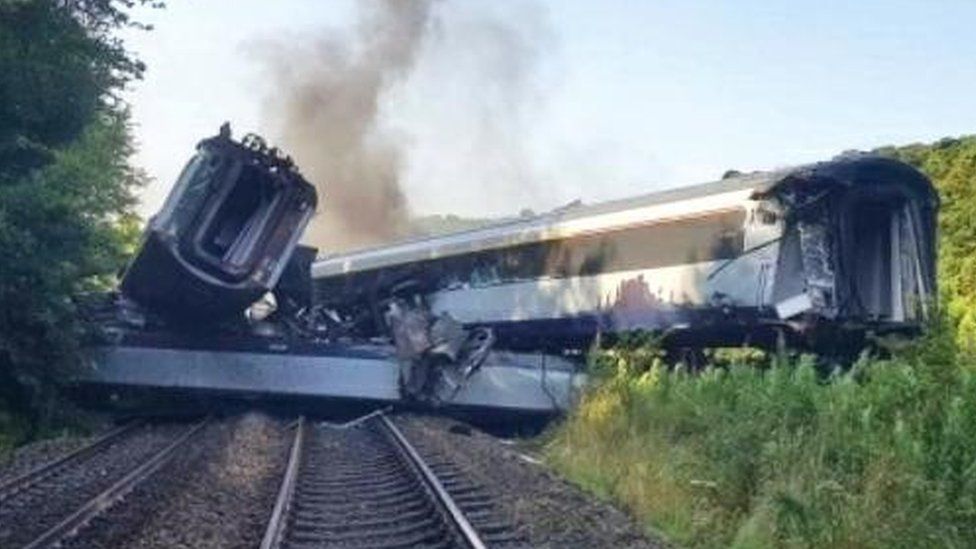
Three dead after passenger train derails near Stonehaven - BBC News

The timing of the scheme conflicted with rewrites, and due to a misguided sense of hope, mixed with a few drops of arrogance, I decided to put the crime pilot aside again. In the moment, it seemed like the right choice: the pilot was revealing deeper layers of problems, and the circumstances around the scheme, I thought, meant I was a shoe-in. I also, for reasons that make even less sense, decided to go full charge with the action pilot, thinking it was near finished (forgetting my own rules on having a varied slate). A few things happened regarding said scheme, which I cannot put up for public knowledge at this time, that meant it was not to be, and for reasons which I still have questions over.

At this point, I was feeling miserable. I had taken a gamble and it completely blew up in my face. Thankfully, it wasn't all gloom: I had kept in touch with a script editor-turned-producer from Doctors, who I sent over a script to. My own manners and diligence had, at least, granted me this much needed lifeline.

Jul-Sept (Summer): 

And here begins my Doctors journey. The script was liked, passed onto another script editor, Mary Flannigan, and ta-da, I was on the Writer's scheme. I've got posts planned to detail the process further, but over the coming months, I would pitch, draft and rewrite a trial script for the show under Mary's guidance. After what had happened with the 'other' show, this was such a boost and I loved the experience. 

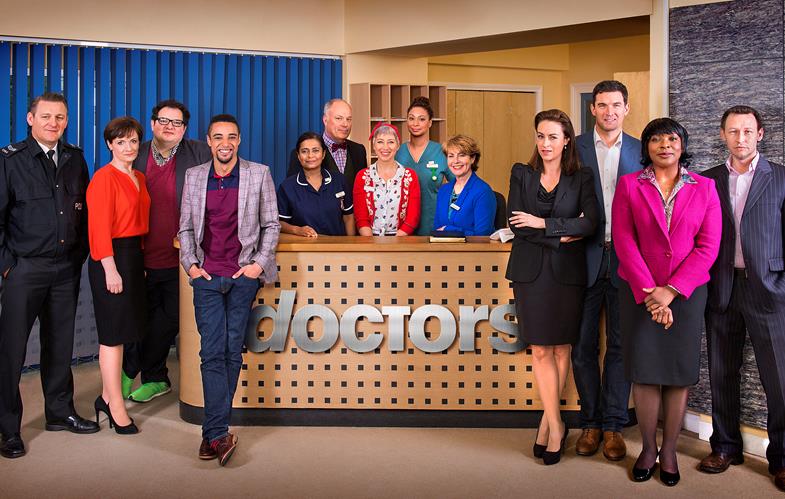
https://www.bbcstudios.com/media/2743/doctors.jpg

Plus, with my first shot in, I could start to think about getting outside again. I went, for the first time in my life, office hunting. It's a minefield, to put it lightly. Eventually, however, I found just the place and began to work from there.

As for the action pilot... I had begun to reversion it, trying to solve a problem around the protagonists that emerged in notes. What started out as something closer to Donnie Brasco was starting to drift into more of a mother-son story with this element of homegrown fascism. It wasn't a bad approach, and I thought it would add a lot of intensity and action to the project. However, what I should've realized, as the drafts and brainstorms worn on, was that I had screwed up. Not here, but back to the project's origins. I hadn't done my due diligence and was building on weak foundations, with a script that ended up more mimicking other shows than being its own thing.  

How had this happened: anxieties. I was worried about getting work and chasing shows I liked, that I wasn't paying attention to the right things. A writer must endeavor to maintain a clear and cool head in tough times, otherwise this can happen.

Oct-Dec (Winter again): 

The action pilot, not unlike a plane featured in it, finally crashed here. A last ditch effort to rescue the project by doing more a Shakespearean family tragedy, trying to add dimension to the lead, was a no-go. I felt awful: months of work and after all that, nothing to show for it. In two years, no new spec.

Doctors, thankfully, rode to the rescue again: I completed the scheme and secured the big prize: getting to write my first broadcast TV drama script. As of writing this, still on the treatment stage, but considering how fast the scheme went by, and what had happened earlier in the year, it was nothing short of a miracle. In addition, ITV called out yet again, with me landing on the 2021 Original Voices scheme, this time for Emmerdale. After a fun zoom workshop, I got to draft half an episode of a hypothetical episode.  In that same week, I attended the launch of Underlying Health Condition, and did some pitches for a major northern production company, so hey, the year ends on a bang!

Returning to the above question, did I accomplish everything I wanted? No. The saying 'one step forward and two steps back' is an apt summary of 2021: I am grateful for the success I did have. Breaking the continuing drama deadlock is a huge win, whatever else can be said. But where I failed, indisputably, was in craft: I did not grow as much as I had wanted to, and in turn, hurt my slate. I forgot basic principles and charged into situations with the wrong mindset. Never put your eggs on one basket, always spread yourself out and never take anything for granted.

 If I want 2022 to really hit the heights, changes will have to be implemented and certain tenets revisited. Discipline needs to be re-instilled: I fought hard to get here, and I'm not backing down.

Tuesday, 19 October 2021

I'm working on BBC's Doctors

So, I finally have some work news and it's a whopper: I have just gotten a place on BBC One's Doctors, following completion of their writers scheme. Basically, it was a trial to write on the long running drama about a medical practice in Birmingham. The series follows the lives of several GPs and staff at the Mill Health Centre. There's love, there's laughs, there's loss and always a new patient with some new problem every day of the working week! 
 
As I succeeded to the script editor's satisfaction with said practice episode, now I get the real deal: pitching (and hopefully then scripting) my first broadcast drama credit.
 
 BBC Doctors (@BBCDoctors) / Twitter
 
It's been quite a trek to get here, having tried to get on the scheme two years ago, and not landing it. (On the flip side, it's a reminder to be gracious, as that script editor went onto become a producer and put me forward this time when I showed him a new, and better, script). I do intend to do a full post on the scheme and how the process to develop a Doctors episode works, but sufficed to say, do not let the quaintness fool you: this is a tough and demanding gig.
 
However, I'm really excited to get cracking on the real deal in the coming weeks, and big, big thanks to Mary Flanigan (no J, as she made very clear!) and Simon Curtis, for giving me this opportunity, as well as Michelle Goode of Writersofluid, whose notes helped polish the drama script that got me onto the trial in the first place. And in true awards tradition, not forgetting my friends and family, who've cheered me on through not just this, but last year and a bit as I've navigated a turbulent industry and media landscape.