Showing posts with label ITV Original Voices. Show all posts

Sunday, 11 December 2022

Screenwriting Professionally: 2022 edition

Another year, another time to reflect on the highs and lows of my screenwriting efforts. Some big pushes, some amazing experiences, and some terrible reversals. I was also able to finally travel again after nearly three years of being stuck in London, so huzzah!


I had dubbed 2021 as being 'one step forward and two steps back'. Is that also an apt summary of 2022, per what I just wrote? Well, that'll take a bit longer to explain. No more preamble, let's just go!

Jan-Mar (Winter): 

In past entries, I've written that this is the 'quiet' period of the year for me. Not so this time - a few days in, an email lands in my inbox and BAM, won ITV Original Voices and got to be one of the four placements on Emmerdale. It would be an even split - part done at home, part hauling myself up to Leeds and getting to work in ITV Studios. I got the second slot, meaning my tour of duty would start in March.

Don't think that meant I was slacking off though: I was grinding away a pitch for my episode of Doctors. I had sent a script off to a lovely producer on River City. I also got hired to consult on a children's book about disabilities, being published by none other than Penguin Random House (thank you Laura Henry-Allain). A picture book for little kids and their families, it offered a simple and colourful introduction and guide to disabilities, what they entail and how to make a better world for them. It aimed to be supportive, thoughtful and celebratory - no tragedy or sadness, here!

I wished for so long to have things pep up at the start of a year - well, I got it!


Apr-Jun (Spring):  

Busy busy busy! Emmerdale was a rollercoaster, going from storylining to script editing to finally a trial script. Always on my toes and always new challenges, surrounded by a fantastically helpful team. Those were some lively rooms, with no shortage of jokes (and sweet treats to boost morale!) and I even got to visit the interior sets - the Woolpack, the various houses, the prop room, all very cool.


And if you think that was all on my plate, oh ho ho no! I was doing a long overdue rewrite on the pilot script for Brenda and Effie, aiming to extract more from the wonderfully wacky world of Paul Magrs' unique imagination. River City got back to me in remarkable time, we got chatting and I was eventually able to set up for my own episode (bypassing the shadow scheme used by other soaps). It was frantic and tiring, but you know what? It was also exhilarating. Years of strife and struggle, doubt and fears over my own ability, and here was not one but two major UK dramas validating my ability.

It wasn't all sunshine, however: on top of a string of annoying stomach bugs, I also found Doctors sputtering a bit - there was a change in script editors, which left my pitch needing to undergo more rewrites. To be clear, the new person (or interim, rather) was very nice and helpful, but it was now approaching half a year since I'd been given the go-ahead to do an episode, and still it wasn't moving as I'd have liked it to. In addition, due to the new workload, all work on original specs had to stop, meaning I was now two years without a new spec available for my agent. Still, better money coming in than not.

Jul-Sept (Summer): 

And here comes the not-fun part of this trip down memory lane. I wrapped Brenda & Effie and then dove into River City. Got my first payment for the script, which I proudly showed my folks - I HAD MADE IT! What was meant to be the culmination of my journey thus far, the next step into television drama, however, turned into a crushing defeat. So enraptured in my own desire for success was I, I wasn't taking my notice of my own wellbeing. After three years of no real break or holiday (if I wasn't writing, I was planning or doing some other work), my mind was out of it. I hadn't seen my brother or my nephew in even longer, missing out on seeing him grow up. I wasn't spotting things in my work, and that's when mistakes started happening. Big mistakes.

BBC Scotland - River City

I wasn't happy - every rewrite just didn't sit right with me. Something was missing, something wasn't clicking. I hadn't got the voice of the show right, even if I was writing passable drama with proper structure. With feedback and deadlines tight, an ability to recalibrate was also not on the cards. I was up at dawn, pounding out words without the passion or fun that should come with the craft. It was monotonous, draining and my desperation to finally conquer a personal milestone was likely all that was keeping me chugging. Until I got the phone call that is.

It hurt. The River City staff were kind and graceful, don't misunderstand, but I was kicking myself. I hadn't seen the problems, and now, it was too late. I made a decision: I had to get out. Get out of London, get out of the UK, just get away from writing for a while. Recharge. Re-evaluate. Clear my head and see what changes needed to be done. So, I joined my family over in Spain for their holiday, met up with my brother (but not my nephew, alas) and took the clean country air. No internet, just food and folks. It was exactly what I had been needing for a long time.


Oct-Dec (Winter again): 

Coming back to the UK (and boy howdy, had things happened in my absence!), I knew what I needed to do: Get my passion back and write original specs. How? By completely upending my writing methodology and routine, taking help from The Organized Writer by Anthony Johnston. A complete rethink of how I scheduled my day and how much work I took on: if I was to make things right and put myself back on track, I needed to work smarter, not harder. Split the day up by projects into short, manageable chunks.

Result: most output I've done in a long time, with stress down and some comprehensive treatments finally written. They currently comprise a cosy crime, a thriller and a teen drama, with some other stuff kicking around. After such a long gap, it feels incredible.

And  that's not all either: been talking to some shows, so see what comes of that; done some more consultation work on the disability book as well as on a children's project. Doctors is still an unknown, though conversations have been happening.


'One step forward and two steps back': to answer myself, is it an accurate summary of 2022? I mean, did I really go backwards at all? I am still grateful for the successes I did have, even with my loss. I got right into the beating hearts of major shows and learnt a lot, even revising and changing some of my own methods along the way. I didn't hit my big target, but I hit smaller ones along the way.

Most important, and this is another point I raised in the last recap: I implemented long overdue changes to how I work. It's a shame it took what it took, but I'm glad for it. We can get so buried in our work and dreams that we forget to take a step back and realize that something isn't working anymore. We need to be able to tap the brakes and rejig: even a few days away can do wonders to clean the cobwebs.

What do I want out of 2023? Well aside from the usual of gigs and pay, being able to get the new specs, however they turn out, out into the industry. Variety is not just the spice of life, but also of an artistic career, and I want to get into more exciting and thrilling genres of TV. I know I have more to offer and i want to showcase that. Film? One day perhaps...

Monday, 10 January 2022

I'm joining Emmerdale (ITV Original Voices 2021)

Only a few months after my big score on BBC's Doctors, this happens. 

I completed the 2021 ITV Original Voices scheme (you may recall I did the 2019 intake for Coronation Street, but didn't make the final four. If you want to refresh, or learn about it if you're new, here) and got chosen to do a three-month comprehensive placement in the story and script departments of this long-running country drama. It's not unlike the Writer's Scheme from Doctors, but more expansive: you learn every step that it takes to make an episode. At the end, I do another shadow/trial script for the show. If they like it, well, who knows what opportunities arise?

It is amusing for me to get this: Emmerdale has been a constant in my life, coming in and out. Being the son of Spanish migrants who grew up rural, the show always gave me a cozy nostalgic feeling when I was away from Spain. Back when I was at Met Film School, doing my masters in screenwriting, I met none other than head honcho of the ITV soaps, John Whiston, down in London. Really nice guy, had lots of advice about television and we stayed in touch since. He even read and really liked a script of mine!

So, a big fat thanks to everyone on the Emmerdale team, for giving me this opportunity, as well as Michelle Goode of Writersofluid, whose notes helped the script that got me onto both Original Voices schemes, as well as on Doctors (a reminder that a good script keeps on giving and giving). And not forgetting my friends and family, who've cheered me on as the application and test script for this part of the scheme were done on super-tight turnaround. Including the great Mr. Josh Merritt, a fine artist in his own right, cheerleading me on.

Monday, 27 December 2021

Screenwriting Professionally: 2021 edition

In what's become an annual tradition, I recount the highs and lows of my screenwriting efforts in the last year. A special year indeed: 2021 was my first year as an agented writer, thanks to the great Andy Townsend. It marked my first steps into broadcast drama and was the first time, in nearly a year, that I was able to start working outside again, as is my preference. The COVID pandemic had been, and still is, profoundly surreal, and trying to get back into 'the swing' after such a seismic shift in culture and society has been tricky.

Industries in 2021 - Economist Intelligence Unit

Has it been a better year than 2020? A firm YES - vaccinated, got talking to industry folk again and my productivity was up a good 100% compared to said prior. Was it a good year, for me? Did I achieve my own goals and did I grow as a writer? That is much more complicated to answer.

 
Jan-Mar (Winter): 

At first, the year started relatively quiet and slow - with my vaccine eligibility still months off, I was endeavouring to power through my action drama pilot, best as I could. I had been tinkering away on it since last autumn, believing it was a great new challenge, as well as showcasing my ability to write setpieces and something with a faster pace. Writing from home, given I live in a flat with others, was incredibly difficult: always distractions.

On the flip side, however, I progressed through the BBC New Voices scheme from last year. Now I got to do a Writer's room for series 2 of Jojo & Gran Gran (a Cbeebies megahit). Working with the producers and script editors of the series to conjure up stories and learn the particular flavour of the show was indeed a lot of fun. I even got to make the acquaintance of its lovely creator, Laura Henry-Allain.

Apr-Jun (Spring):   

Now this period ended very differently to how it started: work slogged on with the action pilot, but that lack of 'space' was possibly the worst it ever was. Work that should've been a few hours took days, if not weeks, to turn around. No matter how bad I wanted it, it was hard to muster up the energy. Add to that, a family health scare, and it was rough.

There appeared to be two bright spots amidst all this. Two things that could turn it around: first was my agent liked an old crime spec I had on the backburner, which needed some punch ups. The other was a new disability initiative on one of the continuing dramas, which itself was partially following through an earlier script submission I had made to the production team, which they had liked. If I could land these, the blockage would finally clear and I'd be back, right into the heart of the action. A new submission in a lucrative genre, and a shot on a beloved show.

And it all went wrong.

Three dead after passenger train derails near Stonehaven - BBC News

The timing of the scheme conflicted with rewrites, and due to a misguided sense of hope, mixed with a few drops of arrogance, I decided to put the crime pilot aside again. In the moment, it seemed like the right choice: the pilot was revealing deeper layers of problems, and the circumstances around the scheme, I thought, meant I was a shoe-in. I also, for reasons that make even less sense, decided to go full charge with the action pilot, thinking it was near finished (forgetting my own rules on having a varied slate). A few things happened regarding said scheme, which I cannot put up for public knowledge at this time, that meant it was not to be, and for reasons which I still have questions over.

At this point, I was feeling miserable. I had taken a gamble and it completely blew up in my face. Thankfully, it wasn't all gloom: I had kept in touch with a script editor-turned-producer from Doctors, who I sent over a script to. My own manners and diligence had, at least, granted me this much needed lifeline.

Jul-Sept (Summer): 

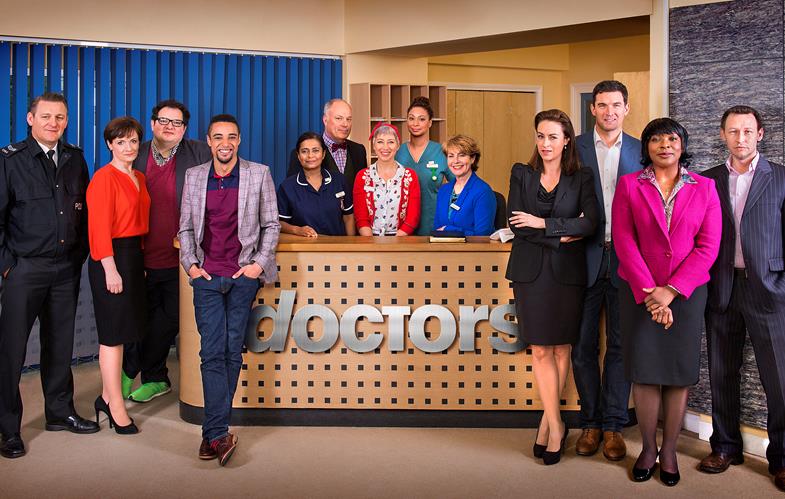
And here begins my Doctors journey. The script was liked, passed onto another script editor, Mary Flannigan, and ta-da, I was on the Writer's scheme. I've got posts planned to detail the process further, but over the coming months, I would pitch, draft and rewrite a trial script for the show under Mary's guidance. After what had happened with the 'other' show, this was such a boost and I loved the experience. 

https://www.bbcstudios.com/media/2743/doctors.jpg

Plus, with my first shot in, I could start to think about getting outside again. I went, for the first time in my life, office hunting. It's a minefield, to put it lightly. Eventually, however, I found just the place and began to work from there.

As for the action pilot... I had begun to reversion it, trying to solve a problem around the protagonists that emerged in notes. What started out as something closer to Donnie Brasco was starting to drift into more of a mother-son story with this element of homegrown fascism. It wasn't a bad approach, and I thought it would add a lot of intensity and action to the project. However, what I should've realized, as the drafts and brainstorms worn on, was that I had screwed up. Not here, but back to the project's origins. I hadn't done my due diligence and was building on weak foundations, with a script that ended up more mimicking other shows than being its own thing.  

How had this happened: anxieties. I was worried about getting work and chasing shows I liked, that I wasn't paying attention to the right things. A writer must endeavor to maintain a clear and cool head in tough times, otherwise this can happen.

Oct-Dec (Winter again): 

The action pilot, not unlike a plane featured in it, finally crashed here. A last ditch effort to rescue the project by doing more a Shakespearean family tragedy, trying to add dimension to the lead, was a no-go. I felt awful: months of work and after all that, nothing to show for it. In two years, no new spec.

Doctors, thankfully, rode to the rescue again: I completed the scheme and secured the big prize: getting to write my first broadcast TV drama script. As of writing this, still on the treatment stage, but considering how fast the scheme went by, and what had happened earlier in the year, it was nothing short of a miracle. In addition, ITV called out yet again, with me landing on the 2021 Original Voices scheme, this time for Emmerdale. After a fun zoom workshop, I got to draft half an episode of a hypothetical episode.  In that same week, I attended the launch of Underlying Health Condition, and did some pitches for a major northern production company, so hey, the year ends on a bang!

Returning to the above question, did I accomplish everything I wanted? No. The saying 'one step forward and two steps back' is an apt summary of 2021: I am grateful for the success I did have. Breaking the continuing drama deadlock is a huge win, whatever else can be said. But where I failed, indisputably, was in craft: I did not grow as much as I had wanted to, and in turn, hurt my slate. I forgot basic principles and charged into situations with the wrong mindset. Never put your eggs on one basket, always spread yourself out and never take anything for granted.

 If I want 2022 to really hit the heights, changes will have to be implemented and certain tenets revisited. Discipline needs to be re-instilled: I fought hard to get here, and I'm not backing down.

Friday, 7 February 2020

Diary of a Spec Script Day 32-34 (February 1st-3rd)

The work of honing and expanding a treatment gets underway. In revisions, I find it good to take your time and really work on individual scenes - especially ones that gives us a greater lens into the chaarcter's mind and psychology. Even in an ostensible old-school-esque adventure yearn involving lost Russian treasure, it's still important to ensure consistent and interesting characters who gain something out of the experience beyond material wealth. In this case, it's a story about ideals and expectations - how we can have something set in our minds, how we get disappointed, and how learn to accept, and possibly even love, the change.

Something which I got from my time on the Corrie scheme was the idea, more so than I had done previously, to treat every paragraph in the treatment like a scene or beat. In the past, I tended to be less strict, allowing one scene to occupy multiple paragraphs to detail and pull it out as much as I could. However, being direct and to the point is an important component of screenwriting and, to be quite frank, if you can say something with brevity, then clearly you've not thought it through enough and are just writing filler.

Indeed, it is tempting to throw in loads of trivial details to pad out a treatment - here is where you can be tempted to go really purple prose in your writing. Now, sometimes, there is leeway: if building up a picture of the world or environmnet helps you decode or unravel the character, then that's fine. But exorbitant detail about things like clothing, or over-descriptive actions, or just minor elements of the scene that don't connect to the core dramatic action - ditch them.

Something else that I'd like to highlight - what happens when you don't know everything that a character will do, or how a scene will play out? Is it right or proper to force yourself to slow down to really finetune one element, or do you just move on? Now, you might think it's the former, since I've talked at length how this treatment was going to be a more deliberate affair than past ones. However, I take the cue from C. Robert Cargill on this - if in doubt, just put in a placeholder for what you want to happen in the scene. Remember, when you write on spec, you're on no one's schedule but yours - do what you have to, but getting it right is more important than being a perfectionist.

Next time, onto the step outlines. Let's see what ends up changing.


Prev                                                                                                                                                Next

Friday, 13 December 2019

Storylining for Coronation Street - a workshop experience

As part of the 2019 ITV Original Voices scheme, I was invited up with other BAME and disabled writers to attend a day-long masterclass/simulation of working on the storylines for the long-running and much loved drama Coronation Street. Departing London while still dark, finally diving into a three-year-waiting copy of Anno Dracula for entertainment, I found myself up in chilly Salford's MediaCity, where ITV and BBC stand side-by-side across the water.


Along with about 19 other writers, we were guided up into the cosy Corrie offices in ITV Studios and met the story team, like the wonderful Lindsay Williams. They talked us through the day's itinerary, got everyone introduced through an ice breaker over croissants and coffee, and then walked us through the process of making Corrie:

It starts with the story team: they meet, generate ideas, map them out ala a writers' room board and then go off and break those down into indivudal storylines. Following revisions and more meetings, these are then handed off the writers.

Actually, let me present this easy list to detail the process:
  1. Story conference - every 4 weeks, for 6x4 Episode blocks.
  2. Board Planning - A-E Plots and Arcs.
  3. Storylines - Moving forward, Producers offer notes.
  4. Breakdowns - exactly what it sounds like.
  5. Commissioning
  6. 1st Draft Meeting - The writer has ten weeks to write their episode's first draft. After, given notes from Producers and Script Editor.
  7. 2nd Draft Meeting - Now, the writer has 48 hours to write the next draft. Notes from Producers, Script Editors, Director and production team.
  8. Continuity Read and 3rd Draft - Now writing time is cut to 24 hours. Notes aggain.
  9. Shooting Script published.
  10. Amendments - any last minute tweaks/changes.
Armed with that knowledge, we were broken off into groups and set a task: brainstorm our own storyline for the next two eps (Monday 2, 7:30 and 8:30), following on from Friday's episodes. We had a choice of Jade and Hope (the obssession storyline), Roy and Nina (the more grounded care storyline), and Michelle and Robert (the big revenge storyline). I was in the Roy team and, with laptop and notepad, got to work with my team, conjuring up where the rocky relationship could go next.

There was a definite energy and kinesia there - it was so much fun just brainstorming and throwing ideas around. I found I rather missed this since the Belfast room I did for Pablo.

Oh, and part way, we were given a tour of the Corrie set, so huzzah!

Get a load of that mug...

Later, we presented our storyline to the groups and story team. We were met with strong approval and felt quite chuffed about that. So, we were sent off home with our assignment - write two episodes (one night's) worth of storylines, from our group's work, and send them in Sunday to be judged. From there, well, some may get asked for revisions (like me), and then after, a lucky four will be selected to work on the series.

This was a very rewarding and valuable experience. A stereotype does exist of soaps/continuing drama as this lazy, silly, harrowed type of project, but it's actually a well-oiled machine and one that does genuinely care about story. If you've been running as long as Corrie has, well, something must be working. Indeed, the system they use is fairly close to other shows, such as Eastenders (though some, like Doctors, can be looser with writers pitching their own stories).

I also felt my ability to outline/write treatments did get stronger from the exercise, since every paragraph counted and we had only 8 to play with for a whole episode. Over the last year I've definitely put more into planning my scripts in detail, so this was a welcome booster.