Showing posts with label book review. Show all posts

Monday, 1 May 2023

Review: Haunt: Screenplay & Filmmaker Diaries

With 65 having done its run in theatres, I figured why not share a recent read of mine - the Haunt: Screenplay & Filmmaker Diaries. Writer-directors Scott Beck and Bryan Woods (also the minds behind A Quiet Place) made a little slasher called Haunt back in 2019, a twisted take on chintzy haunted houses where a group of teens get stuck in very real danger. Overseen by Eli Roth, Haunt used its low budget and small cast to its advantage, creating a small but distinct little horror. 

So in 2022, the duo brought out this book, a diary documenting their lives as working Hollywood screenwriters while also juggling directing their horror film. The pair discuss meetings, foods, movies they've seen and even changes in their own lives (like fatherhood and marriage), as the film lumbers from script to production to finished film. It comes with a draft of the Haunt script as a bonus.

Books like this are always deeply fascinating for me - I love getting inside other storytellers' minds and seeing how they tick; how they approach challenges and what are things to avoid. Beck and Woods, writing in a simple, conversational manner, offer this in easy, digestible chunks. They go over every issue that comes with making a film - pitching, writing, rewriting, notes, meeting, casting, budget, working with crew, getting locations, editing, balancing work and home life and then getting it out there. For every success, there's a bunch of setbacks, mistakes and sudden left turns, forcing the duo to think fast and still balance everything. It has the peaks and valleys of good drama, yet Beck and Woods never become sappy or maudlin - they acknowledge the pain, but endeavor to push on and enjoy the good parts.

The script draft, which follows a quick but neat interview with Scott McConnell (Gointothestory.com), was not only a fun read, but prompted some interesting questions about how the duo uses formatting to create a particular effect on the reader. Throughout, the script will have onomatopoeia to punctuate sounds and movements in scenes, as well as use the spacing and position of words themselves to create a sense of distance and atmosphere. The effect is a highly visual and evocative read that makes the script pop, even as the material itself is very firmly in its genre. 

Yet, it never feels gimmicky or lazy: it always done to enhance that haunted house feeling, giving it a sense of place and style. In my time as a script reader I've seen exactly this sort of stuff done wrong. VERY wrong - quirky formatting done to mask a generic, unengaging script. I and certainly no company is impressed by 2004-level Word Art or goofy Photoshop. However, Beck and Woods do it right - the story is set in a mad haunted house attraction, so it creates the sense of being in a twisty, turny, spooky place. Form and substance marry up.

A definite recommend, even if you're not a horror hound and just like a peek behind the curtain.

Wednesday, 1 July 2020

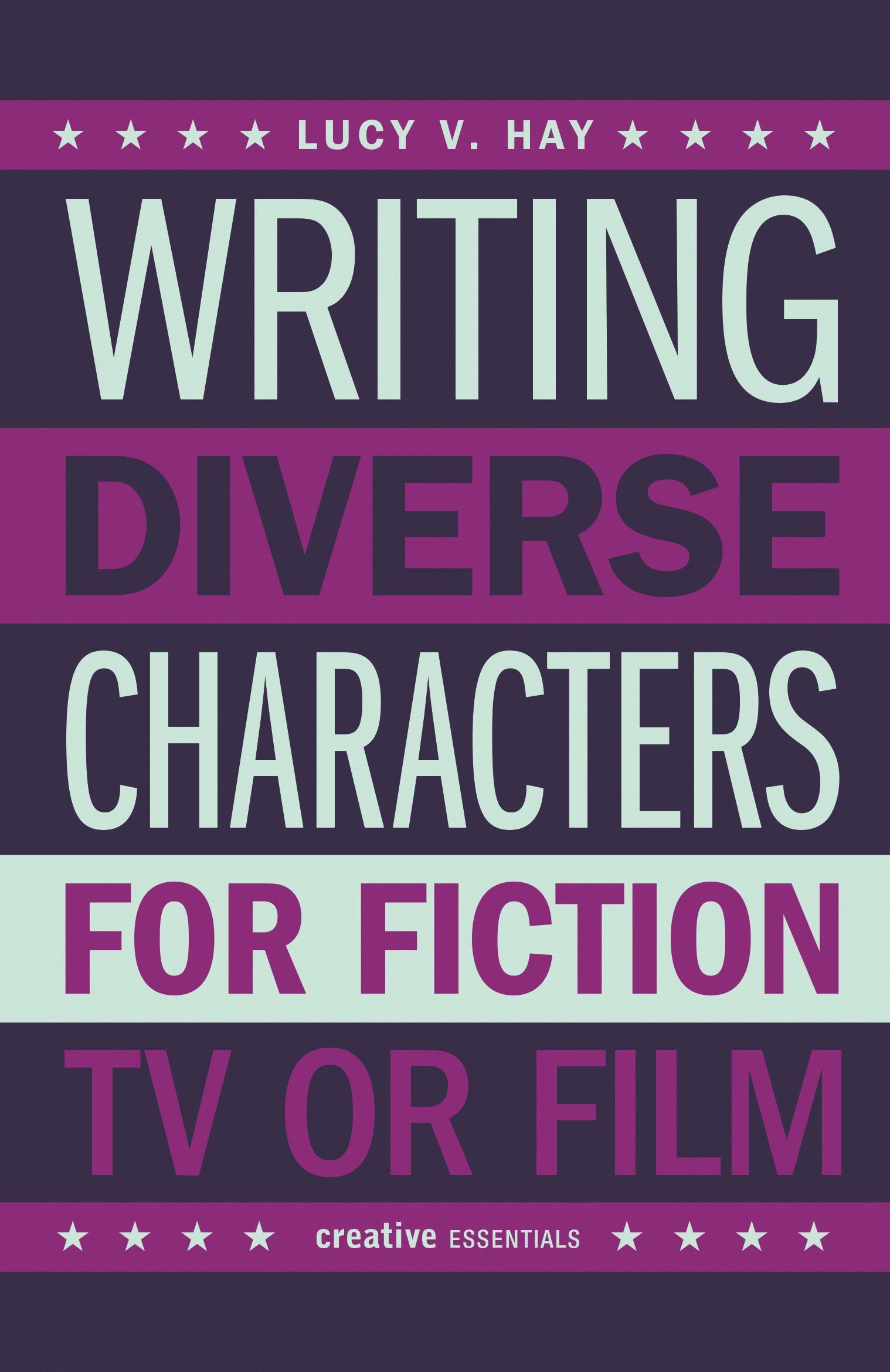
Review: Writing Diverse Characters for Fiction, TV or Film

In a time where things are uncertain in film and television, a question that gained renewed relevance is diversity - how do we ensure people form different communities and backgrounds don't lose out on work, training and opportunities as production crawls back to life? Just as important, how do we reflect that in our writing? How do we show off the multicultural society and times in which we live, in a dramatic and compelling plot?

Consultant and Bang2Write head honcha Lucy V. Hay, a name familiar to my readers and anyone in the online writing community, is no stranger to providing writing advice, as well as advocating for more thoughtful debate and open-mindedness in writers. This crystalizes in arguably her greatest book, Writing Diverse Characters for Fiction, TV or Film, as she discusses the value of diversity in novels and screenplays, how writers can better implement it without being tokenistic, and contextualises it with current success stories in media.


https://images-na.ssl-images-amazon.com/images/I/717bAxRTfFL.jpg

Combining industry insight with a good all-rounder on character, Hay provides a guidebook built on what feels like a painfully obvious yet overlooked aspect of writing: WHO your characters are and what they represent. Hay, chapter by chapter, writes in a bubbly and lively style, making the many stats from surveys and institutes regarding representation in media and literature, much more digestible than it should be. Through this, she then breaks down, in wholly unpretentious terms, how this correlates to spec scripts and books, the mistakes new writers make and how to fix them. 


She's comprehensive with character too: not only going over the old chestnuts of heroes and their character development arcs, but also encouraging you to think about your supporting cast and even incidental/background characters. These kinds of 'blindspots' are something every writer has, at some point, done in their writing. Hay is not interested in shaming you - rather, she just wants you to engage more thoroughly with your process and ask 'why?' Indeed, that warm tone I described above helps what could be patronizing come off as not only welcome, but compels you to want to do better.

https://franziskaeberlein.myblog.arts.ac.uk/files/2018/12/Untitled-design-3.png

Hay, however, is also critical of the pro, as well as the anti-side, when it comes to this discussion, arguing that true representation should not just be about simply heroes, nor the ever-sticky question of 'role models' in stories that defy the standard white-hetero-male paradigmn that, regardless of your own politics or tastes, has been the default for a long time in media and literary canons. Why, Hay posits, can't women, BAME and LGBT persons get the fun parts like villains or sidekicks? Why does every story have to draw attention to their condition or orientation: why can't they just have adventures and escapades like the regular white guys in movies and TV shows do? In turn, from an industry perspective, this could only broaden the available opportunities for people from under-repped backgrounds.

Writing Diverse Characters for Fiction, TV or Film is, to put it succinctly, a great primer on creating layered and varied casts. It comes highly recommended, as does her free E-book, Writing Female Characters.

Tuesday, 29 January 2019

Review: Writing the Short Film

Short films are, for many a young and new filmmaker, their first step into the business. Make a few, make a good one, you can generate a little buzz about yourself. Give people an idea of what your tastes and strengths are. However, their brief length can pose a challenge for writers, trained or not. So what could help here?


Back in 2004, screenwriting lecturers Cooper and Dancyger decided to add their perspective to the world of screenwriting manuals and bibles, but rather than doing the umpteenth book on features or coming up with another cute name for a three-act reskin, instead tackled the subject of short films. While still framed with Aristotlean principles and act structure, Cooper and Dancyger keep their focus small and tight by analysing and diseecting how the short form tell stories, how to convey information within limited time and what the differences are between feature and short, beyond length.

One of the very few screenwriting tomes exclusively about shorts, and certainly one of the more well known, Cooper and Dancyger deliver a solid enough guide to how all the fundamentals of film narrative (dialogue, characterisation, pacing, want vs need, subtext) can be applied and prepared for the short form, but it is unmistakably the work of academics. As such, the more bold and colourful among ye may be turned off by it. 


Whereas other writing manuals favour a more humourous, conversational style of writing, designed to ease the aspiring writer in and create a sort of bond between guru and pupil, the duo write with a clinical precision and analytical frame of mind. It very much reads like a classroom piece, making the book feel and read more like a collection of university essays than, necessarily, one writer speaking to another in a relatable fashion.


This by no means is a big negative, and Cooper and Dancyger do their best to supply the reader with tools, detailed maps and means to prepare a short screenplay. They frame most of it around a two act principle (though also concede to one act) using some adaptative exercises, tackling the classic Greek myth of Icarus, as well as scenes from shorts they or their students have been involved with, to illustrate their points. It works decently and it never had me confused. Indeed, some of the best parts come from these segments, where they go through revisions and show you how something changed.


Still, it all feels sterile and written without enthusiasm, which can leave it a little dry and ponderous at times. It's more instructive than it is motivational or inspirational, which does align it more with the stereotype of screenwriting books. Do not confuse this with implying the book is sloppy or boring; merely written by observers and analysts of the craft, teaching classes and engaged in an academic discussion of film, versus the more impassioned approach of a guru or working screenwriter of larger projects wanting to share tricks and fun anecdotes. 

On its own merits, Short Film is capably written, well structured and clearly geared at new film students. Indeed, it reads like classroom material: thorough, lengthy but always at an intellectual distance, more a teaching tool than a standalone piece that makes for a good read in its own right.

Monday, 17 December 2018

Review: Dan O'Bannon's Guide to Screenplay Structure

One of the oldest criticisms of screenwriting books is that they are not written by working practitoners (the old chesnut of 'those who cannot do, teach'), thus utterly deligitmsing them. Naturally, I think this stance is more than a little hyperbolic and irrational, but if you have that view on the subject, this one's for you.
 
Dan O'Bannon is the late, great mind behind Alien, Total Recall and Return of the Living Dead. With the aid of friend and collaborator Matt R. Lohr, he delivers a screenwriting book that places emphasis on conflict, as well as creating an exciting three act method called 'Dynamic Structure', derived in part from his background in science. Across linked chapters he breaks down his method, its influences from science like hedonic adaptation, how it applies to several famous films like Psycho and Dumb & Dumber and how you can implement it in your work.

O'Bannon's book is solid enough for your standard discussions on structure, but where it really excels is as a workbook: whereas a lot of tomes will state a bunch of arbitrary rules, O'Bannon regularly encourages you to engage in analysis and ask questions. Whether more literally in the exercises that close each chapter, or more in discussion of what makes effective drama and the place of 'rules' within that. O'Bannon is by no means an adherent: he believes in the uniqueness of your voice and says rules can be bent if they don't aid you. 


His D.S. is less about hitting specific page numbers and more how to consistently excite and wrongfoot an audience. However, he recognises there are fundamentals that stories must adhere to in order to function; chief is conflict, whereby O'Bannon puts focus on giving 'both sides' motivation. Instead of just 'a hero comes up against obstacles', he asks you to also think about the story from the antagonist/obstacle's POV. This, therefore, increases the tension and heightens the stakes as your characters, good or bad, have real, well defined motives that clash and produce richer drama.

As a bonus, he even examines and contasts his D.S. with other paradigms and works, such as McKee, Field and Aristotle. This ends up not being as much of an ego-stroke as one would assume: he acknowledges their historical significance as well as concedes their good points. However, he's not afraid to take them to task: whether it be the arcane thoughts of Aristotle, the strange wording of Lajos Ergi in defining dramatic concepts, or the archness of Field's famous paradigmn. He's not even afraid to acknowledge the limits of his own structure, when he analyzes Lawrence of Arabia. If you want a nice digest of the history of storytelling and dramatic theory, O'Bannon's got you covered.

Granted, the heavy emphasis on structural analysis and conflict does leave the book feeling a little skewed: pacing, characterization, dialogue and theme are all secondary and merely glanced at. O'Bannon doesn't necesserily regard them as inferior, but his emphasis is on effective structure and conflict. These other elements he primarily views as arising from these (character is action and whatnot), rather than dwelling on them as seperate elements. Also, O'Bannon concedes he can offer little meaningful business advice, so those looking for a more well rounded package should look elsewhere. 


However, what it sets out to do it does so with style and relish, making for an engrossing read. If you love genre movies and fiction, O'Bannon's work or haven't cracked the structure code yet, this book is ideal for you.

Monday, 19 November 2018

Review: Adventures in the Screen Trade

On November 16th, screenwriting lost a real legend in the form of William Goldman. Master of both original writing and adaptation, Goldman's resume is filled with multiple titles that most writers would be lucky to have just one of in their entire careers: Butch Cassidy and The Sundance Kid, All The President's Men, Magic, The Great Waldo Pepper, Stepford Wives, A Bridge Too Far, Marathon Man, Misery, Princess Bride, Chaplin and Maverick, as well as assisting on A Few Good Men, Good Will Hunting and Twins.

Playwright, novelist, festival judge, teacher, critic, essayist and having a front-row seat in the New Hollywood of the 1970s, there's a lot to unpack with Goldman. For the aspiring screenwriter, or creator period, or even just movie geek, where do you start? And can you learn anything immediately applicable to craft? Well, part biography, part writing manual, Adventures in the Screen Trade answers with tales of his life, career and views on cinema.


Spanning the late 60s and 70s, the book is split in three: the first is Goldman's views of the then-contemporary industry and is where 'nobody knows anything' comes from. It's more an interesting artifact than wholly applicable to today, though if you follow any Hollywood rag... it may not have have changed all that much in some ways.

The second part is about his films, spanning Charly to A Bridge Too Far, detailing the ups and downs of each project, as well as some unmade ones like his version of The Right Stuff (later adapted by Philip Kaufman) and the musical remake of Grand Hotel. Goldman's skills are in full-force in these emminently readable accounts: it manages a fine balance of being informative and insightful about the ins and outs of filmmaking and storytelling without reading as gossipy, self-congratulatory or even spiteful, despites the missteps and bad luck. Goldman's tone is rather casual but not without some moments of deprecation of his own work and early naivete, and a good sprinkling of wit.

In addition, Goldman spends a good chunk of each chapter talking about his process, discussing how each screenplay represented a different challenge for him. But more than simply memories, Screen Trade comes with a little story about adapting a short story into a screenplay in its third section, Da Vinci. The short story is pretty rudimentary: a story about a little barber's son who becomes entranced with his father's newest hire, a veritable Michelangelo of hair. If you wanted a mini-masterclass in how to adapt a work to film, as well as some good writing primers, this has got you covered.

Honestly, do you need me to say more? Just go out and add this one to your collection. And while you're at it, also check out the sequel, Which Lie Did I Tell? More Adventures in the Screen Trade. It carries through into the 80s and 90s, and not many memoirs can go from crippling depression to stories about gay lions with such grace.

Monday, 22 October 2018

Review: Screenwriting is Rewriting: The Art and Craft of Professional Revision

Given I've made my feelings know about screenwriting gurus and the whole field of writing teaching before, I decided why not jump on the bandwagon's bandwagon and review some books on the subject in a new, ongoing segment? And what better one to start with then one of my personal favourites: Screenwriting is Rewriting: The Art and Craft of Professional Revision by Jack Epps Jr.


The man behind Top Gun, Dick Tracy and Turner & Hooch attacks the rather volumunous world of screenwriting theory with a different perspective and emphasis: instead of long sermons about Aristotle, three act structure and 'negation of negations', Epps focuses more on the actual process of rewriting your screenplay and getting it into the best shape possible. Across linked chapters, he breaks down and discusses ways to identify problems, create game plans and give oneself targets during rewrites to strengthen your craft and content.

Epps' methods may appear, on the surface, to be slower and more lethargic than what we normally associate with rewrites (recommending individual passes over one big attack, as well as lots of planning and detailing), but there is a clear process at work. In each chapter, Epps very plainly breaks down the how, why and what (going through topics like dialogue, characterisation, pacing, scenes) in a manner not disimilar to a good teacher (he is the chair of the School of Cinematic Arts at USC). He even readdresses and recontextualises concepts and processes throughout the book, showing how every piece of a screenplay must be carefully considered and nothing left to luck or chance as they have a knock-on effect on one another.

One of my favourite parts of the whole book is his suggestion of compiling all your notes on a script, and breaking them down by categories (again, character, pace, dialogue and many more subcategories, depending on what detail you like going in) in a type of plan. From there, depending on the project, you can prioritize what the biggest problems are and leave minor stuff till later, drafts or passes. I have found this incredibly useful for my own rewrites on projects and it helped clear so much of the clutter I had had trouble with before. Even his stressing of handwritten notes and twice reading your script, while it may seem a no-duh, only hit home once you try them and realize how much more liberating and clarifying they are. 

 
This more matter of fact approach is the book's greatest strength, feeling completely unpretentious and just focused on giving the writer clear tools on how to make a script better. As a bonus, he even provides examples of his techniques in action, both on his own projects as well as from some of his former students, just to hit home that this is not snake oil. Those with more of a taste for drama/literary theory, however, will not get much from the book's bluntness and mind on application rather than analysis or philosophy. This is a work tome, not a quick or casual read. 


However, there are already plenty of titles that fill that cavity in, and it's good to have something more immediately useful to a practising screenwriter in a market often criticised for not providing such tools. Easily one of the more refreshing titles to have hit the market in some time, Epps provides a book less interested in esoterics and more in practical use to the writer. Highly recommended.

Thursday, 17 May 2018

In Defense of Writing Courses (A Response to Julie Myerson and Sharlene Teo)

So a while back, the internet was the internet and a row kicked off: veteran author Julie Myerson wrote a negative review of debut writer Sharlene Teo's first book, Ponti. In it, she admired Teo's ambition, but faulted the book's prose and use of literary devices. So far, nothing out of the ordinary, but it was this quote that seemed to especially irk people: 'If a more vivid, elastic and relaxed Sharlene Teo is hiding somewhere beneath all this knotty verbiage and MA creative writing-speak, then I wish her lots of luck'. 

And then, a quick glance at the comments or Twitter shows where this went...

DISCLOSURE: I do not know either of these people, condone their actions or have read 'Ponti'. Teo could've taken the criticism better, rather than post up inflammatory twitter posts, but Myerson should've taken her own advice for a 'tougher editor'. The review is a little wonky in structure and lacks a good flow, in addition to the out-of-place potshot that doesn't add anything of critical substance.

While my bread and butter is more screenwriting, anyone within the different writing spheres online has come across the debate on 'learning to write' and academic courses. Some say they teach discipline and widen the palette, others say the best school is read, read and read some more. Some, even more extreme, denounce them as mediocrity factories, churning out formulas and tepid, castrated fiction.

Me? Somewhere in the middle: I believe they can be useful and offer great value, but one needs to be selective. In fact, I argued as much in Part Three of my BA Screenwriting series, where I gave advice to BA film students who sought to become screenwriters via a masters degree.

To reiterate and recontextualise my key points from that piece on the benefits:
  • Careers: Other skillsets and career paths can open themselves up to you, that you wouldn't be exposed to by just reading. Not merely writing for your chosen medium (film, television, novels, comics etc.) but also explore more development roles like reader, editor, teaching and consulting. Indeed, the Internet has lead to an explosion of the latter, as people with prestigious qualifications set up shop to aid others.
  • Professional development: on the course, you'll be getting your material developed, reviewed and critiqued by veterans with whom you develop a relationship with and can turn to for help. You can even, if you ask nicely, get them to read and critique non-course work, or run a CV or cover letter passed for a check. This also covers pitching and getting comfortable talking to others.
  • Work ethic: the structure and deadlines of the course will encourage you to start working more professionally and efficiently on your material. Learning how to turn around an idea into a story, in whatever medium, within a handful of weeks is a useful skill (not to mention, close to what is expected in the business), as well as how to generate multiple ideas.
In addition:
  • Palette widening: You'll be exposed to literary and artistic works that you wouldn't normally come by, depending on your tastes and social circle. You may know some of the bigwigs like Dickens, Austen, Hugo, Shakespeare and Woolf, but what about less 'blockbuster' authors like Maugham, Marlowe and Aeschyles? You may know Jane Austen, but do you know Daisy Miller? Are The Sound and The Fury or Absolom, Absolom titles you'd snap up as soon as another Harry Potter book?
  • History: in addition to reading more, you'll also learn more about the history of your craft. How novels evolved from serialized newspaper and magazine entries; how Campbell's views on mythology inspired some of your favourite franchises; or how stage plays change from Ancient Greece, through Elizabethan England and into the mid to late 20th century, when titans like Miller, Pinter and Williams ran amuck.
  • Network: Yes, yes, this is an old chestnut, but it's true. You never who you'll meet, and what they'll become someday. Never pays to be a dick.
So that's all well good. However, if you read the other article, there were some cons to be raised too:
  • Tutors: Just like with screenwriting gurus or any sort of 'guide', their quality can vary considerably. Some are unpredictable and temperamental, others have no interest in growing their students beyond the classroom. Some are too lax and don't teach proper tools, others are deadset on doing things one way and one way only. Make sure the tutors are either practitioners or come with really strong recommendations (industry or successful ex-students) to avoid this.
  • Module content: There is no point in spending thousands on a course that, yes, can make you write well, but does not prepare you for reality or suggest career options to explore while you prepare your material. Some, sadly, operate on a 'take the money and run' mentality, leaving you adrift with no career guidance and too heavy a focus in one area. Also, how is the course structured? Does it feel like one subject flows into the next, or is it just a random jumble?
  • Reputation: The more presitigious an establishment, the more difficult the entry criteria will be, and just like pricing, this can be a big hurdle. Inversely, the smaller and less well known the school, the higher the chances are that the MA is not very good, especially if it's not a school that primarily specializes heavily in fiction, media or the arts.
Really, it's down to what you're looking for, and where you see yourself in 5-10 years. If you're totally green and can spare the time and money, give it a whirl. Someone more seasoned, they'll just have to decide for themselves.

But what is it that bothers me about the attitude of Myerson and other pros like her who take such a dim view of creative academia? Well, as discussed before in my Defense of Screenwriting Gurus, I believe part of it is the demystificaiton. Like magicians, writers want to guard their tricks and feel special. If you give someone guidleines, well, doesn't that take some of the illusion away? Does it not reduce art to mere blueprints that can be followed by any old Tom, Dick or Henrietta?

But on top of that, the quote alludes to a bigger issue: the notion that said institutions are straitjacketing authors and not allowing them to 'be themselves'. They are breeding some sort of monoculture in art, where everything is the same and there's no room for variation, innovation or originality. After all, how many more YA fantasies; how many more superheroes; how many more stories about drug addiction, mobsters and young people struggling with their sexuality? How much more do we have to deal with snarky or overly melodramatic prose from an emotional young mind? This 'repetition' is what Myerson seems to be jabbing at.

I sympathise with the frustration and need for an easy punching bag: I'm certainly as sick to death of old and overly rigid 'advice' (your character must be X, or you can only use Y with Z in order to create J) constantly being rehashed to green writers as anyone. However, as I argued in the Gurus article, I consider this a misreading of creative education: courses and teachers are not there to tell students what stories to write, but rather, provide the tools with which they may or may not build them with. The importance of stakes, conflict or theme is no more 'pre-fab storytelling' than functioning equipment and hygiene is an 'option' in cookery.

Art doesn't exist in a vaccum and the most popular works tend to reflect the society and culture they sprang from. Maybe the continued popularity and creation of these specific stories says something about our world? Does the continued popularity fo YA fiction say something about the way we treat the young? Does the continued popularity of superheroes say something about the troubled times we live in, and our desire to have somebody looking out for us? If Teo has a fanbase, maybe that's indicative of Ponti having more meaning than Myerson may be giving credit for.

Should Myerson instead point the finger at lowly readers for propigating these stories by making them so successful? Perhaps at the publishers for creating so much similar content and not diversifying? What of editors being too soft? Maybe Myerson should instead roar at the world around us and ask some harder questions of what these stories and how they're told say about us?

All I know is a tool or aid is what a writer makes of it: classes and teachers will not necessarily make you a master storyteller, but they can be a step towards it. If you want anything bad enough, you'll work hard to get there. But hey, I'm just a lowly script reader and aspriing screenwriter. What do I know? Well, here's novelist Chuck Wendig's thoughts on the subject: http://terribleminds.com/ramble/2013/01/10/a-short-rant-on-the-you-cant-teach-writing-meme/

Sunday, 30 July 2017

Monthly Round-Up (Reviews, articles and more) - July 2017

So, it's been a bit of a wet and windy summer in the UK, but hey, it's a proper English summer. I'm currently hard at work on a new TV pilot, as well as planning a couple of projects for the future. As always, follow my Official Facebook, for all news and updates:
https://www.facebook.com/abeldiazwrites/

Now, onto the reviews. On Blasting News, I cover the subversive Sherlock Holmes novel, 'The Veiled Detective': http://uk.blastingnews.com/opinion/2017/06/the-veiled-detective-review-sherlock-inverted-001812973.html

Now, back to ThirdActFilm's WHOCap reviews. I bring Series 10 to a close when 'The Doctor Falls':
http://thirdactfilm.com/whocap-review-the-doctor-falls-s10-ep12/


Next, I applaud the webhead's arrival in the MCU with 'Spider-man Homecoming':
http://thirdactfilm.com/spider-man-homecoming-review/

Then, I tackle an 80s comedy giant in a Throwback review for 'Police Academy'':
http://thirdactfilm.com/throwback-review-police-academy-1984/

I then do another top 4 list of war movies, inspired by Nolan's 'Dunkirk':
http://thirdactfilm.com/like-dunkirk-heres-more-war-movies-youll-love/


And finally, I tackle one of the mythical 'missing stories' from Classic Who, 'The Massacre of St Bartholomew's Eve': http://thirdactfilm.com/massacre-of-st-bart-review/

Get your copy of Time Shadows here and support a really good cause for the disabled:
http://pseudoscopepublishing.com/timeshadows/

Sunday, 11 December 2016

Monthly Round-Up (Reviews, articles and more) - December 2016

Happy Holidays everyone!

Now, I'm introducing a new running feature on this blog: a monthly update on all my reviews, articles and other tidbits that aren't my creative projects. This will help ensure a regularity of content, as well as an easy list to access for finding certain works.

As always, you can also keep up with my Official Facebook, for even more news and updates as they happen relating to projects:
https://www.facebook.com/abeldiazwrites/

So, onto my newest pieces and reviews. First off, I've started reviewing novels on Blasting News UK. Specifically, Sherlock Holmes books. First, the South African tale of diamonds and murder, 'Murder at Sorrow's Crown':
http://uk.blastingnews.com/opinion/2016/11/murder-at-sorrow-s-crown-review-a-superb-sherlock-debut-00126846http://savagescribe.deviantart.com/journal/?edit5.html

 
Next, an American tale involving a Holmes imposter in 'The Counterfeit Detective':
http://uk.blastingnews.com/opinion/2016/11/the-counterfeit-detective-review-an-american-sherlock-adventure-001285835.html

And finally, Sherlock and Tarzan meet in the very jokey 'The Peerless Peer' from sci-fi legend Philip Jose Farmer:
http://uk.blastingnews.com/opinion/2016/12/the-peerless-peer-review-a-sherlock-and-tarzan-team-up-001301955.html

Now, for a new first, I do a trailer reaction and review for 'Spider-Man Homecoming':
http://uk.blastingnews.com/opinion/2016/12/spider-man-homecoming-trailer-reaction-and-review-001319191.html


Over on ThirdActFilm, I review the 2001 thriller 'The Pledge', starring Jack Nicholson:
http://thirdactfilm.com/throwback-review-the-pledge-2001/

An article on The Sweatbox, a documentary about Sting and the troubled production of Disney's 'The Emperor's New Groove':
http://thirdactfilm.com/the-sweatbox-the-documentary-disney-tried-bury/

An article on Doctor Who's future under Chris Chibnall, in light of recent news:
http://thirdactfilm.com/doctor-whos-future-under-chris-chibnall/


And lastly, I review the 1998 thriller spoof 'Wrongfully Accused', starring Leslie Nielsen:
http://thirdactfilm.com/throwback-review-wrongfully-accused-1998/

It's been a long and trying year, but I'm always looking ahead and building myself up. Enjoy and, once again, have a very, very Happy Christmas.