Showing posts with label reference book. Show all posts

Friday, 1 December 2023

Books for Writing in Genres - A Handy Guide

Every writer, at some point, has gone 'I'd like to try something new' or 'I've always wanted to write X', but where to start?' You can watch/read your favourites, take notes and study them, but what if you need something more specific? Some type of reference or guidelines, even just something to quickly highlight common tropes you can avoid or find new spins on? 

Well, writing guides to just about every genre in fiction exist, old and new, and many authored by working veterans, are available. Of course, the sheer volume (and then factoring in sites like Amazon permitting self-published works) can be rather daunting and confusing for a newcomer to disentangle. Well today, I'll give that a shot with an easy list of published works: a mix of personal recommendations and ones I've heard on the grapevine.
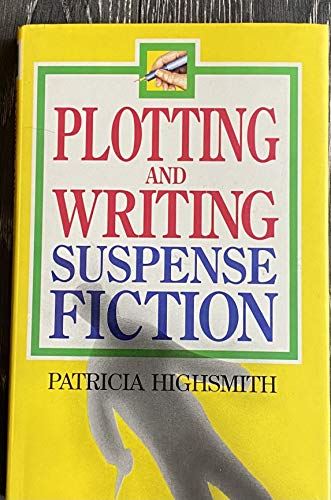
 Plotting and Writing Suspense Fiction - Highsmith, Patricia: 9780715394519  - AbeBooks

This article, for the sake of disclosure, is not sponsored by anyone mentioned - this is just me and me alone.

To be clear, this is not a comprehensive or exhaustive list of genre writing guides, nor is this one about storytelling basics (your Save the Cats etc): I already covered that elsewhere. This is also not a guide to books on entire mediums like film, stage and TV (save one example which I'll explain), career advice (at least, not chiefly) or memoirs by famous writers - this is just for storytelling genres.

There will also be no self-published works (the quality threshold, never mind the sheer number of them, is just too all over the place to be useful or consistent) and I will avoid too many books from within the same series (Teach Yourself and For Dummies do include a number of these guides, if you want an immediate starting point). Last, I will also include, as and when relevant, essay compilations, though this will be geared in the direction of practical writing advice, rather than purely analytical writing.

Crime/Mystery:

  • Writing Crime Fiction by Rosemary Atkinson 
  • How to Write a Damn Good Mystery by James Frey 
  • How to Write a Mystery: A Handbook edited by Lee Child with Laurie R. King
  • Writing the Cozy Mystery by Nancy J. Cohen
  • Writing the Mystery: A Start to Finish Guide for Both Novice and Professional by G. Miki Hayden

Thrillers:

  • Plotting and Writing Suspense Fiction by Patricia Highsmith
  • Writing and Selling Thriller Screenplays: From TV Pilot to Feature Film by Lucy V. Hay

Fantasy/Sci-fi:

  • Wonderbook by Jeff Vandermeer
  • Get Started in Writing Science Fiction and Fantasy by Adam Roberts
  • Making Myths and Magic: A Field Guide to Writing Sci-Fi and Fantasy Novels by Shelley Campbell and Allison Alexander
  • Writing the Science Fiction Film by Robert Grant 
  • Writing Fantasy and Science Fiction by Brian Stableford
Horror:
  • On Writing Horror: A Handbook by the Horror Writers Association, edited by Mort Castle
  • A Sense of Dread: Getting Under the Skin of Horror Screenwriting by Neal Marshall Stevens
  • Horror Screenwriting: The Nature of Fear by Devin Watson

Comedy:

  • How To Write Comedy by Tony Kirwood
  • The Serious Guide to Joke Writing by Sally Holloway
  • Elephant Bucks: An Insider's Guide to Writing for TV Sitcoms by Sheldon Bull
  • The TV Writer's Workbook by Ellen Sadler 
  • The Complete Comedy Writer by Dave Cohen
  • The Hidden Tools of Comedy: The Serious Business of Being Funny by Steve Kaplan

Romance:

  • Writing and Selling - Romantic Comedy Screenplays by Craig Batty & Helen Jacey
  • Writing a Romance Novel For Dummies by Victorine Lieske and Leslie Wainger 
  • (Interestingly, I've noticed romance seems especially dominated by self-published guidebooks. If you wish to give them a go, well, have at it. Just check out the author's credentials to see they are legit.)

Children's/Animation:

  • Writing for Animation by Laura Beaumont - my one cheat on this list as animation is a medium, not a genre unto itself. However, writing is a criminally underdiscussed part of the animation and few blogs and websites mention it either. There's also incredibly few books discussing children's stories, so another strike.
  • Writing for Animation, Comics, and Games by Christy Marx
  • Animation Writing & Development: from script development to pitch by Jean Ann Wright
  • Directing the story: professional storytelling and storyboarding techniques for live action and animation by Francis Glebas
  • How to Write for Animation by Jeffrey Scott
  • Creating Animated Cartoons with Character by Joe Murray (thanks to Liam Swann for these suggestions!)
  • The Magic Words: Writing Great Books for Children and Young Adults by Cheryl B. Klein 
  • Writing for Children by Pamela Cleaver
  • Writing Picture Books by Ann Whitford Paul

Hope this little compilation has helped guide you on the right road!

Monday, 20 August 2018

Reference Books - The Writer's Secret Weapon

For a lot of writers, it's a pain: ''I don't want to do homework, I just want to write!''

But, as discussed last article, the old addage of 'write what you know' can only help to a point. But where do you start research: any subject can be broad and look rather daunting from the outside. How do you begin to tackle proper police procedure or modern medical practice or the Napoleonic Wars?

Internet, right? Well, not really: while the options are nigh-limitless, it also means you could get easily overwhelmed by all the search results. Within that comes sites of varying credibility, the always debatable Wikipedia and even the differences between countries - police in the States are quite unlike our local bobbies, for example.

What is needed is a guide, a lense that will focus where to start and, from there, expand. Reference books are just such a tool: tomes devoted to specific subjects that will tend to cover a little bit of everything, giving you plenty of places to then dig further on Google or Bing. It's actually kind of incredible they aren't talked about more often by writers, blogs, courses or just in general discourse.


But what do some of them actually offer?
  • The Crime Writer's Guide to Police Practice and Procedure by Michael O'Bryne and The Real CSI : A Foresnics Handbook by Kate Bendelow. These are as good as anything for getting started in writing about crime, providing a nice overview of police hierachy, investigations, crime scenes and the plethora of possible crimes you can use.
  • The Writer's Guide to Weapons: A Practical Reference for Using Firearms and Knives in Fiction by Benjamin Sobieck: want to know how guns, knives are other weapons work and are supposed to be like? This military vet had you covered with easy-to-read yet comprehensive detail on all types of weaponry.Plus, he deubunks common myths and exaggerations. such as the uselessless of pumping and cocking guns to be threatening.
  • The Writer's Guide to Psychology by Carolyn Kaufman. Too often, insanity is used as a lazy crux by writers to write dull, nonsensical villains who exist just to be bad. Or worse, misappropriating conditions such as schizophernia and giving them nonexistant effects like split personalities. Well, Kaufman's here to combat that with a tome that covers all the major mental illnesses and, more handily, also provide coutner-examples to common misuses of the conditions.
  • Oxford Handbooks: this ever-respectable label is most notable for its lengthy series geared towards healthcare, such as Clinical Medicine and Clinical Diagnosis. These are primarily intended for students in these fields but still contain a wealth of useful intel on the how and why of medicine, surgery, hospitals and proper treatment. They're so good they even got namedropped in the BBC miniseries Trust Me.
  • Spycraft: Essentials by Bayard and Holmes and Spycraft Secrets: An Espionage A-Z by Nigel West. Fancy knowing about the real life 007s, what their jobs are really like and the strange lingo? Well, these books'll have you covered, though Bayard and Holmes' book is geared more in favour of the States and organizations like the CIA.
  • The For Dummies series: hey, they have the title for a reason! Well written for novices and very detailed, these books have endured so long for a good reason and are the most common and easiest to find of any on this list. There exists one for just about every topic out there, no matter how random or ridiculous it could be. After all, they did books on sex, beekeeping and Youtube Channels. What's next? A book about Freemasons?
And that was a super-quick skim. Just typing in 'reference' in Amazon will yield loads more results that cover almost every subject you could want to know. You'll also often find tons of them at charity shops and boot sales for ridiculously low prices, since they're seen as just disposable 'general interest' and thus, not percieved as valuable as novels, comics or even their more respected breathren, encyclopedias.

Also handy - autobiographies: what better way to learn than from someone who's been and done it? You can't take it word for word, you'd need to buy the rights for that, but these two can help guide your explorations and even help inspire a few characters.