Saturday, 29 May 2021

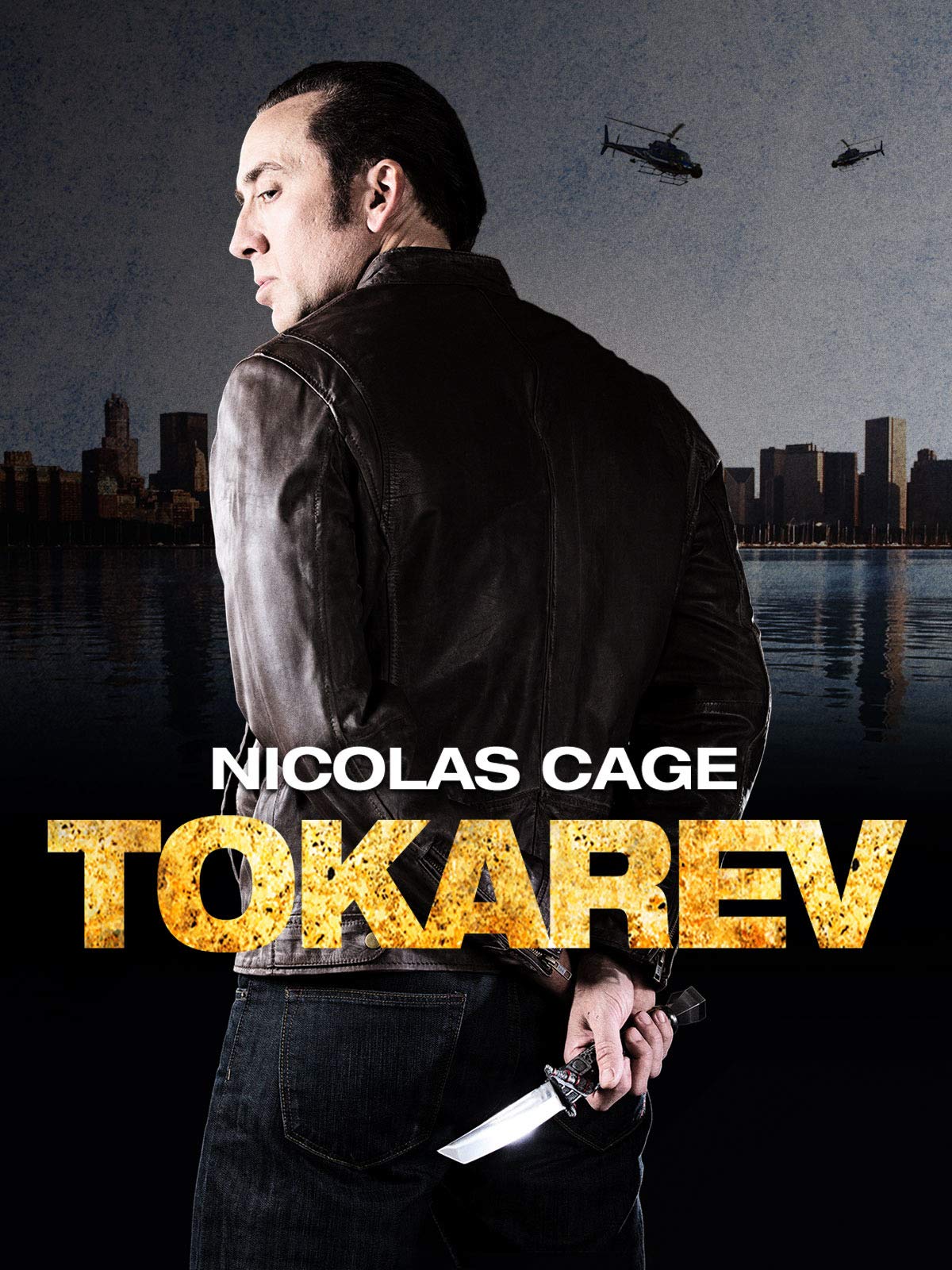
Tokarev (2014); OR, Subversion for Subversion's Sake

Watch Tokarev | Prime Video

The 2010s are an incredibly odd era when it comes to Nicholas Cage's filmography: from indie king in the 90s, to major star in the 00s, this decade was schizophrenic and lacked a consistent identity. One minute, he's your regular Hollywood lead (Ghost Rider Spirit of Vengeance); the next he's a quirky character actor (Into the Spiderverse) and then there's the headliner of low budget genre fare. Some are madly experimental (Mandy, Color Out of Space); others just lower grade versions of studio movies (Dying of The Light, Trespass), and then there's Tokarev (aka Rage in the US).

From the outside, it's cut-and-dry: it's Cage-Taken, a badass dad out to get his daughter back from villains. However, Tokarev makes a couple of key choices to set itself apart from both the Neeson franchise, as well as other B-Grade revenge flicks. In turn, I think there are some valuable screenwriting lessons to be learnt (outside of the usual shortcomings of these types film i.e. the two-dimensional characters, the well-trodden premise, predictable arcs etc.)

Naturally, there will be SPOILERS, so you are warned. Tokarev is free on Amazon Prime, if you want to watch it.

Tokarev starts out simple: Cage plays Paul, a reformed crook, now construction bigshot. He's a good husband and devoted to his teenage daughter Caitlin. However, Caitlin is abducted while he's out to dinner. With no ransom demand, Paul turns to his old criminal buddies to help get her back. Alas, a few beatdowns are not enough and she's found dead, having been shot by the titular Soviet weapon. 

This freaks out Paul, as he and his two friends had stolen cash from the Russian mob as young crooks, swearing the theft to secrecy. Paul becomes convinced this is all a revenge plot, goes on the offensive against the Russians, and even suspects someone ratted him out. All pretty standard.

Tokarev then throws out its big curveball: it turns out it was Caitlin's boyfriend who killed her. How? Because she and him got drunk and took out Paul's old gear which, surprise surprise, included the Tokarev he had taken years earlier. She gets accidentally shot and so he concocts a fake kidnapping to mask what he did. Realizing that he's brought hell down for no reason, getting his friends killed in the process, Paul lets the Russians kill him, consumed by his past sin.

I kind of like the twist, at least in concept: it's unexpected, you do get small hints that, to Paul and his fellow criminals, something seems off and it serves as dramatic irony. It even mirrors Paul's own life-altering choice with the Russians and how taking a life changed him. Tokarev plays less like a Diet-Taken, and more like the tragedy of a man who, in trying to hide his crimes, is destroyed by them. Paul's not a bad guy: he values family and friendship and he has, by and large, left that life behind. Even his drive to get revenge comes from a genuine place: he values his daughter above all else and saw her as the embodiment of his new way.

For a film of this calibre, this is more thought than one might expect. Screenwriters Agnew and Keller's experience in genre B Movies means they know the tropes inside and out, and can find ways to play with those to create something with more depth. Toying with formula and genre expectations can lead to fresh and exciting new experiences (Knives Out, Mad Max, The Lego Movie). However, this decision has huge knock-on effects on the rest of the film that open up many holes and undercut what, even among negative reviews, has been called a genuinely strong element. Tokarev would make for a perfect case study in set up and payoff, and how to correctly subvert expectations to deliver a payoff that's not only more original, but more satisfying.

Tokarev reminds so much of one of the classic beginner's screenwriter's mistake - stapling on a twist to an, otherwise, bog standard story. Just write something that's identical to something else, thinking it'll be an easy sell, but then throw in a last minute wrench to catch the potential producer off guard and have them leaving going 'Wow, what an ending!'

Mashing up what I would describe as Taken and Carlito's Way, however, leads to a film with a confused identity: characters are not deep or textured enough to work as a searing drama that meditates on redemption, but there's also not enough action sequences to be a proper action film. A twist like this only works if the rest of the narrative supports: the best twists make subsequent viewings more enriching (think of say, The Sixth Sense). It's like jamming a peanut into a half-melted chocolate bar and calling it peanut butter chocolate - doesn't work.

The main offender, naturally, is the protagonist. Paul is presented, throughout the film, as too much of a nice guy for this twist to land. The film is too earnest in his 'new' self for it to feel justified: he shows remorse, he does have second thoughts, he does doubt why he's doing what he's doing and he does feel powerless. The film makes his quest for revenge palatable to the audience, so when it turns out he was going after the wrong people all along and it was his own gun that killed Caitlin, it feels awkward. Sudden.

If he was more turning more monstrous and become more willing to let innocents get hurt as he tears up the city, the irony of him being, in essence, his daughter's killer would work a lot better. On rewatch, it would make his choices feel more pathetic and tragic, now that we know. Maybe if the film had challenged his 'nice guy' image more, it could add another layer to his character and have us, as the audience, question more who he truly is: did he ever really change? Was his daughter the only thing holding him back from becoming a monster again? As the text stands, Paul is presented in a way that that doesn't match the intended effect of the narrative he's being taken through. Imagine if Othello 'killed' Desdemona but it wasn't him, just some soldier under his command who did it for reasons unrelated to Othello himself or Iago. It's tragic, but the meaning is completely different and less potent.

The fact that the boyfriend, the real culprit, is barely in the film and has no real dynamic with Paul compounds this problem: how much harder would it hit if they had begun bonding in their grief, had gotten closer, only for the bombshell to drop? Would he egg on Paul, maybe get involved as a means to save his own skin, or would he try to pull Paul back as some attempt to atone for his own crime? What vein of rich, ironic drama could be mined there?

The other major problem is that, with its current execution, the twist leaves us as an audience with no sense of closure to the plot, cheating us out of catharsis. Think about it: the Russians still rule the city; Paul's wife is left without her husband or step daughter, and the real killer is still free. This invites so many questions and makes Paul looks ineffective as a protagonist. By not making the tragedy hit harder, and using it as a means to tie everything up, Tokarev ends up, as a story, unfinished. The mob boss doesn't even get the final showdown or come to kill Paul himself: it's just a squad of faceless goons. Had he finished the job himself, it would've acted as a mirror to Paul's own past.

Tokarev, in every way, is a perfect example of how much payoff matters in writing a compelling story. It's also an example of how great ideas, alone, cannot salvage something that doesn't try hard enough everywhere else.

Monday, 3 May 2021

HOW DO I STAY INFORMED? - Screenwriter's Survival Kit

WE'RE BACK, and with a big one. 

 In past posts, I discussed that it is important to chase up your network every few months. On top of that, to know what’s happening means you need to follow the news in the industry. These places will often announce new shows coming out, if shows have been recommissioned for another series, or who is working with who. Often times, they will also include the names of the development team behind the show, who are people you can contact and the companies making them (companies which have development people, very important that.

Now, where are the places you need to keep up with? Well, here's a few:

  • SOCIAL MEDIA

Follow production companies on their social medias pages to stay up-to-date. Facebook and Twitter are the main ones where they will post news about projects, commissions and other bits of business. Mentioning these developments in your catch up email will show whoever the relevant contact is you are keeping informed and interested in them.

If you are interested in a specific show, they do often have dedicated, official (always double-check) pages on these websites, where they keep fans up to date on what's going on. 

  • INDUSTRY PRESS/THE 'TRADES'

These are websites and magazine all about what’s going on in the business. If you don’t want to, or can’t afford, a physical subscription (which can get pricey, if you follow multiple publications), you can also follow them on social media and visit their websites every couple of weeks.

    •    VARIETY
    •    DEADLINE HOLLYWOOD
    •    BROADCAST NOW - this is the big one for UK TV.
    •    SCREEN DAILY
    •    SCREEN INTERNATIONAL


Another good, if not vital one if you want to go into children's or animation, is Kidscreen, which is exactly what it sounds like – news on kids content. 

  • ASK SOMEONE

When you are in meetings and talking to people, don't be afraid to ask ''So, what are you working on?'' Not all projects, especially newer ones, get announced and, well, you never what one might be setting up a writer's room in the future.

Short this piece, but sweet. Knowledge is power. Go get some and become an industry He-Man (or She-Ra, entirely up to you).

Tuesday, 6 April 2021

4 Screenwriting Negatives FLIPPED into Positives

Screenwriting can, as fun as it is, be a negative space on a personal level. It's easy to get downtrodden, even disillusioned, by rejection, bad notes and even scripts that take a lot longer to write than you had initially planned for. It's easy to let it get into you and seem more damning and impossible than it really is. Often, even simple sentences have torpedoed your confidence for a day or more, depending on what that project meant to you.

However, like making or practicing pancakes (see? Not just for a title pun), there are always different approaches to something that seems like there's only one way, but is actually just hiding alternate methods.


So, let's run down some common ones that may seem like disasters, but in actuality, have something more to offer to those more determined and diligent:

  • When you don't place in a contest, it doesn't mean you wrote a bad script. 

Nice and easy one to start with: Contests are often the first port of call for new writers. They are also lotteries, whether they are paid (Script Pipeline, Nichols, Austin) or not (BBC Writersroom, ITV Original Voices): you and thousands of others gamble on having the winning combo. It can be easy to think that winning these is the only ticket, and not doing so is a sign that you cannot write worth donkey diddle. 

Not true, however: taste plays a part in any reading and sometimes, yours will not be to the reader's, never mind a myriad of other reasons why it's not meant to be. A spec pilot of mine that failed in contests got me my first adaptation gig, and another got me Pablo, for example. As I've discussed in other posts, there are more ways to find people in the industry, and they don't cost a penny. 

  • When your email to someone bounces with an automated 'out of office' email, you might get extra info. 

In doing the above, you may have the bad luck of sending someone an email while they are away - holiday, maternity leave or no longer part of the company. It's annoying and can kill your buzz. You may get lucky in that the automated reply'll provide an alternate means of contact, such as another email for them, or of another person on the development team.

Okay, so what? What's so special? Well, in the event that it doesn't work with Person A (be it ghosting or them not being able to read), suddenly, you have a person B available to try instead, usually their assistant or a more junior member of the company i.e. someone looking for that next big thing. Just remember your manners.

  • When you get notes critiquing your storytelling, it doesn't mean you can't write. 

Let's continue with an evergreen classic: you get notes from a service or writing friend on your script and it just isn't working. May be the characters or plotting or pacing or ending; anything. But don't worry: everyone screws up or misses something. It doesn't mean your whole script is useless or is not salvageable. Always look for the note behind the note, and sometimes, an absence of a note can be illuminating in its own right as the fault behind the other faults.

If you want a more detailed solution, check out Screenwriting is Rewriting by Jack Epps Jr. A great resource and hey, who wouldn't take advice from the writer of Top Gun?

  • When you get a rejection, unless specified by the person, it doesn't mean the door is completely closed. 

You took a gamble and it didn't pay off: they didn't like your script. It can be for any number of reasons and it almost never is personal. Everybody gets it. It can be a devastating feeling.

However, that's far from the end. Say your thank you and then retreat for maybe 6 months to a year and come back, refreshed and with a newer, better and more appropriate project. Do ask if you can stay in touch, and always be polite and maybe even a little humourous in your catch ups. Half the job is networking and just being genuine.

Even in business, like in fiction, there is creative license. Use it.

Friday, 19 March 2021

Jed Mercurio and the Importance of Screenwriter's Etiquette (Part Two)

Don't think I need to explain who Jed Mercurio is if you're reading this blog: probably the most successful British screenwriter of the moment not named Nolan. Line of Duty returns for another series and so, press gets generating. One such was GQ Magazine interviewing Mercurio and talking about working amidst the pandemic, as well as some asides to his political and social views. 

On its own, just a simple piece, save for one topic: amidst talking about issues with modern journalism (a topic, to be clear, worthy of examination), Mercurio uses this as a segway to touch on his noted animosity with television critics, and in particular, highlighting an incident in 2019 where, well, I'll let the article explain:

That became particularly evident when, in December 2019, a storm erupted on Twitter after he called out the Guardian for including Line Of Duty in an article titled “The Biggest TV Disappointments Of 2019”, which also included Game Of Thrones and Killing Eve. In a now-deleted tweet, he directly addressed a young critic for her involvement in the article. In it, she suggested that the show had gone “catastrophically off-piste” by revealing that the mysterious “H”, supposedly the inside man at a high level in the police with links to organised crime, was not one, but four people. “The biggest disappointment these jokers really experienced in 2019 was when they realised what they do for a living,” he wrote, followed by another message directed at her that lead to several fellow journalists tweeting back angrily on her behalf, defending her right to criticise the show.

And then he capped off with this:

I don’t see why it’s OK for a journalist to participate in an article which is fundamentally sneering and not at least have some insight into what a c*** she’s being. If you go into the public domain having a pop at people then expect some comeback. There was actually an enormous pile-on from journalists saying, ‘She’s just doing her job. She’s a talented writer.’ She’s a piece of shit. Fuck her.”

Well... that went from one to fifty fast, huh? 

Indeed, why is this eerily similar... (he said, plugging his article about Joe Carnahan and El Chicano that this one is a sequel to.)

DISCLAIMER: I do not know either of the two main individuals. Nor am I here to demonize Mercurio or denounce his work or collaborators. Like with Twitter's 'Line of Duty was never good' takes, this misses the point and trivializes the real issue here.
 
Seeing someone of Mercurio's stature behave like this about one critic's review of Line of Duty is troubling. Just like with Carnahan's infamous blunder, it is another example of people at the top not setting the example to newcomers: yes, art is passionate and we get very invested in it. Yes, being upset at a bad review is understandable, but to engage in public shaming like this, and then hounding said critic off of Twitter, for the crime of being, what, the one person who wasn't raving about monster-hit and critical darling Line of Duty?
 
Mercurio should know better, rather than perpetuating this 'war' between media critics and creators that achieves nothing nor improves either discipline. In the same way it's not our job as writers to please critics, it's not their job to pat us on the head and give us cookies. Does that mean you agree with everything someone writes about your work and have no right to defend yourself? Of course not, but Mercurio's reaction reads as completely disproportionate to the situation.
 
(As an aside, can we also can it with the 'critics are failed artists' schtick? Besides being the weakest scene in Birdman, it's so hilariously untrue and, furthermore, ignores the ones who do both successfully. See Rod Lurie, C. Robert Cargill (back to him in a bit...) and the entire French New Wave that changed cinema in the 50s.)

What's worse, and especially bad for newer writers to be seeing and taking after, is that Mercurio claims in doing all this, he was giving the critic a chance to respond to him. Okay, but why then front load with ad hominems if what you want is a dialogue? Why not create an actual constructive dialogue with this critic so that both you and they learn from it, instead of shouting and calling them this-that-and-the-other? Sorry, but this isn't actually engaging with your critics: she was going to lose, no matter what she actually said or did.

Like I wrote in the Carnahan article, the truth of internet fire-fights is no one, regardless of position, comes out looking good. If you misconstrue critique of the work as personal attacks, proceeding to broadcast that ire everywhere, how can you expect to work with other people and improve both yours and their work? What are you telling peers about yourself when you do this? What does this say about your values? Conduct and etiquette matter; doubly so when you don't have the stature of a Mercurio to act as some kind of (albeit poor and in no way actually valid) excuse.
 
Indeed, I think newer writers very much need to bear this mind: perhaps not from your work getting reviewed by published critics, but any time you get feedback/criticism on a project. Script reading services, script editors, even just getting feedback in a writing group. The core principle is the same: You have to be able to listen and not freak out when someone doesn't like what you write. A great saying that stuck with me is, 'look for the note behind the note'. If you feel like a criticism of something you made doesn't make sense, rather than start attacking, like Mercurio did, put some distance between you and the critique and think: why would they say this? Is there a choice I made that made them take away that impression instead of the one I wanted?
 
But hey, if I can't convince you, because my work isn't on the same plateau as Mercurio, let's hear from a writer who is: here's what novelist and 'Doctor Strange' (An MCU film is, I'm sure, more than a match for LoD in notability terms) screenwriter  Cargill, has to say about taking criticism: 
 

As a capper, I think it's worth considering the personal effect here: being able to handle critique is not just important for having a career, a good image and navigating the industry - it's necessary for your own mental wellbeing. Using others for validation, especially when it involves critique, is a fickle thing and is more like a coin toss. When you land the tails of negative feedback, being snippy and hyper-defensive is going to do your own confidence no favours, and shows you lack perspective on your work and yourself. Writers can often get stuck in negative mires, worrying about our ability or worth, and anger, while understandable, is not the answer to these insecurities.
 
Have faith in your ability, be confident, but don't get into the mindset of you are always right. Writing, like so much in life, is a learning process, and art is really subjective. Understanding this will take so much of the anxiety off your shoulders when you're making stuff: not everyone will 'get' you, and that's fine. You don't need everyone to love your work and praise you. Instead, take pride in the little victories - finishing a page, or three, or ten a day. Writing a gag that makes a friend or collaborator laugh. A tight action scene. Do the work, listen and keep on writing - if you're not enjoying it, why bother?

Monday, 8 March 2021

GETTING WORK WITHOUT AN AGENT - Screenwriter's Survival Kit

I'm repped now (thank you Andy Townsend!), but I spent several years in the 'wilderness' of the industry, without an agent. For new writers and out-of-school-students, this can be incredibly daunting: they've oft-heard the 'no unsolicited submissions/agents only' bit many times before, thus massively cutting down submission options. They may also have heard that big shows won't hire writers without one, or without a track record of credits. 

Can't get work without an agent - can't get an agent without work. What a Catch-22, right?

Well, not entirely. Your options will be more limited, to be sure, but as I've mentioned many times on this blog, the industry casts a huge smokescreen around itself (mostly for legal protection). Those walls and gates can absolutely be broken through and there are people out there who will take a chance on new blood. While I cannot sell you a magic ticket, nor would I, I hope the following will serve as a roadmap as to the avenues you can explore to train and earn.

Also, for the purposes of clarity, I'm specifically talking about paying gigs, not competitions, scratch nights or short film festivals, nor am I talking about self-funding projects like an indie feature. This is about commissions.

CAN I GET TV WORK? 

Yes, but get ready for it to be slow coming. Very, VERY SLOW. TV that is more amenable to unrepped writers tend to err on the lower budget end, meaning it can take longer to make and, more importantly, fund if it's not an in-house production from a broadcaster.

One easy recommend is Children's TV: shorter lengths, simpler stories and, on the whole, lower costs than regular comedy or drama. Pre-school, in particular, can be really amenable to new talent if you have a good sample on hand and are, most importantly, enthusiastic to write for the series. 

Based on my experience, some of the things that they look for include:

  • Big and colourful, something cheery (but not bubblegum - the days of Barney are long gone.)
  • Contains an educational component (though doesn't have to be an education series persay, just simply with something that teaches kids a lesson about life or the world.)
  • Diversity
  • Humour - kids loves slapstick, goo and goofery. Just be careful of imitable actions (''don't try this at home, kids'')

BUT WHAT ABOUT ADULT WORK?

Sketch shows, if you pitch it right and have some cracking samples, may be willing to give you a show. Again, just bear in mind the profile: the bigger the comic, the harder it will be. Between the two, however, comedy allows for more moving about between kids and TV, so doing the above can make this a bit easier.

As for drama, the continuing dramas/soaps are seen as the 'traditional' way in, though most don't regard themselves as such (even Doctors, often treated as the beginner's show). Reaching out to the script producer is an option, though bear in mind they also work on the series and handle a variety of other responsibilities, so don't be surprised if it takes 6+ months before you get a reply. However, that's not the only way - storyliners are a job you can apply for and, even better, they tend to progress into script editors or writers, meaning there will usually be a new callout every couple of months.

WHAT OTHER WORK IS THERE?

  • Radio and podcasts: The audience is smaller than film or TV, but the advantage: lower costs, allowing more risks to be taken. Yes, you can just pitch straight to a producer on radio, and maybe get your work on BBC Radio 4, without any sort of 'unsolicited' hullabaloo. If you're into comedy, Newsjack is the classic entry point. Welcome to Nightvale and Homecoming, meanwhile, are proof of how much narrative podcasts have become a force of their own, and not something to overlook if you're interested. Audible do callouts from time to time, and don't be afraid to search 'audio drama' or dig into 'BBC Sounds'.
  • Games: While these can sometimes demand some level of experience, and you won't be right away on the next Assassin' Creed, the great thing here is an agent isn't needed, and there are fairly regular call outs for writers, or narrative designers, to work on a new game with smaller developers. Sometimes it's on a specific game, other times to join the company's writing department to work on several.
  • Online content: web animation, often no longer than maybe 2 or 3 minutes, has been coming more into its own in recent years. The views on Youtube are, frankly, insane. These tend to be, but by no means always, part of a bigger brand and a link will usually be provided on the channel to find them. There are also jobs to write live-action Youtube videos as well, such as being a researcher or copywriter, depending on the style of show.

WHO DO I SPEAK TO?

Exactly the same process as I discussed in the Networking article of SSK (read here if you missed it). Producers, script editors and head writers are your ports of call. End credits and IMDB are your friends.

WHAT WILL I GET PAID?

Use the Writers Guild of Great Britain (WGGB) website to check your rates, which covers all sectors of the industry and media.

I hope this is of use. Naturally, none of this is a complete guarantee: all work is tricky and competitive. However, this should clear away what can feel like some of the impenetrable mist.

Monday, 1 February 2021

HOW DO I DEAL WITH REJECTION? - Screenwriter's Survival Kit

This is inevitable.
You can do nothing about it.
It will happen.

Every writer, in every field, deals with this at least once (and that's being generous): rejection. The big R all writers fear (whereas Residuals is the R writers like). it's one of the hardest facets of being a working writer that newbies must make peace with.

 
Yes, you will work really hard on a script or other project (but as this is a screenwriting blog, let's mainly focus on that), only for someone to say no. I'll talk more about why shortly, but there's any number of reasons why rejections happen.

WHAT DOES REJECTION FEEL LIKE?

For as much writing as there is about rejection being a reality, I don't think there's much written on what it feels like in the moment; especially if you're new to the whole business. Naturally, I can't claim to represent every screenwriter in this: just my own experiences. However, for what it's worth, here's my take on the stages of rejection grief (mainly when you're a newcomer, though pros certainly feel the sting too), and what to do.

  1. Shock - You open the email or envelope and get told the bad news. Usually, it will start with a courteous hello/how are you/hope you're well, and then tell you that they will not accept your screenplay at this time. Sometimes they will cite a reason (not for us/we already have something similar/we like the concept but...), but other times not. The initial shock of being told no will give way immediately to a sort of numbness, like time has slowed and you've divorced from reality. Afterwards, you will feel
  2. Upset - Naturally, rejection hurts. You spent all this time, put in all this work, and they said no. This can hurt more if it's from a person or company you really like. You may feel a weight in the pit of your stomach, or even the trickling of tears at the corners of your eyes. Hey, it hurts - you're not a baby for feeling hurt by something that meant something to you. Then comes a burst of
  3. Anger - You spent all this time, put in all this work, and they said no - HOW DARE THEY! You want to scream, want to explode with indignity and rage. You were sure you did everything write - proofread it over and over to make sure it worked; the characters were good; the plot was good; the pacing tight; the structure strong; no typos or errors. You were sure! SURE! And yet, it didn't make it. After the fire subsides (time taken can vary a lot), you will reach a state of
  4. Acceptance - Having got the fire out of your system, calm sets in and you just say, 'well, that's a shame, but I must move on.' Maybe you go back to your current project, maybe you opt for a break; you just do something because you're a creative and it's what you do.

The main thing to remember with rejection is it's not personal. No one is out to get you, or humiliate you, or destroy your dreams. 

Sometimes, it just doesn't work out. 

BUT WHY NOT?

Maybe you need to get better at writing; maybe they weren't the person for the project; maybe it simply wasn't the right time in the market for the project; maybe you just didn't have the name recognition for it to be worth the gamble. 

BUT HOW DO I DEAL WITH IT?

Well, aside from going back to writing, one easy bit of advice is just give yourself room. Let yourself feel; let yourself have time to digest. If you're not on commission, then the script is being written on your time and thus, you are in total control. Step away for a bit; have a walk, eat something you like, maybe watch a movie or a show. Like after a night's binging, let yourself detox from a rejection. Give it a few days, I'd say.

As time passes, and you get more rejections (which you will), you will find the stages get less potent. The shock, anger and upset will start to fade: never fully gone, but they will not be as harsh on you. 

DO I NEED TO REWRITE MY SCRIPT?

I'd say, if you sent it out to multiple people, wait. If they all come back rejecting it, it's worth having another look over. As the saying goes 'If one person says it's crap, it's an opinion. If ten people say it's crap, you've got a problem'. However, never try to rewrite something right after getting a rejection - it's too raw for you yet to be truly objective.

WILL I GET USED TO REJECTION?

Like anything in life, the more you do it, the more used to it you become. The hurt and annoyance will never fully vanish, because you are an artist and you are, always, exposing yourself in creating your art. However, experience brings maturity and with that maturity, coping mechanisms. You may think you won't, but you will.

BUT IF I CAN'T?

You will - that's just the immediate shock talking. Nor should you worry about 'lost chances': barring you being rude to the other person, new opportunities can and will emerge in time. Maybe this script wasn't for them, but another could be. 

And if not? There's always someone else out there.

Always keep pushing, and you will get where you want to be in the end.

Monday, 18 January 2021

HOW DO I MAKE CONTACTS? - Screenwriter's Survival Kit

Welcome to a brand new sub-series on this blog, designed to be one-stop shops for your big craft and industry questions. 

To inaugurate, I'm going to talk about one of the most vital yet still poorly-explained parts of building a media career, in any field but focusing on screenwriting here. The big N: Networking. This can be especially troubling for those living away from the big media hubs, or have some difficulty in social circumstances. You may be socially awkward, or not used to being hyper-proactive in a job sense. 

However, it is a vitally important part of this business: you need people to make your movies and shows. You need people with some level of power or resources to know you exist, and playing the lottery with screenwriting contests and just waiting can be a needlessly big gamble. Whether it's for a producer, director or development person, the process is the same.

WHAT DO I DO?

First, after having written and polished a quality script, find a company/producer who makes stuff similar to your script. If you have an action thriller, find people who make action thrillers. Comedy: comedy. 

You can find people with greater ease than ever before: sites like IMDBpro and Linkedin offer ways to get directly in touch. There's also production company websites, which usually contain a generic/office email: HUZZAH! They've already done half the work for you. A little more brain juice, and you'll quickly figure out the email of the person you want. Producer, executive, script editor, assistant - all people to speak to.

In the email, you don't need to be heaping wild praise, or desperately begging for attention. Short and sweet is the desired. Start by say 'Hi, I'm a screenwriter (mention if something you worked on got an award or distinction. If you're currently on a course, even better. They love students, as they aren't a threat. Otherwise, just what genre you write in).' 

After, write a quick bit of praise. Something like, 'I really liked your show (quickly say why, just a line) and I'd like some advice on getting into continuing drama/hour-long drama/animation/sitcoms. If it's possible, could we do a five minute phone/zoom chat?'. 

NEVER EVER attach a script or CV without asking to do so first. Dumping stuff onto someone is only going to turn them off. You want to make their lives as easy as possible: the less demanding you are, the more willing they will be to hear you out. 

BUT WHY A MEETING AND NOT A SUBMISSION?

I'd say doing this is better than gambling on a blind read - you'll get a meeting, where you can become more than just another anon email, and make a contact in the process. This is how I did it - I was humble, open-minded and asked industry people for advice. Now, I'm in the business. This advice works.

WHAT DO I SAY IN THE MEETING?

It's an informative conversation, not a shopping list. There's no right way to go about it, save for not going overly-personal, or insulting the other's person's work. Some easy pointers, if you are having trouble, include:

  • How did you get started?
  • What are your influences?
  • What was you best experience on a project?
  • What keeps you going, even when things don't go well?

As for talking about yourself, which they likely will ask about, you just simply talk about your writing background, if you've won anything/placed anywhere, and maybe do quick pitches of whatever script you've ready to show. A logline, maybe a quick descriptor of the main character and the conflict. Be cool, be calm and, above all, be a good listener. Industry people love to talk, so let them. When it comes time for you, be chipper and upbeat: monotone will make you sound like you don't care. Don't force it, but I guarantee you will find, as you get comfortable, you will be more engaged, and be more charming to the other person. 

AFTER?

They will ask 'Can you send it/something along?' At which, you send the script and your writing CV. Good time to chase up would be 10-12 weeks. Indeed, checking in every couple of months with a simple 'Hey, how are you?' goes a long way.

You may not realize it, but you do have the ability to network with greater ease than you may be aware of. Once get in the groove, it may become your favourite part.