Showing posts with label treatment. Show all posts

Friday, 15 April 2022

Your Script's First Draft Will Suck... and that's fine

They call it the vomit draft for a reason. Like it or not, you will never get everything right on the first try with a script. Heck, it's unlikely you will, even on the second or third. A good writer gives themselves the breathing room to not only create, but to make mistakes and learn from them. You have to develop a critical eye and know what makes a compelling story tick. How do you find three-dimensional and complex characters? 

Cracking dialogue? 

Deep and resonant themes, raised through engaging conflict?  

Rewrites. 

Understandably this can be a hard pill to swallow for newer writers: if you're trying to juggle a day job, the thought of your ticket to fame and fortune being a long haul is unappealing. You want success and you want it now, so why can't your script be gold the first time?

Because writing, like art and science, is an experiment. 

IS THERE A WAY TO SPEED IT UP?

Depends on what you mean - if you want to write quicker, be more of a free wheeler (or pantser, as in 'by the seat of your pants') in your method. 

If what you mean is 'can I cut crap sooner?', that's a tougher question. There are some things you can try, but so much of writing is, as stated, trial and error. You'll never be able to get everything fixed the first time through, because it's the first time. Something that looks great in an outline can utterly collapse in script form. I speak from experience. It's not worth becoming one of these paranoid 'I must get it all done now now now' writers because you will never get work out there with that mindset.

SO WHAT THEN?

Here are some things you can do to help your first draft writing be less painful and speedier.

  • Read lots of scripts: The more you read, the quicker you'll be able to sniff out crap in your own material. In fact, I'd argue these will help you more than watching the movies, as you will see how their tricks were done. Like a magician, you can't do a trick if you don't know how it was done. Furthermore, don't just read the Oscar winners: read junk! You'd be surprised how much you can gleam from reading the three terrible scripts for Tim Burton's Superman Lives, or two different drafts of the Will Smith (topical reference?) bomb Wild Wild West.
  • Get a proofread and break down: whether it's from a writer's group or a script editing service (as always, shop around and get a good deal), get a second pair of eyeballs on your treatment or beat sheet. They will give you notes, and from there, develop a more detailed feedback breakdown.
  • Scene by scene brainstorm: A handy tip from William M. Akers (New Adventures of Superman) in his book Your Screenplay Sucks!: 100 Ways to Make it Great. Take each scene in your outline and give them a whole page, write a basic description of what it does and then the rest of the page is just brainstorming ideas to make it better. Don't worry about spelling or grammar or anything, just splurge everything and anything.
  • Space it out: A classic tip I've shared before, but one I will bring up again. Don't do too many rewrites on the same project back-to-back, and try to shake up the genres you write in. You might find some inspiration in working on a horror and then a comedy versus two horrors consecutively. With a treatment, because it's not a script and so you're looking at it from an 'outside' perspective, I think this reset is important to help clear your thoughts and see the weak points.

Also, attitude is important: acting bigheaded and defensive when people do comment on your work, or even when you yourself go over the idea and dismiss any possible issue, is unhelpful. There's a time to defend your work, and there's a time to be open and experiment. If you want a first draft that will be worth anything in the long run, the latter is what you need to do.

SHOULD I GAMBLE ANYWAY ON A SUBMISSION?

It's not worth it - yes there are those one-in-a-million stories like John Hughes writing Ferris Bueller in days, or how fast Stallone wrote Rocky, but those films were in constant refinement and had the advantadge of, y'know, money and studio support. You're on your own so you have to adjust your expectations. It's not worth blowing a potentially great contact or contest shot by submitting something that's not ready.

WHAT IF IT DOESN'T WORK AFTER I'M DONE DRAFTING? LIKE AT ALL?

It happens, and it's nothing to be ashamed of. 

It's not.

Sometimes, ideas don't generate the stories we think they can and that's fine. So as long as you're not promising it to anyone, this isn't a big worry. You didn't fail, it just means that idea wasn't right or you didn't think through or break it down enough. Don't let one mistake throw you off - you can always get back up and start fresh. That's what is so great about writing: you can always start over. Making a mistake isn't the problem: not learning from it is.

Friday, 7 February 2020

Diary of a Spec Script Day 32-34 (February 1st-3rd)

The work of honing and expanding a treatment gets underway. In revisions, I find it good to take your time and really work on individual scenes - especially ones that gives us a greater lens into the chaarcter's mind and psychology. Even in an ostensible old-school-esque adventure yearn involving lost Russian treasure, it's still important to ensure consistent and interesting characters who gain something out of the experience beyond material wealth. In this case, it's a story about ideals and expectations - how we can have something set in our minds, how we get disappointed, and how learn to accept, and possibly even love, the change.

Something which I got from my time on the Corrie scheme was the idea, more so than I had done previously, to treat every paragraph in the treatment like a scene or beat. In the past, I tended to be less strict, allowing one scene to occupy multiple paragraphs to detail and pull it out as much as I could. However, being direct and to the point is an important component of screenwriting and, to be quite frank, if you can say something with brevity, then clearly you've not thought it through enough and are just writing filler.

Indeed, it is tempting to throw in loads of trivial details to pad out a treatment - here is where you can be tempted to go really purple prose in your writing. Now, sometimes, there is leeway: if building up a picture of the world or environmnet helps you decode or unravel the character, then that's fine. But exorbitant detail about things like clothing, or over-descriptive actions, or just minor elements of the scene that don't connect to the core dramatic action - ditch them.

Something else that I'd like to highlight - what happens when you don't know everything that a character will do, or how a scene will play out? Is it right or proper to force yourself to slow down to really finetune one element, or do you just move on? Now, you might think it's the former, since I've talked at length how this treatment was going to be a more deliberate affair than past ones. However, I take the cue from C. Robert Cargill on this - if in doubt, just put in a placeholder for what you want to happen in the scene. Remember, when you write on spec, you're on no one's schedule but yours - do what you have to, but getting it right is more important than being a perfectionist.

Next time, onto the step outlines. Let's see what ends up changing.


Prev                                                                                                                                                Next

Sunday, 2 February 2020

Diary of a Spec Script Day 27-31 (Jan 27th-31st)

Right, so  went and did some more jotting and mulling, before returning to do revisions on my treatment. Here, the main objective was expansion and refinement - I needed meat on my skeleton.The easiest parts to write, I found, were the teaser (which sets up the world and was the most throwback-y of the story, so I got to indulge in my Herge-impersonation here), as well as the first act (as here is where I had the most clear picture of my pilot's narrative, and what my cast would be doing). The trickiest was the climax and ending - I knew what they were, but writing them down into something visible, as well as sensical, proved to be a lot harder. By my own admission, endings are something I struggle with, whether I know my story's outcome or not (and I almost always do) -  I enjoy the journey that the destination comes off as an afterthought, and can be a headache to tie in.


Thankfully, the treasure hunt aspect of the plot gave me something to anchor myself with, so it proved less of a nuisance than usual. I was feeling more confident, and even snuck in some more details about the world and the characters lives into the treatment, because I could (such as the contents of the children's lunches during a morning school run scene that set everyone up). Was it dramatic? No, but it just gave me another few more spots to paint in as, slowly, the world of my pilot started to glow in my mind and reach out to me.

Speaking of glows, I also colour-code all my acts, which gives me a quick visual means to gauge what parts of the pilot need lengthening or shrinking, as well as just make it easier to digest my work in review and be able to point right away and say 'okay, that's there, and there and there.'


After that was done, I did a readthrough, to see how it played (IN SHORT, PROMISE BUT QUITE WONKY), and then I did a scene breakdown to help marshal my points and criticisms into a gameplan. I should clarify I don't mean a step outline (though that will come soon), though these terms are used interchangeably. Here, the difference is my outline is, essentially, the script without the dialogue - it's all the action. A scene breakdown, on the other hand, is the cliffnotes, the broadest possible version of what every scene does, so I can tell what can and can't stay and pulls its weight.

The breakdown revealed that my second act was too long, with two setpieces sandwiched back-to-back, and my third act woefully short with basically one revesal and a whole lot of chatter. Character development and choices weren't there - it was reading much flatter than I had initially thought - doubly problematic, as the family story is the heart of the piece, the glue that holds the adventure hijinks together and makes it live.

Once again, turned to my notes and began to scribble and pound out little ideas or twists on scenes, as well as what needed expansion in the next go at the treatment.


Prev                                                                                                                                                Next

Sunday, 26 January 2020

Diary of a Spec Script - Day 20-26 (Jan 20th-26th)

Right then, so writing continues, but of course, man's gotta eat and make-a the money, so it's a bit slow going. Still, that can have its own benefits: while I am, by nature, someone who likes to get stuck in and GO GO GO, being forced to move at a slower pace allows more time for reflection and digestion of ideas and scenes, which is not a bad thing for a writer. It only becomes bad when you procrastinate.

So, I can assume most reading this know what a 'vomit draft' is, right? It's like the most basic, messy, crazy, unfiltered version of a screenplay that you can do - the first big go at it. Well, I am doing that, but for treatments - I find having something I can see, outside my own mind, helps me a great deal in my process. Plus, as I've said many times in the past in this blog, you can always redraft and rewrite. Forget perfection, just focus on getting it right.

 Yes indeed.

As this is a fast-paced adventure yarn, I knew the skeleton of where I wanted the plot to go: what was everyone after and where do they find the clues for it? I had a rough idea of what the setpieces would be, and the main characters wanted. More intricate character dynamics and nuances are not here because, as said, it's early days and this about build up in layers.

So into a Word doc it all went in a fierce blast of stream-of-conciousness, filling out about four pages (obviously for a treatment, a little lean, but it's a start) with material. Plus on the side, I kept my little 'ideas' doc open as well, adding in any questions or ideas I cooked up, as I was writing the skeleton. I had a fairly clear idea of what the opening/teaser would - bad guys in a room, conferring, piecing the clues together, while the young versions of our heroes try to escape some peril. Simple and classic, but effective in helping to set the tone of the piece.

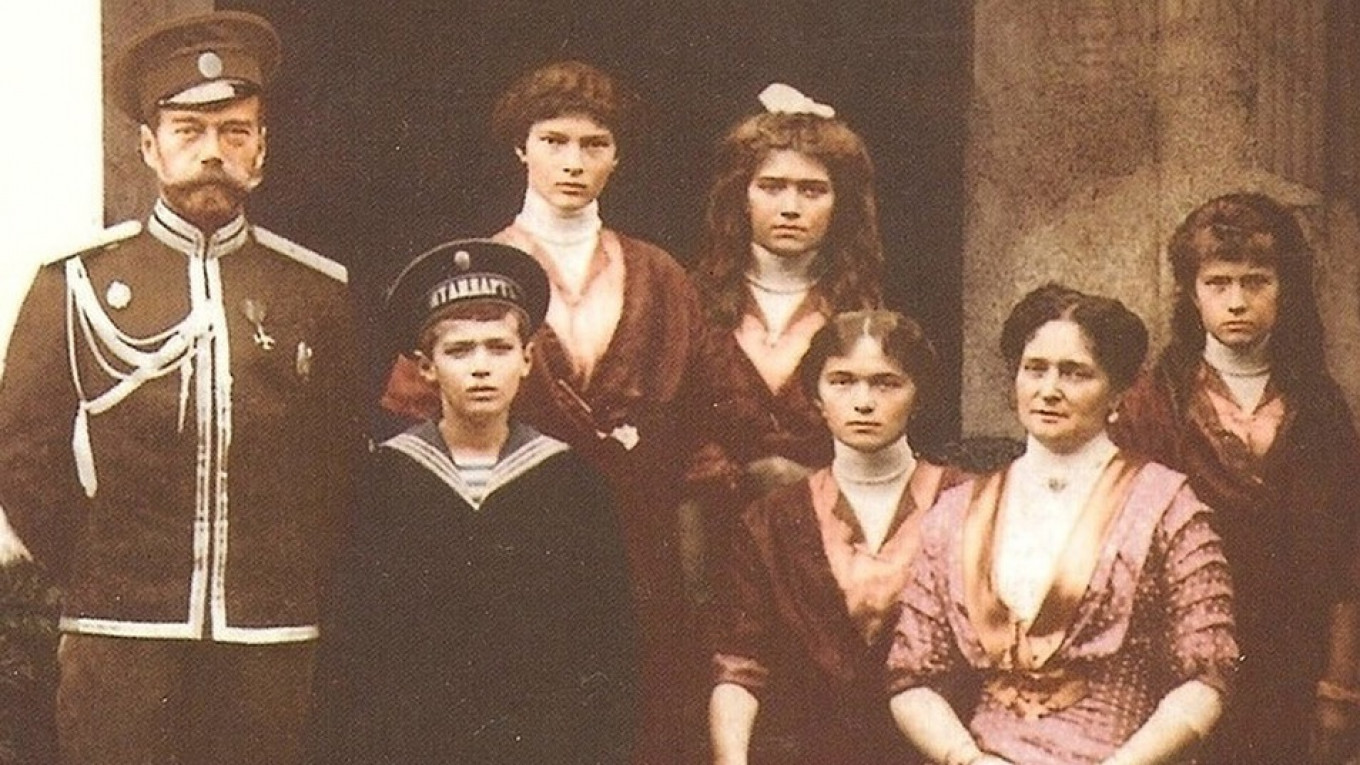
Now that I had a skeleton before me, as well as a quiz's worth of questions about characters and scenes, I knew that additional research would come next. Places were I could sure up anywhere that I wasn't as knowledgable on. Since the script pertained to various myths surrounding the last Imperial dynasty of Russia, the Romanovs (a subject which I did have enough prior knowledge of, for the skeleton), I wanted to do some extra digging. Through that I then also wanted to look into figures surrounding their execution, and then in turn, where loyalist White Russians went to, One thing lead into another.


What can I say? I love history: always have since I was little. Who we were and why we made those choices is a fascinating part of the human condition, as well as having obviously appeal for dramatists.Last year, for example, I got a lot out of learning about the history of my area, Camden, and visiting the Archives. Indeed, just browsing through old maps and adverts could ignite little sparks in my mind that, in the end, help me find ways to do more interesting things with my cast and where they could be.

In addition, I also kept my regular notepad on hand, jotting down interesting facts and general little 'flashes' of ideas for what could go into the script.Among them were ideas about, for instance, incorporating a version of the original Kindle, the Fiske Reading Machine (which could store whole book on cards, and could be reading through a magnifying lens) as means to uncover clues, as well as slipping in more nods towards the Romanov children, like Alexei's famous prank of the strawberry in the noble's shoe. It's just all fun.

Prev                                                                                                                                                Next

Sunday, 9 September 2018

Why One Pagers are handy for screenwriters

One of the hardest things about writing is pitching. Let's be frank: most of us are pretty nervous about it, and would rather eat burning coals than have to sell someone our story. How can you tell someone your compelling saga of emotional heartache or exciting adventure within a minute or two?


And what about when you're starting a project? Naturally, give yourself the freedom to experiment: Just plugging in for the formula won't yield interesting results, usually. However, with that always comes the peril of losing focus and forgetting why you ever bothered in the first place. Wouldn't having some kind of mission statement help keep you on track with what your intent is? What is your story about, at its core, when you strip away all the bells and whistles of snappy action or whimsical dialogue?

Enter one pagers: a succinct and tidy summation of the project and what you want. For me, they've proven to be rather handy and helped keep me on the course to story nirvana. No, you don't have to obey them as gospel or refuse to change them: consider them more as roadmaps on the creative journey.

So, how do you actually write one? Well, there's three steps:
  1. Start with your logline, the super basic distilation of your film. Who is it about, what the threat/problem is, and what will happen if they do or don't get it. IMPORTANT: Loglines are not taglines. ''In space, no one can hear you scream'' ain't a logline. Neither is ''why so serious''. Need help? Try this video.
  2. Then, write three or four paragraphs that cover the major beats of your film or pilot. Broad, arch and not usually invoking dialogue, it's your cliffnotes but is also, in a sense, why you want to write this specific story with these specific parts. Also, like in a script, use strong words that evoke clear images in the reader's eye.
  3. This is capped off by a paragraph devoted to explaning why it matters, what's special about it and why it could work. This is where your awareness of the market place, what it has and what it doesn't, will come into play. You have been reading the trades, haven't you? Haven't you?
From this, you can then graft and expand into a treatment or even a step outline. Again, gospel is not what you're writing, merely a friendly reminder. What's more, this can help narrow down your brainstorms and early research, as well assist email pitching, as it's a much easier document to hand over than a whole script. It can, also, very succintly tell someone how good you are, and if the script is right for them. I should know: I've used it to not half-bad effect before and gotten some reads for one of my kids show pilots.

Sunday, 8 October 2017

So, what's new with me? Projects update (8/10/17)

Alright, so with my reviewing career confined to the depths of internet history, what have I been filling the time with instead? As it turns out, several things.

First, I'm now in development on a short film for the Masters course. A post-apocalyptic drama about an age-divided society, in fact. Treatment's been signed off and now, I can get to work on actually writing a draft. Unlike the experience of writing Spider-Fly back in 2015, I feel there's been a greater understanding of time and budgetary limitations on the project, and a willingness to work within them.

Second, my own writing projects are progressing slowly but very steadily: my first children's TV pilot, Spring-Heeled Jack, has recieved feedback both from a development assistant as well as a professional screenwriter whose been gracious enough to give me his time for free, given he liked the premise enough (I'll talk more about it when it gains a little more traction). Work on a second, a swashbuckler set in 1840s Spain, has just completed its first draft, and I aim to have a second out by the end of the month. It's a love letter to properties like Three Musketeers and Zorro, and it has been quite fun to write. Especially the villain.


And third, I'm currently hammering out a treatment for a feature about the Spanish Civil War. An LGBT love story, in fact, set amidst the chaos of the conflict between Nationalists and Republicans. It was originally meant to be a miniseries, but feedback from trusted peers has advised otehrwise, feeling the core relationship is better suited to the shroter medium. Like with the pilots, once this gets more set, I'll let you know more.


And that's that for now. Thanks to everyone who wished me well when I announced retirement from reviews, and I hope to hear from you again soon.